As a young sports fan growing up in the 1980s, the holiday season meant even more to me than family, gift-giving and time off school. It was a peak part of the sports schedule that included the World Junior Hockey Championship and curling, in addition to the NHL, NFL and NBA.
But what really caught my eye was the amateur sports south of the border, which uses the holidays to launch the college basketball season on the road to March Madness, and to glamorize college football with its postseason bowls.
So much has changed over the decades, almost all of it due to the incredible amounts of money that the National Collegiate Athletic Association generates.
The College Football Playoff tournament began in 2014 and has now expanded to 12 teams. The CFP has allowed conferences and programs to increase revenue by stimulating further interest in games with playoff implications. This plays well for fans who attend the games, and the networks who broadcast them, who recoup the rights fees from hungry advertisers.
But the biggest financial change in America’s two biggest collegiate sports is that the players now get paid.
That’s right. Student athletes attending American universities on scholarship are able to earn in addition to playing sports and getting an education.
Name, Image, Likeness (NIL) is the policy that allows American college athletes to make some money on the side. Some of them make so much that school becomes the side hustle.
There are many worthwhile arguments on both sides of the debate but ultimately what won out is the fact that college programs, coaches, and advertisers were making millions, tens of millions, while the players were simply getting by on classrooms and books.
In 2009, former UCLA basketball star Ed O’Bannon sued the NCAA for licensing a video game company to use his likeness in a game, without payment. The case was decided in 2015 leading EA Sports to make payouts to up to 100,000 current and former athletes whose likenesses were used in the games.
The use of player likeness in team uniform would ultimately lead to NIL payments, where college athletes can now use autograph sessions, commercials and endorsements to earn money, much like current and retired professional athletes do all the time. In fact, there were numerous cases prior to NIL of college athletes participating in such events, only to be caught and punished by the NCAA for disrespecting the rules of their amateur status.
The table was set. NIL kicked in on July 1, 2021. We are now in an era where at least 20 college quarterbacks earned over USD $2,000,000 before taxes in the 2025 calendar year.
Arch Manning of Texas led the way. On3 reported his NIL valuation at $5.3M this year. His Longhorns will play Michigan in the Citrus Bowl on December 31, but they are not in the CFP and can’t win the national championship. Further, although Manning is a consensus choice to be the Number-1 pick in the 2026 NFL Draft, he may stay in college for another year, and take a run at the championship next year. And why not? He’s already making money, and could be in the range of $10M next year while enjoying life on one of the USA’s most famous campuses in Austin, Texas.
Heisman Trophy winner, Fernando Mendoza, the quarterback of the shockingly good Indiana Hoosiers football team was valued at $2.6M by On3, thanks to a late season partnership with adidas. This ranks him 6th in the NCAA.
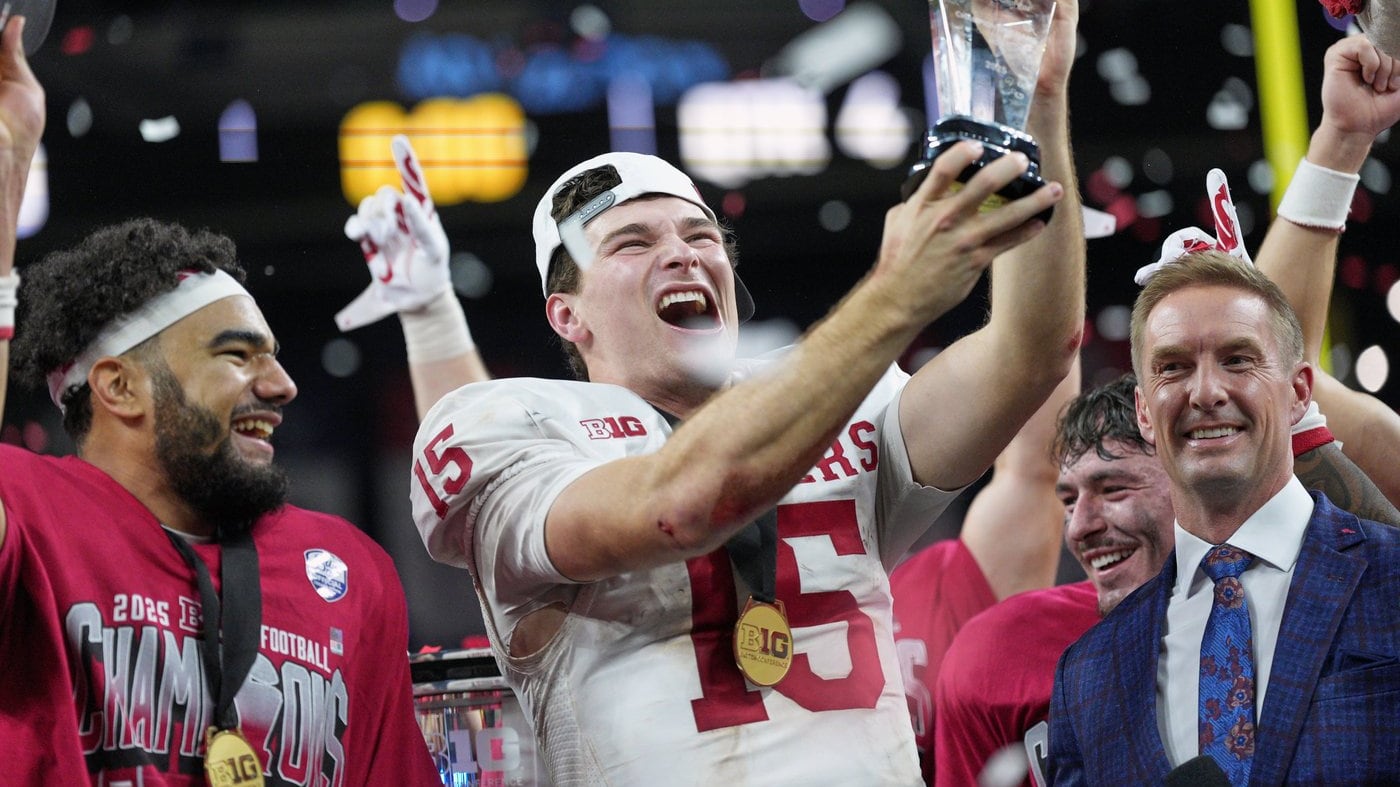
Mendoza was a decent quarterback at California in 2023 and 2024 but nowhere in the NIL rankings when the season started, much like Indiana themselves. But Mendoza threw 33 touchdowns in leading the Hoosiers to their first Big Ten championship since 1967, and the number 1 ranking heading into the CFP. Notably, their win over Ohio State on December 6 drew nearly 20 million viewers, the most ever for a Big Ten championship game. Mendoza will be a 1st round pick in the NFL’s 2026 Draft.
The top NIL valuation in NCAA basketball is AJ Dybantsa of Brigham Young University. He is expected to be the top pick in the next NBA Draft, but he will earn USD $4.4 million as a student this year, according to On3. He has endorsement deals with Nike and Red Bull, and surprised many observers by choosing BYU over traditional basketball powers like Duke and North Carolina. At those schools, his NIL may have been less as he shared the spotlight with other highly touted prospects. At BYU, he is the unchallenged big man on campus. His Cougars are presently ranked 10th, and he ranks second to Manning among all NCAA athletes for NIL. He’s the only basketball player in the top 5, the rest are football players.
College athletes are making money to play, and many of them are already making more than their parents ever made in a year. Despite the arguments against NIL, the caliber of play and competition has not wavered. The college football and basketball games this holiday season are a gift to all of us.
The College Football Playoff will be aired in Canada on TSN beginning with Alabama vs. Oklahoma on Friday, December 19 at 8:00 pm Eastern time.
Follow Dan Gladman on Instagram and Blue Sky: @dgontheroad

