Ontario’s deficit for the 2024-25 fiscal years came in at $8.7 billion lower than forecast in the 2024 budget, even as program spending weighed in at $11.5 billion more than planned, the province reported Friday.
The numbers are detailed in the newly released 2024-25 Public Accounts for Ontario, an annual retrospective showing how the government performed in a given fiscal year compared to its budget projections.
While the March 2024 budget projected a deficit of $9.8 billion for the fiscal year that ended on March 31, it came in at just $1.1 billion. That was largely thanks to higher-than expected revenues of $226.2 billion -- $17.9 billion higher than the 2024 budget projected.
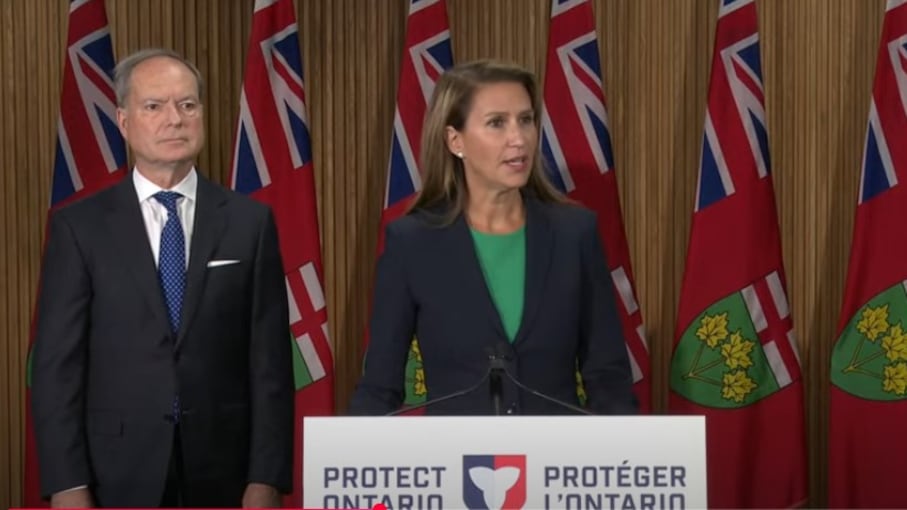
Speaking with reporters, Finance Minister Peter Bethlenfalvy said the update “reflects our government’s continued focus on balancing smart investments with careful fiscal management” in the face of ongoing challenges to the economy, including U.S. tariffs.
“This improvement isn’t just about numbers on a page. It tells a story about people. It reflects factors that include more Ontarians finding work, more businesses expanding and our strengthening public services,” Bethlenfalvy said.
Revenue up
The province says the increased revenue is mainly due to increased tax revenue, transfers from the federal government, higher revenues reported from the ministries and the broader public sector as well as one- time revenue from Ontario’s share of a $32.5 billion legal settlement against tobacco companies.
Income from government-owned businesses was up 0.5 per cent on the strength of higher revenue from Ontario Power Generation (OPG), even as the LCBO and OLG brought in lower net income.
Ontario colleges saw a slower-than-expected decline in revenues from international student enrollment both because the federal government continued to issue visas to existing cohorts of international students from previous years, and because of increased domestic enrollment.
Meanwhile hospitals saw increased revenues from services, donations, research grants, fees, and ancillary services.
Bethlenfalvy pointed out that the province has also made some progress in its debt-servicing costs, spending $1.3 billion less than expected.
Spending grows
Higher program spending was mainly due to increased spending on health, education and infrastructure, the government said, including hospital and transit projects, schools and child care spaces.
Ontario spent $6.2 billion more on health care in 2024-25 than it did in the previous fiscal year and $1.2 billion more on education. The government said most of the additional educational money was spent on creating more affordable child care spaces and funding to support labour agreements.
Bethlenfalvy defended a provincial debt that is projected to grow to more than half-a-trillion dollars by 2027.
“Our economy has grown by $350 billion, while our debt has grown by roughly $100 billion. So our debt to GDP, for analysts and rating agencies in the markets who lend us the money, we’re in the best position we’ve been in over a decade,” he said.
He added that the government has been adding “good debt,” meaning debt meant to pay for critical infrastructure such as hospital, schools and transit that will benefit “generations.”
He and Mulroney cited credit rating upgrades for the province and a “clean audit” opinion from the Auditor General as proof that the government is being a good steward of the province’s finances.
Hiring freeze at government agencies
While revenues were stronger than expected, Treasury Board President Caroline Mulroney nevertheless announced a hiring freeze across Ontario’s provincial agencies, boards and commission public bodies.
“There’s been a great amount of growth over the last couple of years, almost five per cent, and we believe that with that hiring, that they’ve hired sufficient people to deliver on the mandate that we have given them,” Mulroney said, standing alongside Bethlenfalvy.
“We want to make sure that going forward, they have a culture of respect for taxpayer dollars with every decision that they make about hiring.”
The freeze will apply to government agencies like Metrolinx, but Mulroney clarified that “business-critical positions” will not be affected and that agencies that need to grow will be able to, as long as they provide HR plans.
“It means that if they want to hire going forward, they’re going to have to bring forward plans that are approved by government,” she said.
“But they cannot hire without such approval, which in the past, they’ve been able to.”
Mulroney said the move “is absolutely not a cut to public services; it’s a cap on hiring.”
She noted that public agencies have grown at a rate of more than five times that of the Ontario Public Service (OPS) since 2023 and said the freeze is similar to one implemented for the OPS since 2018.
In a statement Friday, NDP Treasury Board Critic Jessica Bell said the hiring freeze could affect some services people rely on.
“Under the Conservatives, agencies like Metrolinx have ballooned to over 90 vice presidents,” Bell said in her statement. “Meanwhile, college workers are on strike, hundreds of programs are being shuttered, and 800,000 people are without a job.
“The Ford government should focus less on patting themselves on the backs, and more on how they can spend in a way that actually improves the lives of Ontarians.”
Bethlenfalvy is expected to present an updated snapshot of the province’s finances, nearly a year into the trade war, this fall. The update is required to take place before Nov. 15

