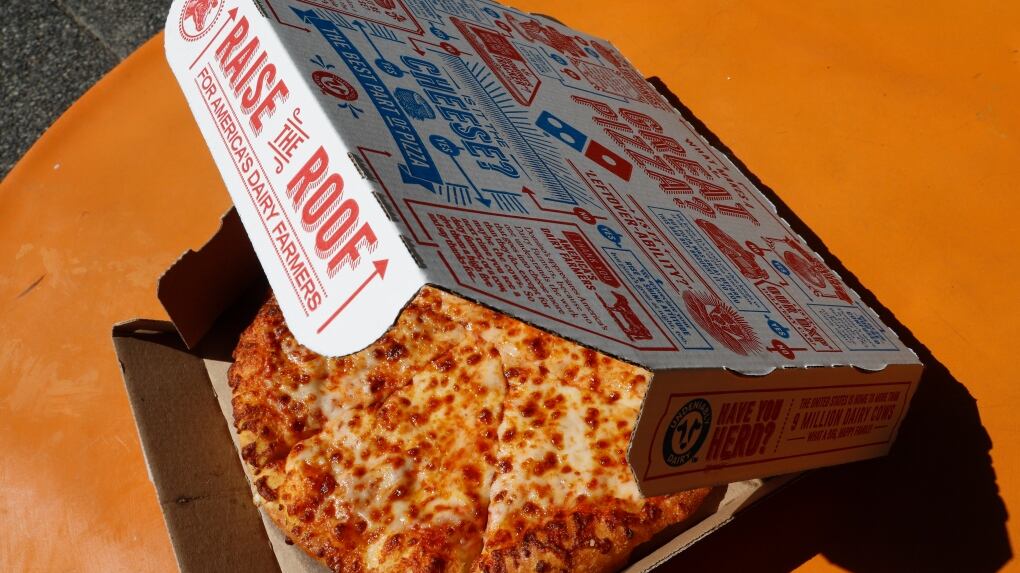
Domino’s Pizza posted better-than-estimated profit and U.S. same-store sales for the third quarter on Tuesday, driven by promotions and new menu items as consumers tighten their budgets amid economic uncertainty.
The company’s shares rose two per cent in premarket trading. The results come at a time when persistent inflation, economic uncertainty and repeated menu price hikes have prompted consumers to prioritize value when dining out or ordering in.
To cater to the shift in consumer spending, Domino’s revived its “Best Deal Ever” promotion on Aug. 25, offering any-topping pizzas for US$9.99. It also introduced other items such as the parmesan-stuffed-crust pizza.
Companies like PepsiCo have also responded by introducing smaller pack sizes for its salty snacks with more affordable pricing to cater to shoppers feeling the pinch, especially in lower-income households.
U.S. same-store sales for the world’s largest pizza chain grew 5.2 per cent during the quarter, compared with analysts’ expectations of a 4.0 per cent rise, according to data compiled by LSEG. Domino’s also benefited from its delivery partnership with DoorDash in the country.
Domino’s has been offering more deals under its rewards program as its goes up against rising competition from fast-food chains such as McDonald’s and Burger King doubling down on steep discounts on select menu items to attract consumers.
Its quarterly earnings per share for the three months ended Sept. 7 were $4.08, compared with the estimate of $3.97, helped by higher order volumes.
Quarterly international same-store sales growth of 1.7 per cent, however, fell short of an estimated 1.9 per cent rise, as the company faces choppy demand in some markets such as Japan and Australia. Geopolitical uncertainties were also taking a toll on some markets, executives had said earlier in the year.
Revenue for the third quarter rose 6.2 per cent to $1.15 billion, while analysts estimated $1.14 billion.
U.S. company-owned store gross margin fell 0.5 percentage point from a year earlier, hurt by higher costs of some commodities such as cheese and pork.
(Reporting by Anshi Sancheti and Juveria Tabassum in Bengaluru; Editing by Leroy Leo and Shilpi Majumdar)

