Canadian exporters can expect to get easier access to new markets as the federal government announced a new strategy to diversify trade from the United States.
Finance Minister François-Philippe Champagne tabled the government’s 2025 budget on Tuesday which includes a suite of supports for trade and transportation infrastructure projects.
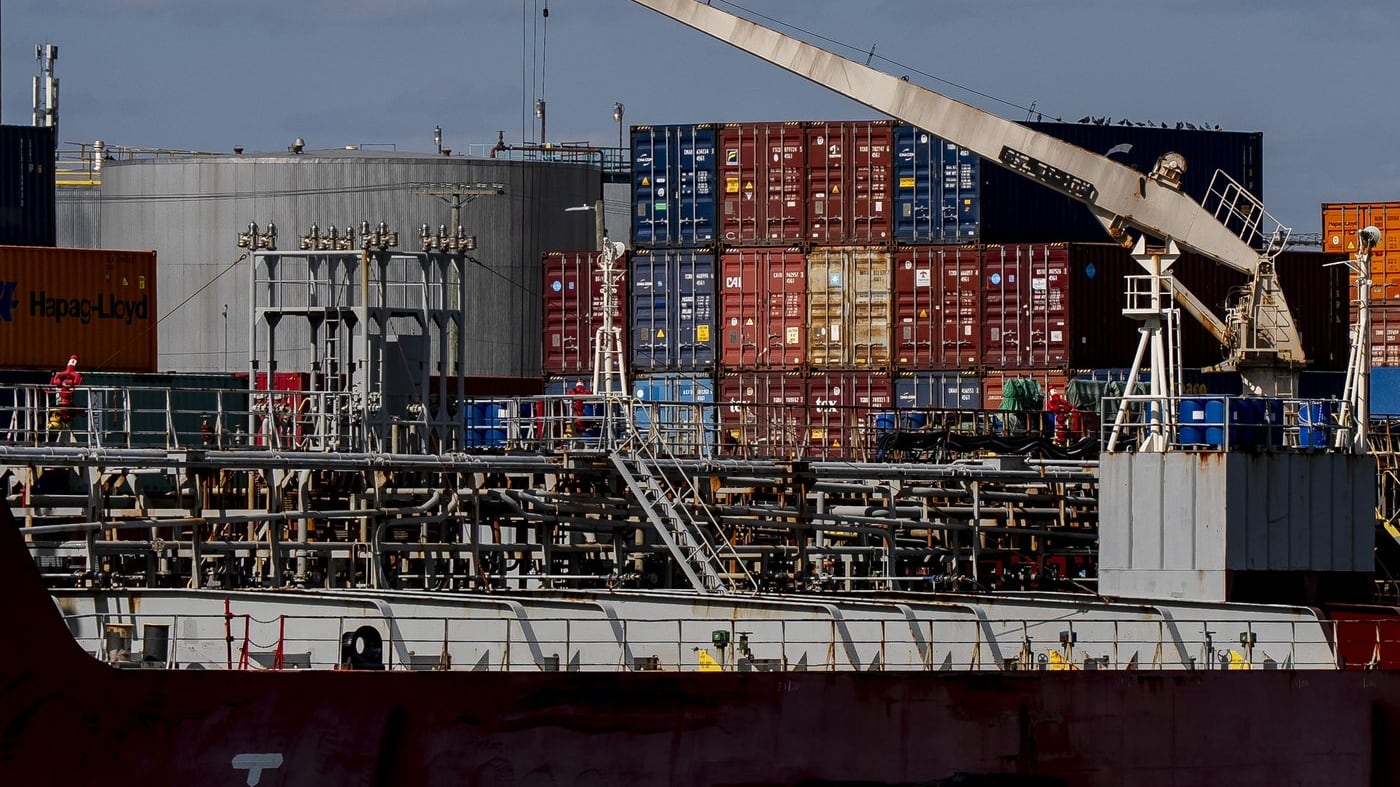
The budget proposes to provide $5 billion over seven years, starting in the 2025 to 2026 fiscal year, for Transport Canada to create a Trade Diversification Corridors Fund.
“By investing in the infrastructure that moves our products to global markets, this fund will strengthen supply chains, unlock new export opportunities, and build a more resilient, diversified economy,” reads Budget 2025.
The budget states $72 billion of Canadian exports were sent to the Indo-Pacific Region in 2024 while $65.2 billion was delivered to Europe in the same year.
Ottawa said, as it deepens its trade relationships with reliable partners, it needs to build the infrastructure that will advance its goal of doubling non-U.S. exports over a decade.
It follows as U.S. President Donald Trump continues to place tariffs on Canada affecting vulnerable sectors. Canada has been actively seeking new trade partners to diversify beyond its heavy reliance on the United States. The feds looked at resetting ties with China and India for example and wrap up free trade agreements with Southeast Asian nations.
“The Fund will support projects of all scales, including digital infrastructure, to improve the ability of our imports and exports to travel efficiently across the country and to and from the rest of the world,” reads Budget 2025.
The government said it will consider investments in key projects in the Great Lakes-St. Lawrence Region, at ports in northeastern Québec like enhancing the Port of Saguenay’s capacity to build a second wharf, rail lines in Alberta, port and rail infrastructure on the West Coast, and more.
Funding for an Arctic Infrastructure Fund
The government plans to increase trade opportunities and connect northern communities to domestic and global markets by providing $1 billion for an Artic Infrastructure Fund. The investment, over four years starting in the 2025 to 2026 fiscal year, will be placed in major transportation projects with dual use applications for civilian and military use, including airports, seaports, all-season roads and highways.
“These investments will strengthen Canada’s sovereignty, support economic development and job creation in Northern communities, advance Indigenous economic reconciliation, and promote further trade diversification by opening new gateways to global markets,” reads Budget 2025.
To facilitate the Arctic Infrastructure Fund’s support for northern projects, Budget 2025 proposes to provide $25.5 million over four years, starting in the 2025 to 2026 fiscal year, to Crown-Indigenous Relations and Northern Affairs Canada, and $41.7 million over four years to Canadian Northern Economic Development Agency, to help accelerate regulatory processes in Canada’s North.
Trade diversification strategy
The government established a new goal to double non-U.S. exports over the next decade of $300 billion more in trade, an increase of over $100 billion in five years. To reach the goal, Ottawa plans to develop a new strategic exports office at Global Affairs Canada to curate a pipeline of international business opportunities.
They also propose to provide $8 million (and $2 million ongoing) over four years, starting in the 2026 to 2027 fiscal year, for Global Affairs Canada to deepen trade relations with European partners. Staff of the office will undertake trade missions with Canadian businesses and support Canadian Chamber of Commerce in Europe.

