A vast ice fishing village on the frozen Ste-Anne River in Quebec is celebrating an old-fashioned winter of cold temperatures and abundant snow. The streets of ice are lined with hundreds of colourful fishing cabins that are reeling in visitors this season.
In a brown model equipped with electricity, heat and a comfortable couch, children, parents and grandparents are pulling up one fish after another from a hole carved out in the ice.
“We are fortunate to have a great winter vacation,” says Eric Fortin. “It is a true winter this year.”
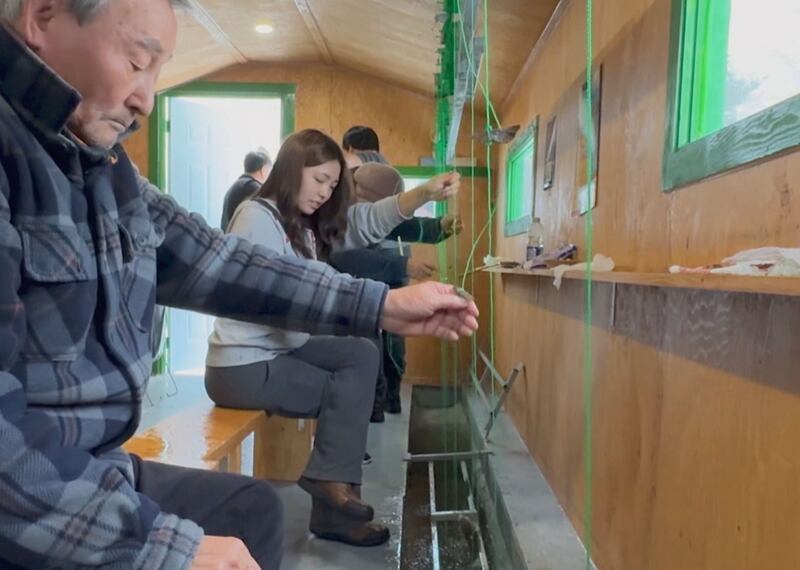
A thick ice cover formed over the river in early December as colder than normal temperatures hit many parts of Quebec.
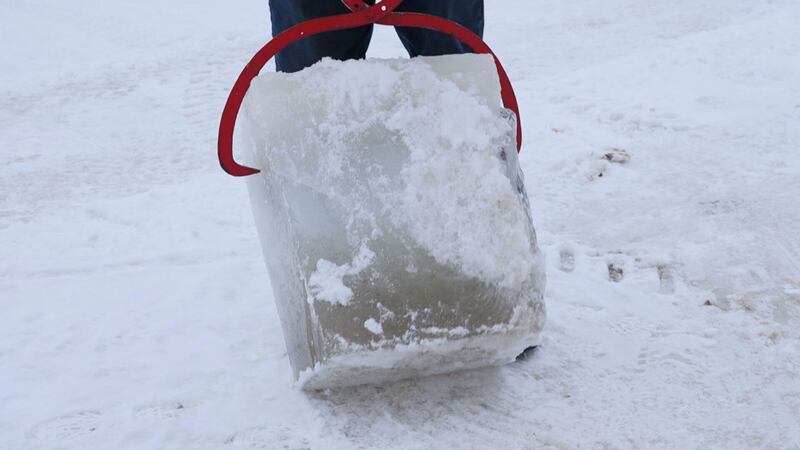
Steve Massicotte is with the Ste-Anne River Outfitters Association and has run a business that rents cabins for more than 15 years. He pulled out a block of ice from the river that shows just how much ice has formed so far this winter.
“It is about 50 centimetres,” he says pointing to the block of ice.
That is nearly twice as thick as on most of last year’s season.
Ice fishing is a nearly 90-year-old tradition in the village of Ste-Anne-de-la-Perade, about two hours from Montreal. In 1938, Eugene Mailhot, one of the villagers, cut out a block of ice from the river in front of his home for his freezer. He looked down and saw plenty of fish in the river and soon set up the first ice fishing cabin.
By the 1940’s, people from Montreal, Quebec City and Trois-Rivieres were arriving by train to catch Atlantic Tomcod, otherwise known as frostfish – a white-fleshed mild tasting catch know for its winter spawning. And it spawned big business in the region attracting more than 100 000 visitors a season, which runs from Dec. 26 to Feb. 15.
“We now have 375 fishing cabins,” says Massicotte. “It’s a village that we install in a village.”
But over the past five years, warm weather shortened the seasons and profits thinned along with the ice. A third fewer visitors rented cabins from outfitters here, as they struggled to try to flood the ice and take advantage of the few colder days to ensure it was thick enough to be safe.
“We have to work twice as hard during mild winters,” says Jessie Casey, who bought his rental business from Mailhot’s grandson, the pioneer of the region’s ice fishing. “This season we finally had it a little easier.”
But setting up the cabins, managing the ice and renting the cabins is difficult physical labour that is getting tougher manage as winters are increasingly warmer and less predictable. The trade is often passed down through generations here, but the mild difficult winters had many considering walking away from the family business.
“Because of this winter, I think we are going to keep some of the young ones,” says Massicotte -- hooked once again on the ice fishing business.

