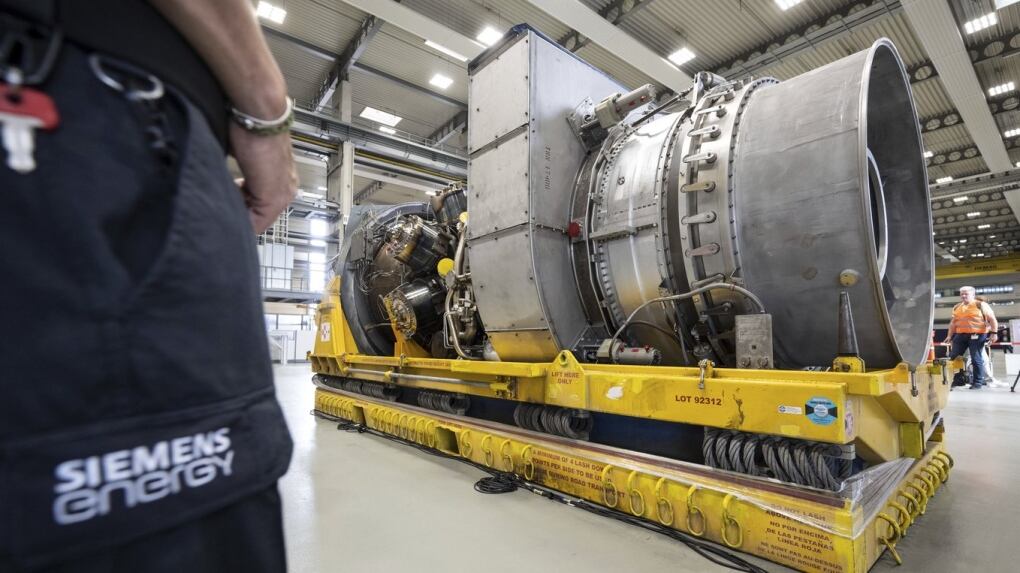
FRANKFURT/NEW YORK — Siemens Energy plans to invest US$1 billion to expand U.S. power grid and gas turbine component production as the country builds data centers needed to power AI technology.
The world’s biggest technology companies are pouring hundreds of billions into U.S. data centers that will need more power than the country’s aging electrical system can provide.
Data centers may take up 12 per cent of U.S. grid capacity in two years, nearly triple 2024’s share, government reports say.
“The U.S. is the hottest electricity market in the world at the moment ... And I don’t see this ending,” Siemens Energy CEO Christian Bruch told Reuters, adding the market was the biggest for order intake last year.
Big Tech’s requirements have led to a surge in power deals aimed at quickly building and connecting new electricity supplies, but supply chain bottlenecks, prolonged permitting processes and other hurdles are challenging those plans.
Siemens Energy’s investment, part of a 6 billion euro ($7 billion) push, include the construction of a new factory in Mississippi to produce power grid equipment, which Bruch said would be the German group’s largest such facility worldwide.
The new factory is expected to be completed in 2028.
Bruch said the expansion in the United States, where the company makes 22 per cent of sales and employs 12 per cent of staff, would add around a fifth to Siemens Energy’s global production capacity for large turbines.
“A big chunk of what’s driving demand is data centers. We have around 20 gigawatts of generation power for data centers, (in the) U.S. only. And this is both orders and reservation agreements,” Bruch said.
The expansion would allow its turbine factory in Berlin, its biggest, to cater more to European and Middle East clients, Bruch said, rather than exporting to the U.S.
(Reporting by Christoph Steitz and Laila Kearney; Editing by Alexander Smith)

