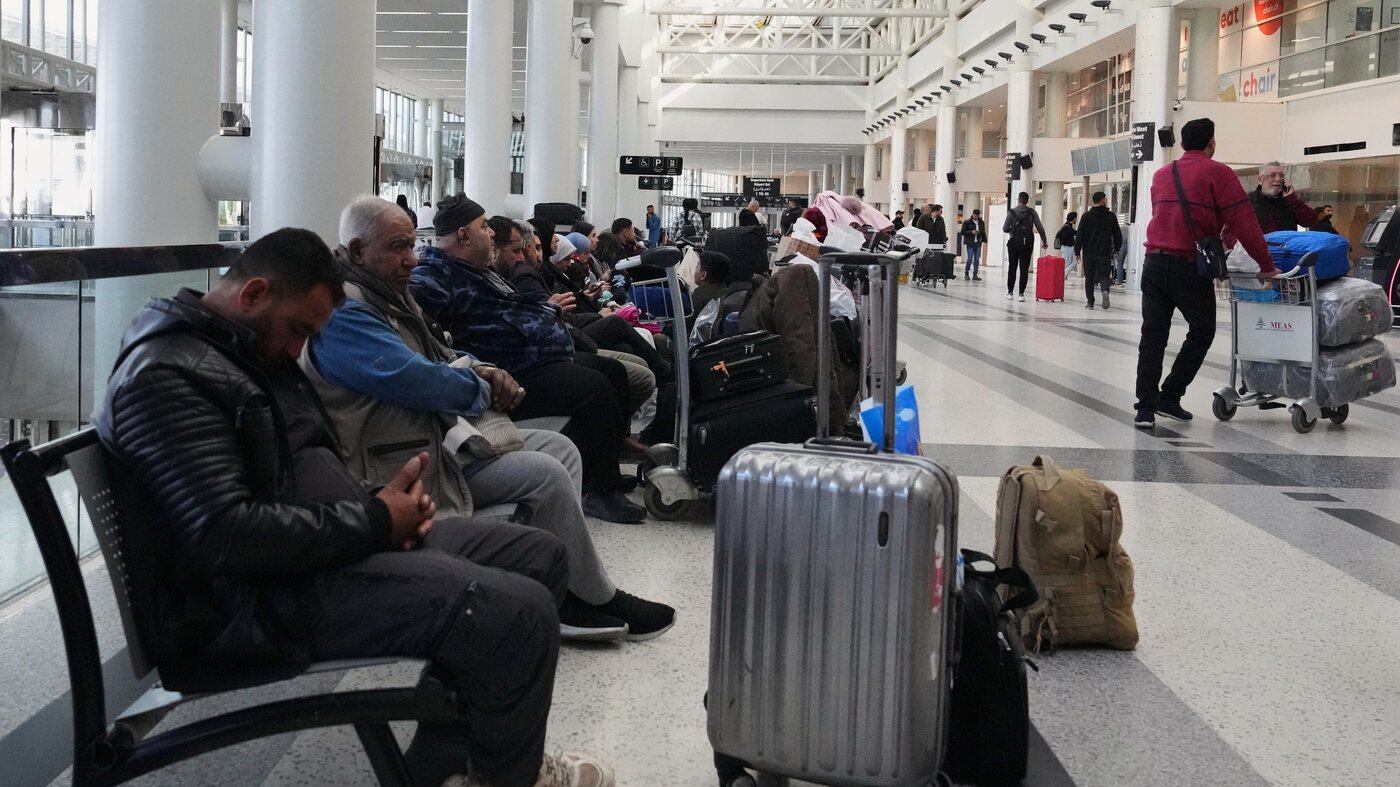
LONDON/DUBAI/HONG KONG — Dozens of repatriation flights were due to take off from the Middle East on Wednesday as governments try to bring tens of thousands of stranded citizens home, while the selloff in global airline shares eased even as the U.S. and Israeli air war against Iran escalated.
The airspace over most of the Middle East remained largely empty on Wednesday, with major Gulf hubs, including Dubai, the world’s busiest international airport, remained shut for a fifth day, in the biggest travel crisis since the COVID-19 pandemic.
The first repatriation flights were due to leave for Britain and France on Wednesday and the United Arab Emirates opened special corridors to allow some citizens to return home.
This contrasts with the thousands of flights that take off in the region normally. Marooned tourists and some expatriates have also tried to find their own way out.
Airline shares were less volatile on Wednesday after double-digit percentage drops in the past few days, wiping tens of billions of dollars from airlines’ market value.
Lufthansa was up 1.7 per cent at 1013 GMT, while Qantas was 2.7 per cent lower. Both have lost more than 10 per cent of their value this week so far, their worst week in almost a year.
BA-owner ICAG was up two per cent, having fallen more than 11 per cent in the past three days.
Airline executives have said that crew and pilots are now scattered across the world, complicating the process of resuming flights when airspace reopens. Soaring prices of oil will also add to carriers’ costs.
Other analysts said that flights will become more expensive as longer routes will become the only options for international carriers.
The Gulf is also a major hub for air cargo, putting further pressure on international trade routes.
Asian airline stocks
Most Asian airline shares pared losses from earlier this week. Korean Air Lines shares fell 7.9 per cent, after dropping 10.3 per cent on Tuesday.
“It is just a different market reaction time as many European airlines have already reacted more since the war started,” said Gary Ng, a senior economist at Natixis.
“As the market prices in a longer-duration war with higher energy prices and weaker currencies, it affects the whole sector broadly, including APAC airlines.”
South Korea’s stock market was closed on Monday when most airline and travel stocks bore the brunt of the impact from the conflict.
Japan Airlines stock fell 2.9 per cent on Wednesday, after losses of 6.4 per cent on Tuesday.
Major Chinese carriers Air China and China Southern Airlines closed down between one per cent and three per cent.
Oil prices have risen sharply this week, with Brent crude oil up around 14 per cent since the U.S.-Israeli strikes on Iran, potentially pushing up fuel costs for airlines.
Hedging is expected to help mitigate some of the cost increases.
“Recent guidance indicates that the airlines have hedged around 50 per cent of their jet fuel needs. In general, they should be able to pass through the balance of the price rise to passengers,” Lorraine Tan, director of equity research for Asia at Morningstar, said.
(Reporting by Julie Zhu in Hong Kong, Alessandro Parodi in Gdansk, Lucy Craymer and Federico Maccioni in Dubai, Roushni Nair in Bengaluru, Li Gu in Shanghai.Writing by Joanna Plucinska.Editing by Josephine Mason and Jane Merriman)

