CALGARY — A new report by the Pembina Institute says removing obstacles to renewable development must factor into talks the Alberta and federal governments are having around electricity emissions policy.
The two governments signed a sweeping energy accord late last year that includes the suspension of federal clean electricity regulations, pending an agreement on equivalent provincial rules by April 1.
The clean-energy think-tank says Alberta’s plan to have a net-zero grid by 2050 seems to rely too heavily on technologies that take a lot of money, time and risk tolerance to build, like carbon capture and storage and small modular nuclear reactors.
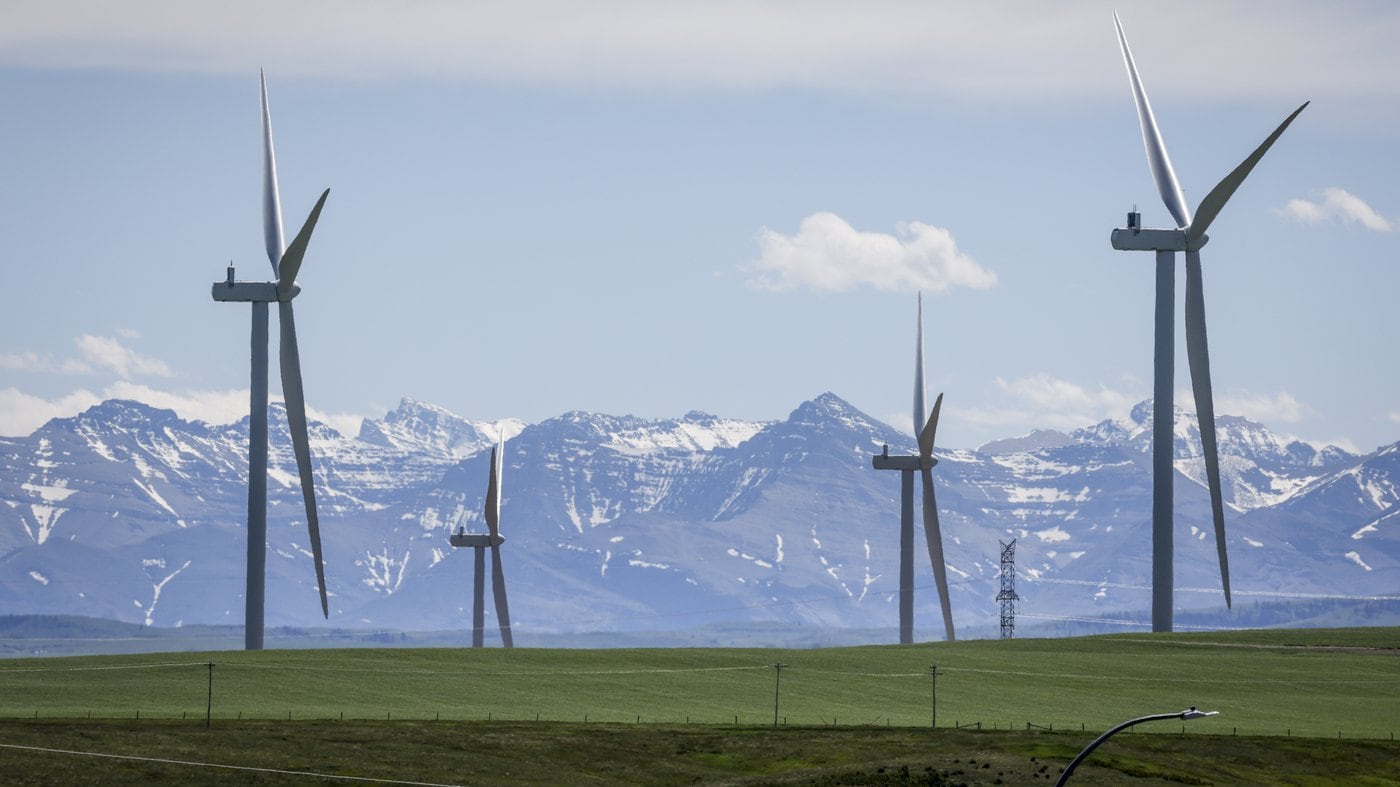
Senior analyst Will Noel argues that solar and wind power would deliver quicker, cheaper and more certain results, but Alberta has been spooking away investment in those technologies with an “onslaught” of policy changes targeting the renewables sector.
A seven-month moratorium on new renewable project approvals ended in early 2024, and the province has since introduced rules around reclamation requirements and buffer zones to protect “pristine viewpoints” from wind turbines.
The Pembina report says there was a 93 per cent drop in new installed wind, solar and storage capacity in 2025 compared to 2022, the peak year for such developments in Alberta.
“It seems like developers are getting fed up with the state of the renewables market in Alberta and they’re looking to move elsewhere,” Noel said in an interview.
Focusing on 2050 as the end-goal and not on the emissions reductions that can be achieved in the interim would be a mistake, he added. He likened it to a boat taking on water and, instead of trying to bail it out now, hoping a rescuer might be somewhere on the horizon.
“Focusing on these quick wins, these no-regret solutions...that’s really what we need to do to have this all be successful.”
This report by The Canadian Press was first published March 10, 2026.
Lauren Krugel, The Canadian Press

