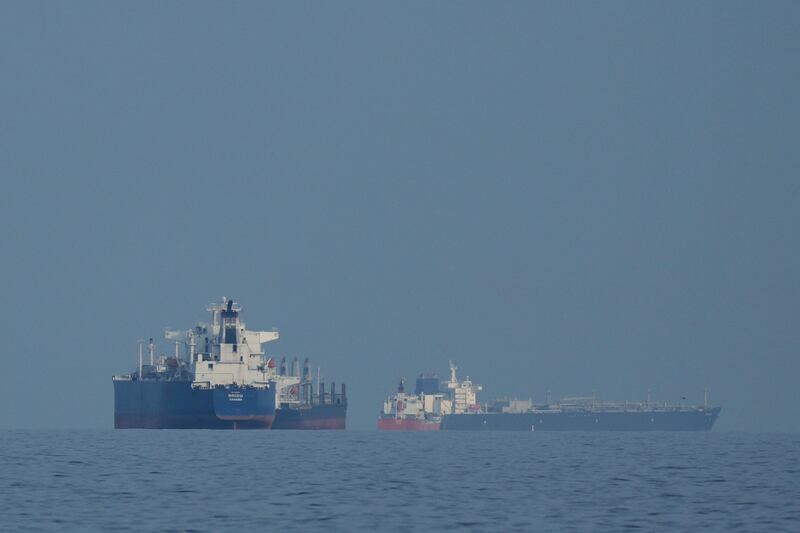
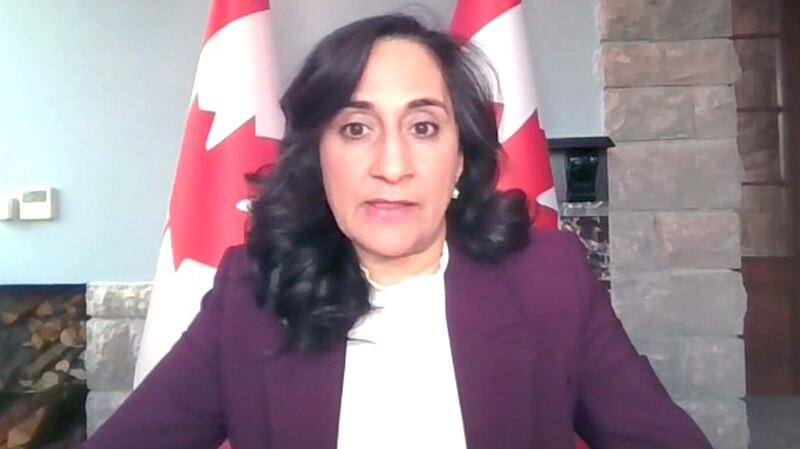
Foreign Affairs Minister Anita Anand spoke out against the “weaponization” of the Strait of Hormuz in the face of an ongoing blockade but offered no specifics on what kind of support Canada is prepared to offer.
“There should be no weaponization of international shipping lanes and prevention from countries around the world having the resources that they need,” Anand told reporters on a callback during her trip to Ankara, Türkiye. “Ships from all countries have the right to pass through.”
Anand says blocking the strait violates customary international law as well as the UN Convention on the Law of the Sea.
She said that’s a “very important point” she’s working on with countries in the Gulf region and around the world. However, she would not say specifically what Canada is considering in terms of next steps.
U.S. President Donald Trump is growing frustrated as many allies have so far declined his request for help in reopening the strait, as oil prices skyrocket.
“To our knowledge, a request has not been made to NATO for the type of assistance that is being requested,” Anand said in response to a question around the U.S.’s request for help.
Anand is taking part in a series of meetings in Ankara, where she says the situation in the Middle East is at the “forefront” of discussions.
Anand also said she agrees with Prime Minister Mark Carney, who said earlier this month that, on its face, the initial strikes by the U.S. and Israel appear to be “inconsistent” with international law.
“I do agree with the prime minister, and I will say that the focus now is to ensure that Canada continually stands with international legal principles and abides by international law,” Anand said.
She repeated the lines Canadians have heard multiple times from the prime minister and other ministers since the conflict began, that “Canada wasn’t consulted, Canada didn’t take part in the military operations, and Canada has no intention to be involved in the offensive military action.”
Anand said she is working “to find paths towards de-escalation” and a “solution that is focused on the preservation of civilian life and civilian infrastructure.”
She says she has spoken with her foreign affairs counterparts about Canadian support but wouldn’t detail what is being considered.
“Our current conversation with Gulf countries rests on how we can continue to support them, especially in the face of indiscriminate attacks, retaliatory in nature by Iran,” said Anand.
Anand has not discussed the Strait of Hormuz with her U.S. counterpart, saying she hasn’t spoken with Secretary of State Marco Rubio since the start of the U.S. strikes on Iran on Feb. 28. She plans to see Rubio at the upcoming G7 foreign ministers meeting in Paris next week.
After Türkiye, Anand’s next stop will be the United Kingdom, where she plans to meet Secretary of State for Foreign and Commonwealth Affairs Yvette Cooper on Wednesday.