The prime minister says he’s pleased with the progress made so far on the federal government’s memorandum of understanding (MOU) with Alberta, but two items won’t meet the April 1 deadline.
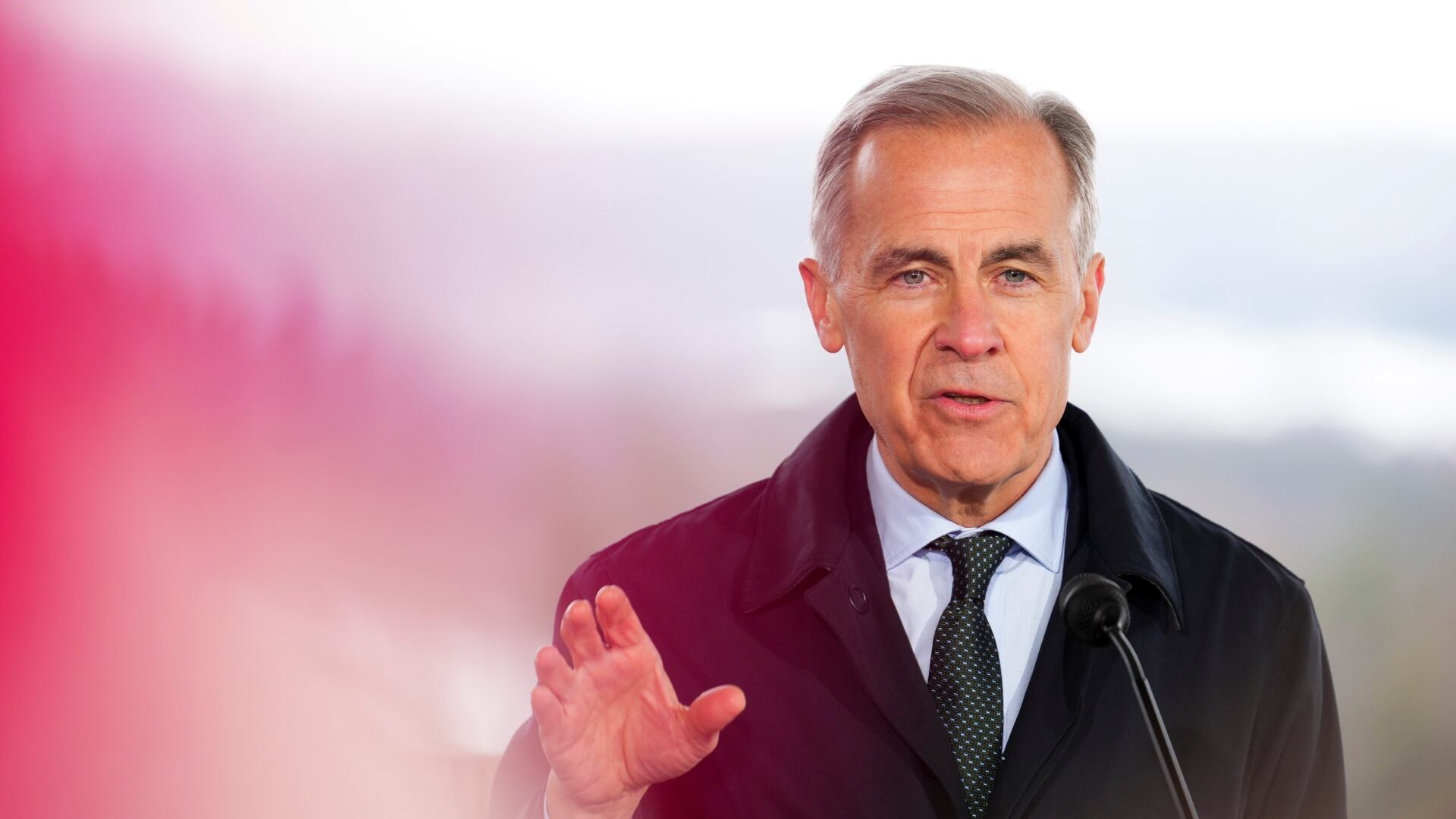
Speaking with reporters at a news conference in Wakefield, Que., Tuesday, Mark Carney said the two governments are gaining ground.
“There’s a lot of momentum,” he said. “Do I think we’re going to announce an agreement tomorrow? No, I don’t think we’re going to announce an agreement tomorrow, but I feel very good about the progress and the state of the discussions.”
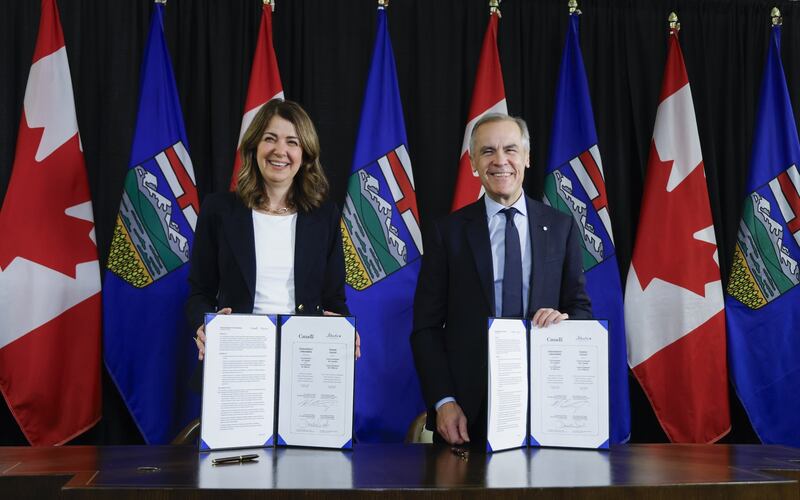
The November memorandum of understanding outlined a number of commitments and steps both levels of government would take to eventually see a new bitumen pipeline built connecting Alberta to B.C. tidewater.
It set an April 1 deadline for four key arrangements that would be needed before a pipeline gets the greenlight, and Smith and Prime Minister Mark Carney have announced “agreements in principle” on two of the items -- methane emissions and project assessment processes.
Smith told reporters Tuesday that there’s still more work to do on an agreed-upon carbon pricing system as well as another memorandum of understanding with the Oil Sands Alliance, formerly known as the Pathways Alliance.
The energy deal stipulated that Alberta’s industrial carbon price would eventually reach $130 per tonne, and Smith said how quickly that price is reached is what is still being negotiated.
“I’ve got a different number than the prime minister at the moment, but we’re hoping to land on the same number,” she said.
Smith pointed to other jurisdictions, like the United States, that currently don’t have carbon pricing systems and said they are more attractive investment environments.
That doesn’t mean she’s pushing for Alberta to not have a carbon price, but Smith said she didn’t want to see Alberta ramp up its price to $130 per tonne too quickly.
“We don’t want to raise it so quickly in this environment, ends up having the exact opposite impact of driving away investment when we’re trying to drive all that investment here,” she said.
“I don’t want to lock in on a certain date just yet. I’d rather the prime minister and I both announce what that date is when we agree.”
She also said that “quite a bit of work” has been done on the separate memorandum of understanding with the Oil Sands Alliance, but that it can’t be finished without the carbon price deal in place.
The alliance is made up of five major oil and gas companies and for years has been planning a major carbon capture and storage project as well as a pipeline to transport CO2 away from the Alberta oil sands.
Carney has said the project is a “necessary condition” of any new bitumen pipeline.
Smith said Tuesday she was hoping to have the carbon pricing deal complete in the next few days, and that the agreement with the Alliance will in turn be finished before the end of April.
“I think we all have a sense of urgency to get this landed,” the premier said, adding that she and Carney discussed the issue Monday.
Smith’s office has set a July 1 deadline for itself to submit plans for the new pipeline to Ottawa’s major projects office, though it has said it could submit it earlier.
New analysis from the Pembina Institute says $40 billion of potential low-carbon projects are at stake due to the uncertainty surrounding the MOU.
“Many of these are real projects with private investors attached, waiting to move ahead once they have certainty that their dollars are indeed wanted in Alberta,” said Jan Gorski, director of government relations for Pembina Institute.
“The MOU negotiation isn’t just about emissions policies — it’s about kickstarting the industrial development that will create investment, jobs and prosperity in this province for decades to come.”
- With files from The Canadian Press

