HAZELGROVE, P.E.I. — A cold spring has put one P.E.I. maple syrup producer far behind where he would usually be by early April, raising concern about how much product he will have to sell later this year.
The slow start is not limited to the Island. Producers elsewhere in the Maritimes say colder daytime temperatures have also stifled sap flow, disrupting the freeze-thaw cycle maple operations depend on.
“It’ll be the first time in 12 years I have such little sap,” said Greg Beamish, owner-operator of Hazel Grove Sugar Shack.
By this point in the season, Beamish said he would normally have about 10,000 litres of sap boiled. Instead, he’s sitting between 3,000 and 3,500 litres, putting production at about one-third of where it would usually be.
If it doesn’t catch up in the next few weeks, he said the hit to his business could be significant.
“If I stay where I am at, it’ll be a poor year,” Beamish said. “It’ll hurt my pocketbook in the long run. I’ll have less syrup to sell. I’ll run out before Christmas, probably.”
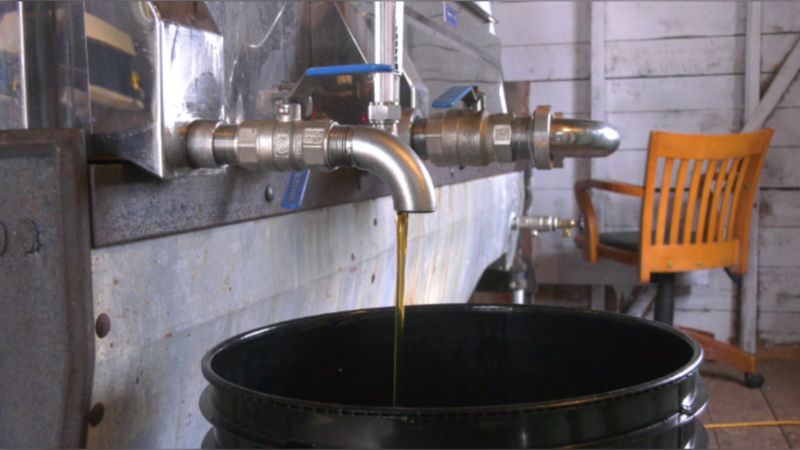
Frederick Dion, executive director of the New Brunswick Maple Syrup Association, said the season is also lagging in his province and that it’ll be difficult to match the production levels seen in 2024 and 2025.
“We’re not over 0 C, so we’re not able to get any sap,” Dion said, referring to daytime temperatures. “There’s still some time, but we will need to have some help from Mother Nature to get things done.”
Dion said lower yields can have a bigger effect on smaller operators, especially if they were planning to upgrade equipment or make other investments in their businesses.
“It will be a setback, because we had a lot of producers that were planning to do some expansion and improvement,” Dion said. “It will be hard to do it at the same rhythm they were expecting to do it.”
In an email to CTV News, Kevin McCormick of McCormick’s Maple in Nova Scotia said weather is only part of the equation. Tapping practices, tubing layout and vacuum systems can all affect how much sap a producer gets.
His own 36,000-tap operation is at about 70 per cent of its usual production so far. McCormick also supplies equipment to producers across the region, and he’s been hearing reports of lower yields.
The uneven season is being felt beyond the Maritimes, too. In Quebec, which produces about 90 per cent of Canada’s maple syrup, the average producer’s harvest was down 30 per cent, according to recent reports.
Despite weaker production so far, consumers may not necessarily see shortages. Quebec’s maple syrup strategic reserve was created to help keep supply moving to domestic and international markets through both strong and weak seasons. The P.E.I. government says more than 90 per cent of the syrup used on the Island is brought in from elsewhere.

