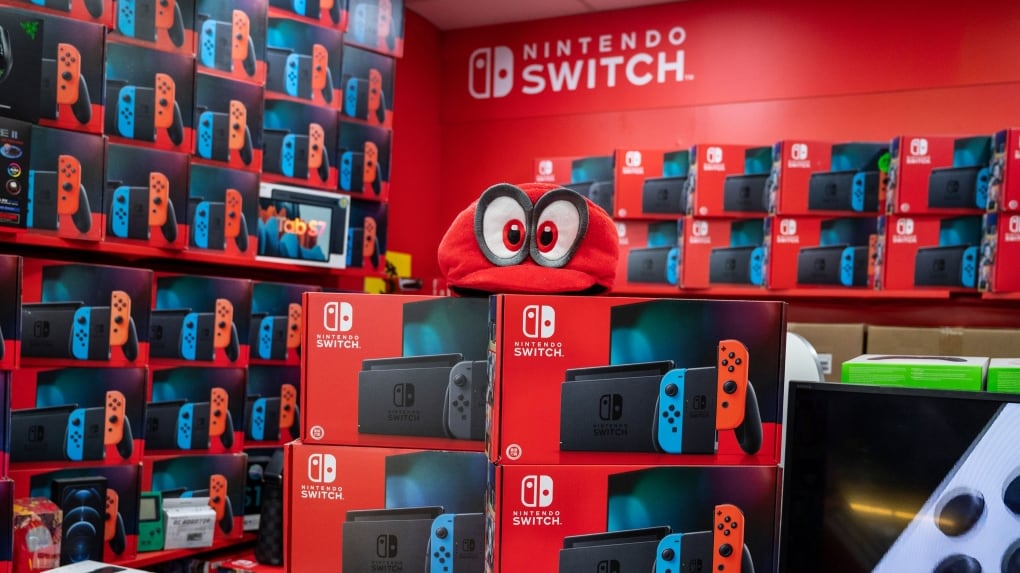
Nintendo’s shares fell seven per cent in Tokyo on Monday after the company hiked Switch 2 prices and as the market frets over a lack of high-profile games to build momentum.
Nintendo posted robust hardware sales for the financial year ended March but, while the company is known for its conservative forecasts, its outlook for this year underwhelmed the market.
The Kyoto-based firm extended the life of the original Switch with games from franchises such as “The Legend of Zelda” and, while it has scored hits such as “Pokémon Pokopia”, it is seen as lacking potential blockbusters.
“The year-on-year decline in game shipment guidance risks signaling that Nintendo lacks confidence in its pipeline,” Morningstar analyst Kazunori Ito wrote in a note.
“However, as user engagement typically accelerates in the second year of a console cycle, we view this as too pessimistic,” he wrote.
Nintendo also said it would raise prices of its Switch 2, with the Japanese language Switch 2 Japan model to go up by 10,000 yen (US$63.73) to 59,980 yen from May 25 and prices in markets such as the U.S. to rise from September 1.
The company has an audience among casual gamers who are seen as particularly sensitive to price hikes, which come as electronics makers grapple with a memory chip price surge.
The second year “is crucial and our non-consensus view is that it will release a Mario AAA game this year,” Jefferies analyst Atul Goyal wrote in a note.
“The... guidance bar is low by design — Nintendo has beaten initial (operating profit) guidance in each of the past four fiscal years,” he wrote.
Unlike more diversified peer Sony, Nintendo remains highly dependent on its core gaming business even as its characters and intellectual property prove popular in movies and at theme parks.
With the PlayStation 5 having spent longer on the market, “Sony is in a much better position to pass higher costs of memory chips to consumers,” Amir Anvarzadeh of Asymmetric Advisors wrote in a note.
Sony, whose shares were up 10% in Tokyo on Monday, forecast lower sales but higher profit at its gaming business. The company also said it was planning a new joint venture to develop and manufacture image sensors in Japan with TSMC (2330.TW), opens new tab as it seeks to control costs.
“These results were at least validating of the thesis that Sony can protect group profits by scaling back PS5 shipments,” Bernstein analyst David Dai wrote in a note.
Reporting by Sam Nussey; Editing by Sam Holmes

