The leaders of Trans Mountain Corp. and the federal agency that oversees the Crown corporation say it’s possible Ottawa will own the Alberta-to-B.C. pipeline indefinitely.
Mark Maki, the president and CEO of Trans Mountain, says it’s a “sovereign pipeline” that operates almost entirely within Canada and that it’s an “incredibly strategic asset” to the country.
At a Canadian Club luncheon in Toronto, Maki was joined on stage by Elizabeth Wademan, who heads up the Canada Development Investment Corp.
Trans Mountain is a subsidiary of the investment corporation and Wademan describes her agency as a “friendly yet challenging shareholder” in the pipeline firm.
Wademan says there’s a case for the federal government to be a long-term holder in the Trans Mountain pipeline and she “personally would love to see it owned by Canadians.”
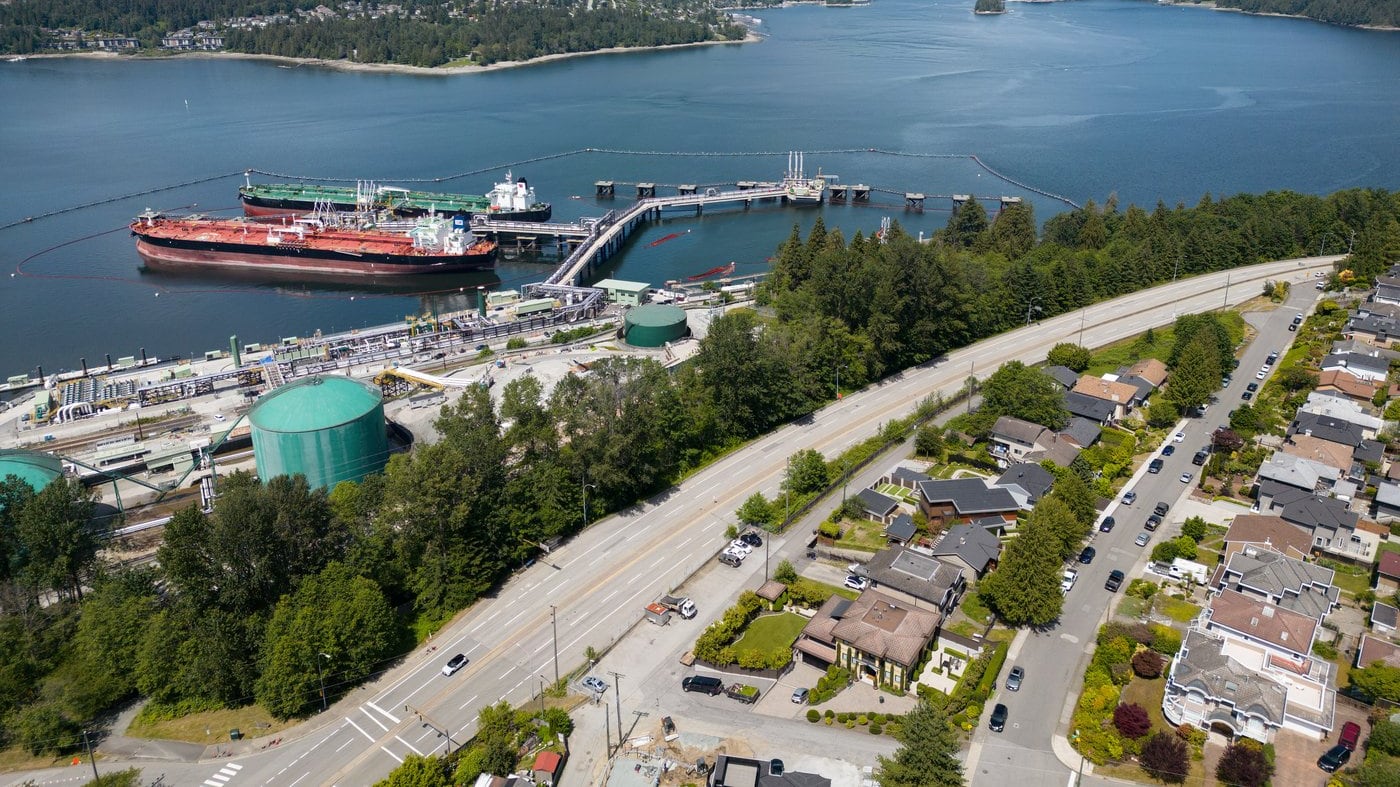
Maki says the Trans Mountain system has been carrying 850,000 barrels of crude per day from the Edmonton area to its docks in Burnaby, B.C., getting close to its capacity of 890,000 barrels per day.
He said that’s not necessarily a good spot for Canada to be in, as it means there’s little flexibility for producers to get their oil to eager buyers across the Pacific. He said Canada needs a second West Coast pipeline — like the one Alberta is spearheading — but that it’s too early to determine whether a northern or southern route to the B.C. coast would be best.
Trans Mountain is among the firms providing technical expertise to the Alberta plan.
Ottawa bought the Trans Mountain pipeline for $4.5 billion in 2018 after Kinder Morgan Canada walked away from an expansion project amid fierce environmental opposition and court challenges. It ended up costing more than $34 billion by the time it started up in May of 2024.
Maki said there’s “no question” Canadian taxpayers will see the investment repaid.
This report by The Canadian Press was first published May 11, 2026.
Lauren Krugel, The Canadian Press

