OTTAWA — Economists expect the annual pace of inflation topped three per cent for the first time since 2023 in April as Statistics Canada’s consumer price index reflects the full weight of the Iran war energy shock.
The agency is set to publish fresh inflation data for April on Tuesday.
A Reuters poll of economists calls for the headline inflation rate to jump sharply to 3.1 per cent in April, up from 2.4 per cent in March, according to LSEG Data & Analytics.
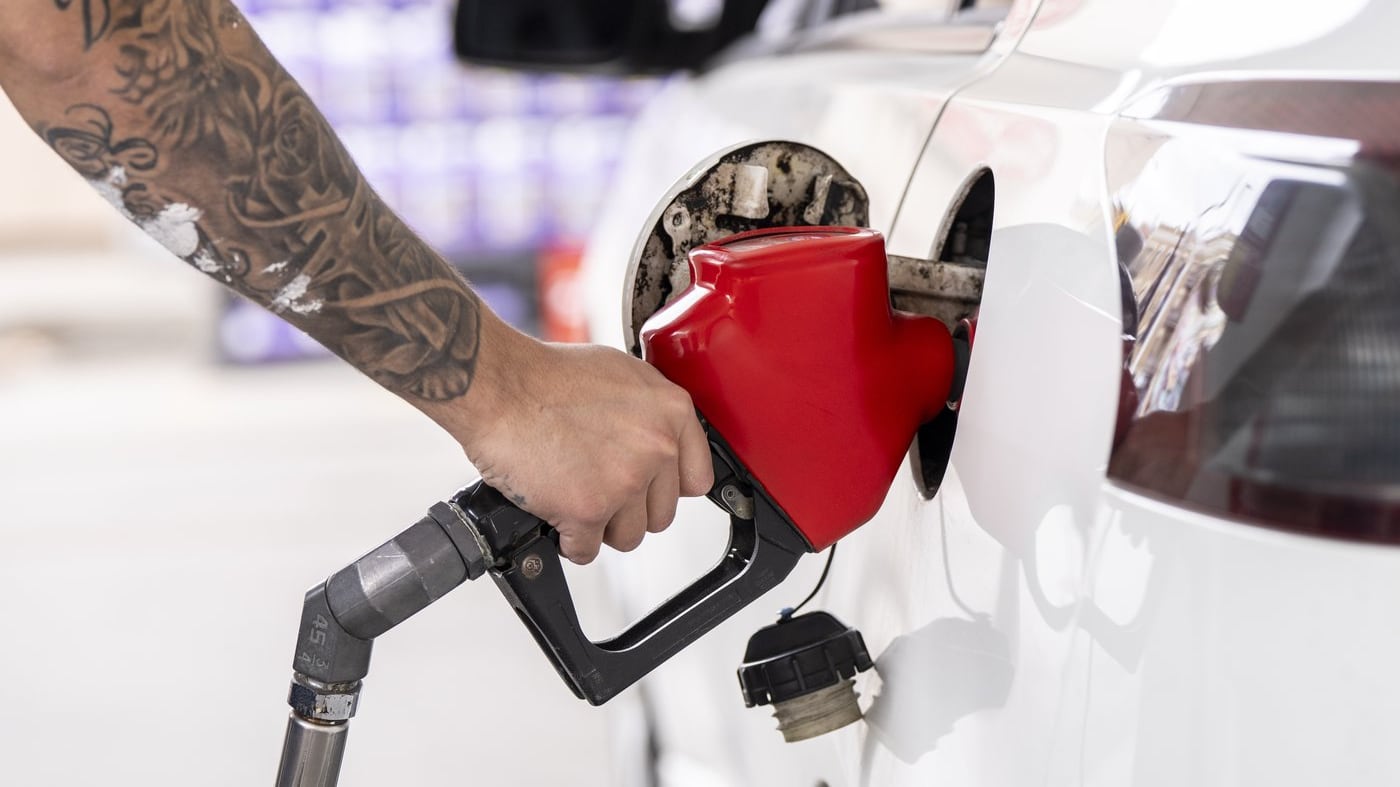
Economists at Royal Bank pin much of the blame on higher gas prices, noting that the average price of gasoline accelerated another eight per cent in April after a 21 per cent surge in March.
Global energy prices have soared since late February as Iran shuttered the Strait of Hormuz in response to U.S. and Israeli attacks, throttling global oil flows from the Gulf region. Prices have remained elevated amid mixed efforts to negotiate an end to the conflict.
Part of the anticipated jump in inflation will also be driven by the end of the consumer carbon price in April 2025.
The federal government’s decision to remove the roughly 18 cents from the price of regular gasoline has helped keep the inflation rate grounded over the past year, but Tuesday’s report will see that relief fall out of the annual price comparison — pushing the inflation number higher rather than depressing it.
The headline inflation rate has floated within the Bank of Canada’s target of one-to-three per cent for the past two years and last topped three per cent in December 2023.
The Bank of Canada has signalled it would look through the initial price hike from higher gas prices tied to the Iran war, but would respond if necessary to ensure any inflationary pressures don’t become entrenched.
‘Magnitude and duration of the oil price shock’
RBC economists Abbey Xu and Annie Zheng said in a note to clients Friday that they don’t expect the energy price spike to reignite broad inflationary pressures, “but that also will depend on the magnitude and duration of the oil price shock.”
“The impact of higher oil prices on energy costs are well-known, so focus will be on the extent to which energy price pressures spread to other broader inflation measures,” they wrote.
Ongoing high prices at the pump have some economists revising their overall inflation forecasts for this year and next.
Desjardins published an updated outlook on Thursday that now projects inflation will peak at 3.1 per cent in the second quarter of 2026.
But that forecast calls for headline inflation to be 0.9 percentage points higher this year and 0.2 percentage points higher in 2027 compared with a previous outlook from February.
Desjardins’ forecast is based on an assumption that the benchmark WTI price for a barrel of oil will hold around US$100 through May before easing to US$75 by the end of next year. All told, the forecast sees gas prices holding roughly 30 cents per litre higher on average in 2026 and 2027 compared with the prewar projection.
LJ Valencia, an economist with Desjardins, said the federal government’s move to waive the federal fuel excise tax for roughly four months starting mid-April will relieve some of the pain at the pumps, and should take a bit of steam out of Tuesday’s inflation report.
“That said, that won’t be enough to offset the significant growth in energy and by extension, gasoline prices, that we’re seeing,” Valencia said.
Beyond the gas pumps, Desjardins expects food inflation will be roughly 0.6 percentage points higher this year relative to the prewar outlook as higher costs for transportation and fertilizer feed through into grocery aisles.
Valencia said other goods that come from overseas, including clothing, will be vulnerable to rising freight rates from the Middle East conflict.
There are a lot of “moving parts” in the inflation forecast right now, Valencia warned, and there’s little certainty on the path oil prices will take amid geopolitical instability.
There are also factors that could weigh on the economy, and inflation by extension — namely, the upcoming review of the Canada-U.S.-Mexico agreement on trade.
Tariffs from the United States are already weighing on the Canadian economy and the threat of tighter trade restrictions in the wake of that review could mean sharper adjustments are in store, Valencia said. A significant slowing in the economy could act as a drag on inflation even in the face of spiking energy prices.
“The persistent uncertainty on that front is obviously also going to play in our inflation numbers moving forward,” Valencia said.
The Bank of Canada has kept its policy rate on hold at 2.25 per cent in four consecutive decisions. The central bank has signalled it’s planning to be “nimble” in the face of competing pressures on the economy and inflation, laying out scenarios that might call for either a higher or lower benchmark interest rate from this point.
Valencia said he expects the central bank will hold to the sidelines for the remainder of 2026 as it waits to see how inflation and economic risks play out.
Craig Lord, The Canadian Press

