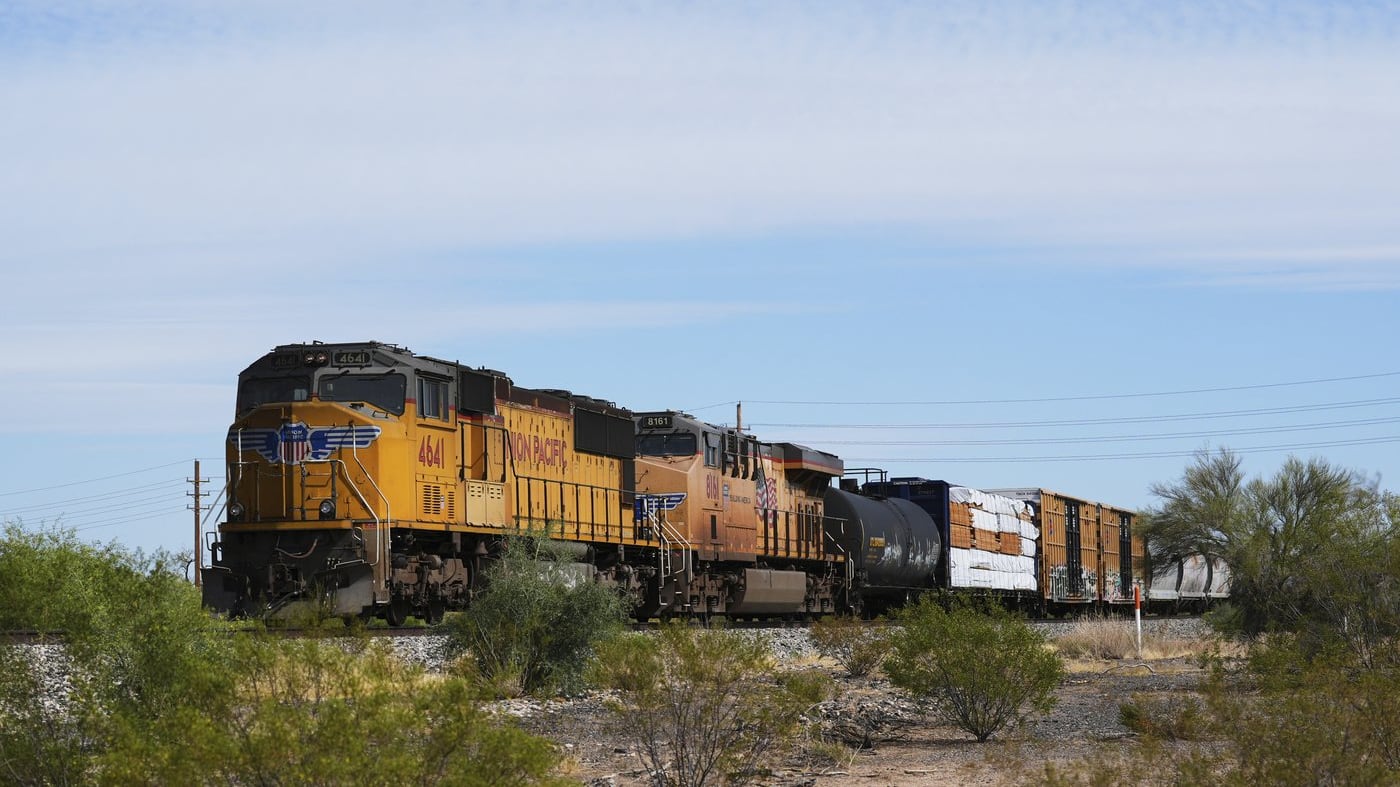
A proposed rail merger in the United States would set off a wave of acquisitions that reduces competition, raises consumer costs and generates freight logjams, says Keith Creel, who heads Canadian Pacific Kansas City Ltd.
The US$85-billion deal would marry Union Pacific’s vast rail network in the Western U.S. with Norfolk Southern’s rails in the east, creating America’s first transcontinental railway and accounting for more than 40 per cent of its freight traffic.
Combining the second- and third-largest railways in North America would trigger more mergers among the current big six, Creel claimed on Wednesday.
“I think it’s inevitable,” CPKC’s chief executive told conference goers in New York City. “This is the first step -- if it gets approved -- to a duopoly.”
Creel also said any bottlenecks at the would-be rail behemoth would ripple out to affect competitors, causing longer freight delays.
“You put a network together that large, that is that connected to Chicago -- and this is just one of many cases -- and it melts down, it affects all of us,” he said, referring to the continent’s railroad capital.
“There’s concerns in Kansas City, there’s concerns in St. Louis.”
Union Pacific CEO Jim Vena has said a merger would have the opposite effect, as more efficient operations shorten transit times and compel rivals to up their game and bring down rates.
A bigger railway would “force our competitors to do better,” Vena said at a Chicago rail conference in March. “If they can’t meet our service ... then they have to do it only one way, and that is price.”
The topic has been churning through boardrooms, ballrooms and train yards over the past 10 months, as fears of market consolidation and lopsided power dynamics between rail carriers and shippers bubble up.
Creel has been among the proposed takeover’s most vocal critics, given Canadian Pacific’s more extensive reach in the U.S. compared with Canadian National Railway Co.
Auto shipments mark one vulnerability for CPKC. The company competes with Union Pacific for car cargo running north-south between Ontario and Mexico.
Measured by revenue, Calgary-based CPKC is the smallest of the six remaining Class One freight railroads, though its tracks now stretch farther than those of Montreal-based CN since Canadian Pacific acquired Kansas City Southern to form CPKC in 2023.
Hauling everything from potash to petroleum, the company extended its sprawling network from Canada through the southern states to Mexico -- no competitor spans all three countries -- and marked the continent’s first big rail merger in more than two decades.
Asked how acquisitions would play out should the one now before U.S. regulators get the green light, Creel declined to offer predictions.
“Who can create the best network to compete against that mammoth, that (is) to be determined,” he said.
“But to suggest or think it’s going to sit still -- no.”
This report by The Canadian Press was first published May 20, 2026.
Christopher Reynolds, The Canadian Press

