CALGARY — Alberta’s latest step toward a possible vote on splitting from Canada adds an unwelcome layer of unpredictability in an already shaky global economic landscape, business leaders said Friday.
More ambiguity means investment dollars stay on the sidelines, projects get more expensive and delays become more likely, said Deborah Yedlin, president and CEO of the Calgary Chamber of Commerce.
“At this moment in time, we don’t have that luxury,” she said.
“Uncertainty is the enemy of investment, and we’re now introduced to new elements of uncertainty.”
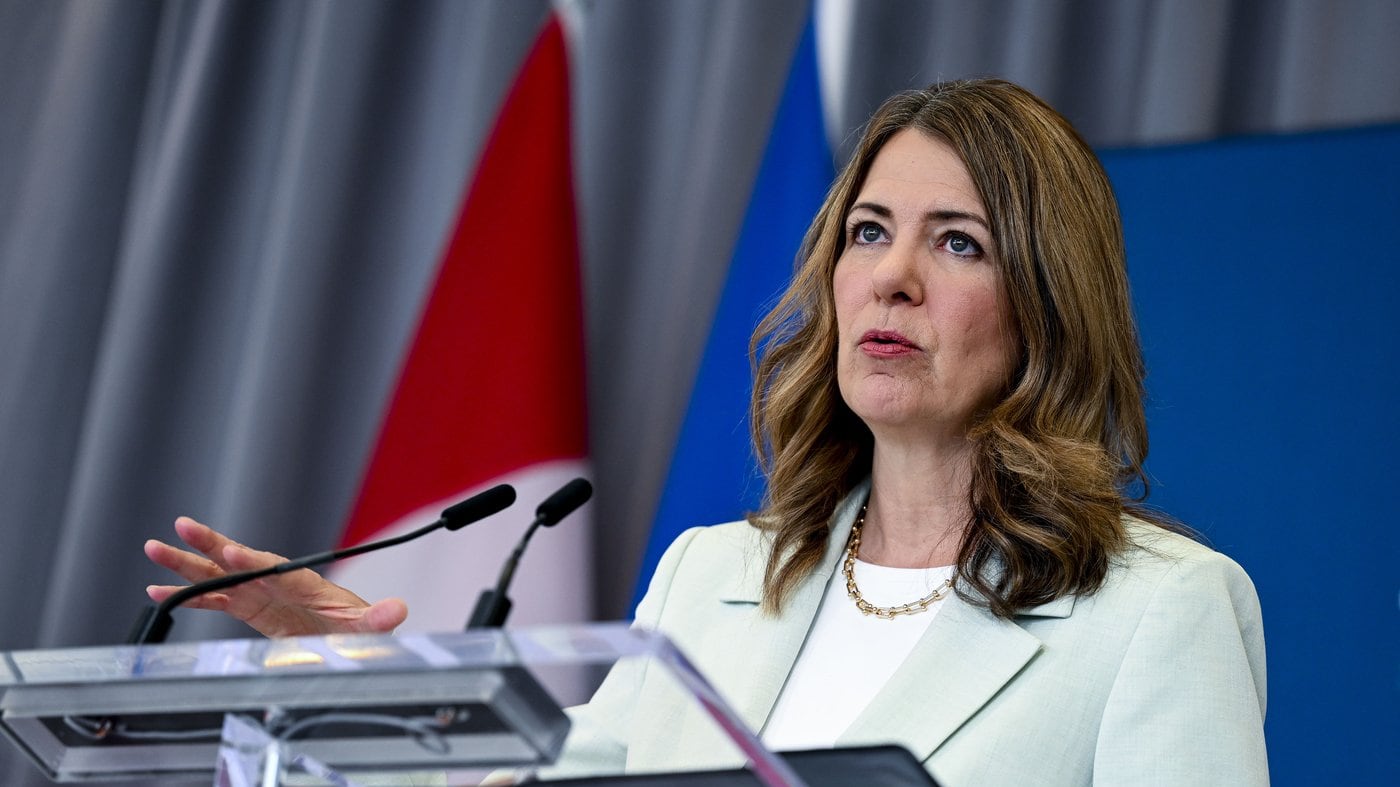
Premier Danielle Smith said in a televised address late Thursday that the Oct. 19 referendum will include a question on whether Alberta should remain in Canada or if the province should hold a binding referendum on separation. Nine other questions announced in February deal with immigration and constitutional matters.
Smith’s announcement came as the war in the Middle East continues to upend the global energy market and Canada looks push forward the infrastructure needed to get more of its oil and gas to customers clamouring for stable supply.
The referendum news also came one week after Smith and Prime Minister Mark Carney resolved one of the last remaining sticking points in the energy accord they signed late last year: an agreement on how to implement an increase in the industrial carbon price. The memorandum of understanding lays out conditions that could see a new Alberta-to-West coast pipeline built to enable more bitumen exports to Asia.
“We don’t need this,” Yedlin said of the separatism debate ratcheting up just as the regulatory logjam holding back resource development shows signs of loosening after a decade.
Yedlin said there’s a concern the rest of the country doesn’t appreciate the gravity of the situation, and that businesses based elsewhere in Canada aren’t immune to the risk of separation.
“It has to be something that we take seriously as a country and as a province because this is not worth breaking up the country for.”
Candace Laing, head of the Canadian Chamber of Commerce, said the country has already been contending with economic costs beyond its control while also recognizing the need to remove self-imposed barriers.
“Prolonged uncertainty around constitutional or political separation brings real risks for investor confidence, economic growth and Canada’s global competitiveness at exactly the wrong time,” she said.
“There are legitimate concerns being raised in Alberta around competitiveness, market access and economic opportunity. Canada’s democratic system is strong enough to address those concerns constructively while continuing to build a stronger, more competitive national economy together.”
The Business Council of Alberta agreed that valid grievances are being voiced in the province, but said separation is not the solution. In a statement, the council said last week’s carbon price agreement shows what’s possible when the provincial and federal governments work together.
“It is an example of a shift by the federal government to recognize Alberta’s importance and unique contributions to the federation. We commend Premier Danielle Smith’s work with Prime Minister Carney to advance a fairer deal for Alberta,” it said.
But the business council said there is more to be done to make the federal-provincial relationship more fair, such as reforming the equalization program and giving provinces more of a say over immigration.
ATCO Ltd. chief executive Nancy Southern has been one of the few Alberta business leaders to speak out in favour of Alberta staying within Canada.
She told reporters after the company’s annual general meeting last week that Albertans should take lessons from the Brexit vote a decade ago, which led to the United Kingdom’s departure from the European Union.
“It has not been a good situation for Great Britain,” she said.
“It’s in my heart and soul to be a proud Canadian as well as a proud Albertan. I don’t believe this discussion should have gone as far as it has.”
This report by The Canadian Press was first published May 22, 2026.
Lauren Krugel, The Canadian Press

