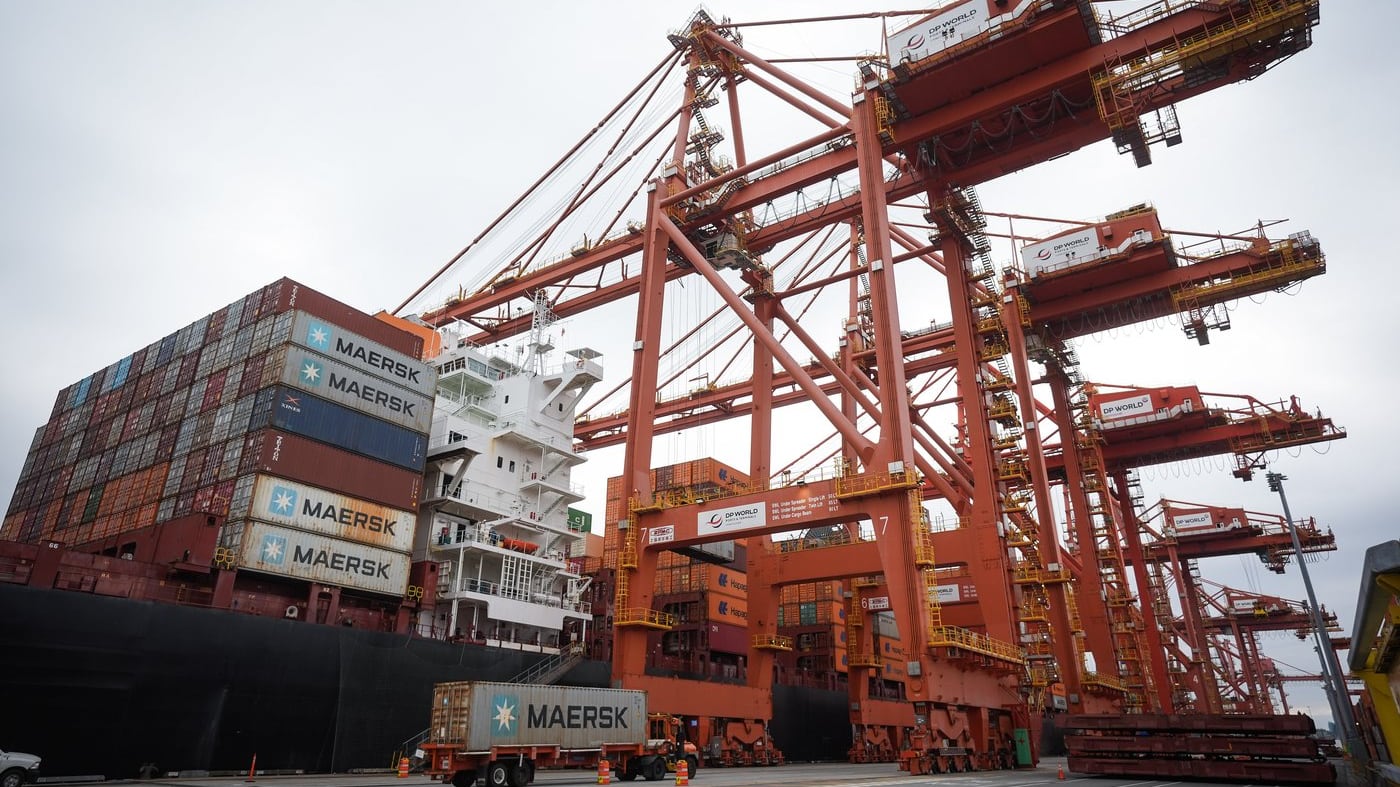
MONTREAL — About three months ago, a U.S. shipping broker saw nearly a dozen loads of copper and electronics bound for artificial intelligence data centres vanish in transit.
The theft cost it nearly US$5 million, estimates Keith Lewis, who was working with the company.
“The bad guys are good at marketing,” said Lewis, head of operations at risk-assessment firm Verisk CargoNet.
“It’s so much more strategic now, so much more targeted ... They know what’s hot and they know what’s selling.”
The incident highlighted an alarming trend: the AI infrastructure boom is driving a dramatic surge in cargo theft, leaving companies and ultimately consumers to pick up the tab. What’s more, crooks are increasingly deploying AI to find and steal those goods in a digitally savvy twist that brings the breach full circle.
The scale
Last year, losses from supply chain crime in Canada and the U.S. rose 60 per cent to nearly US$725 million — more than $1 billion Canadian — as big-rig bandits zeroed in on valuable shipments, according to a report from CargoNet.
Many more thefts likely went unreported because companies fear reputational damage or higher insurance premiums, experts say.
The average theft value rose by 36 per cent, “driven by more selective, high-value targeting by organized groups,” the report states. Theft of metals climbed 77 per cent, fuelled largely by demand for copper products.
That increase is in lockstep with a seemingly unquenchable thirst for AI infrastructure, with copper key to everything from cables and wiring to cooling systems.
“With the emergence of AI data centres, you have a lot of components for those AI data centres being stolen: server racks, RAM, copper,” Lewis said.
“The price goes up because the demand goes up.”
The price of a 25-tonne load of copper rose by roughly a third to more than US$300,000 over the past five years, he said.
Computing hardware and cryptocurrency mining equipment also emerged as “top-tier targets” for criminal groups, the CargoNet report found.
Tools and tactics
To snatch the coveted containers, lawbreakers are relying increasingly on tactics that use AI to tap into valuable company records and generate false paper trails and images.
“Before it was kind of a smash and grab, breaking into a truck,” said Emily Williams, a vice-president at fleet management company Geotab.
Malefactors now use generative AI to automate phishing emails at scale in order to gain access to transport company data and employee credentials, she said. Once inside a system, they are able to find out when and where pricey shipments are scheduled.
Thieves can then pose as legitimate carriers — sometimes drawing on false digital ID gleaned via malware — and offer a low rate to transport the lucrative loads.
One type of scam known as double brokering sees thieves, under the guise of an above-board shipper, subcontract the initial theft to truckers who remain in the dark.
“They’re being told, ‘Go here, pick this up, here’s the purchase order, here’s the invoicing, here’s the manifest.’ Everything looks legit. They even deliver it,” said Jim Yarbrough, who leads the global intelligence team at supply chain risk adviser BSI Group.
“Companies are losing goods right out of their dock doors, and truck drivers are pulling away with them having no idea that they’re involved in a massive crime.”
Once obtained, the costly cargo is rarely seen by legitimate eyes again — until it hits the retail shelf at home or abroad, its illicit backstory now invisible.
“There’s no serial numbers on a spool of copper,” said Lewis.
On top of breaching logistics company data, artificial intelligence can be used to generate false shipping orders and even photos to send to scammed clients as “proof” the load is en route, or as a delay tactic.
“I send you a picture of a broken-down truck that I made in AI. I’ve got a check-engine light on the dash — I made it in AI. Hey, the police have my truck pulled over — it’s a police car made on AI next to a truck,” Lewis said.
“I see this all the time.”
The methods fit into a broader pattern of sophisticated online tactics that revolve around identity theft and drain the economy of millions of dollars, as the higher cost of living fuels demand for pilfered products. GPS spoofing, or fake signals that mislead tracking systems on the true whereabouts of a shipment, offers one example of tech-heavy thievery.
Often, buyers are arranged in advance. “Most of these items are sold before they’re stolen,” said Lewis.
The cost
Canada ranks in the top dozen countries for cargo theft, according to a 2025 report from BSI Consulting and transport insurer TT Club.
The country placed 12th in the number of cargo theft incidents worldwide, accounting for about one per cent of incidents globally — a figure grossly disproportionate to Canada’s size and reputation as a safe, low-crime nation.
Previous CargoNet reports have found Ontario accounts for the vast majority of stolen freight incidents in Canada, with the Toronto area as the biggest hot spot.
Meanwhile, the millions of dollars in losses companies are incurring make their way back to the consumer, as greater insurance and security costs get built into the retail price tag.
Fighting back
To beat back the tide of filched freight, experts recommend tactics ranging from in-cab cameras to integrated security systems and more resources for law enforcement.
“The core problem is fragmentation,” said Williams.
“When fleets manage their vehicles and their trailers and their security systems ... all in separate systems, they’re creating those blind spots that the criminals are looking for,” she said.
Better security comes through sensors, cameras and other forms of “real-time visibility” that flag inconsistencies.
“If there’s a planted driver and they call in a fake maintenance delay just to buy time, the system can actually check and say, ‘Well, what’s the fault code? What’s the engine data?’” said Williams.
Improved vetting of contractors and employees marks another security measure. For example, the carrier contracted to haul those dozen truckloads of now-vanished copper and electronics in one go said on its profile they sported only a half-dozen trucks — a “red flag” hinting the company is phoney, said Lewis.
“How do you pick up 10 or 11 loads when you have six trucks?” he asked. “Something’s not right.”
“Sometimes we’ve accepted this as just the cost of doing business. But we’ve got to slow the roll,” he continued.
“We’ve got to have better defences.”
Christopher Reynolds, The Canadian Press

