
OTTAWA – The secret weapon in South Korea’s bid to win the lucrative submarine contract is code named “Project Beaver.”
Facing market conditions that blocked it from bringing an electric vehicle plant to Canada, the South Koreans drafted a plan to manufacture hydrogen long-haul freight trucks and build dozens of charging stations in Canada, beginning in 2030. The proposal was submitted as part of Hanwha’s bid for the submarines, and the details were kept under wraps until now.
“Project Beaver” will use the technology developed by Hyundai Motors and transplant it to Canada.
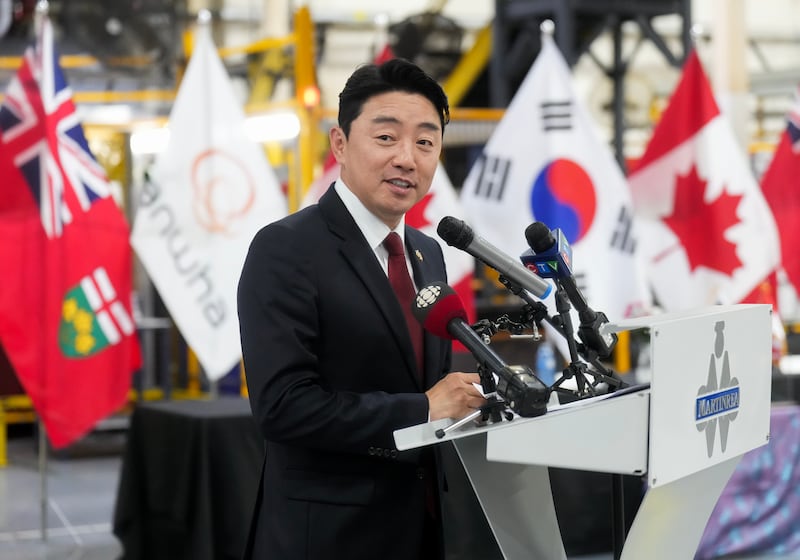
Details about the project, named after the industrious rodent that inhabits Canada’s waterways, were disclosed to CTV News during an exclusive interview with Kang Hoon-sik, the chief of staff to South Korean President Lee Jae Myung.
“This will be a Korean brand where there will be Canadian parts in the manufacturing operations – with raw materials from Canada,” said Kang through a translator in a 45-minute interview with CTV News.
“Once we win the bid for the submarine contract, Hyundai Motors is going to help Canada build its ecosystem on hydrogen,” Kang said.
Phase one in 2030
Kang, who also serves as special envoy for strategic partnerships, said Seoul would invest more than $3.1 billion in Canada to build a new hydrogen transport truck industry and create 9,000 jobs. The investment is contingent on South Korea winning the contract to supply the Royal Canadian Navy with 12-diesel-electric submarines.
Hyundai Motors, which has a defence component, is partnering with Hanwha on its bid. The South Koreans are competing with German shipbuilder ThyssenKrupp Marine Systems (TKMS) in a heated procurement battle over a deal that could be worth more than $100 billion over the lifespan of the submarines.
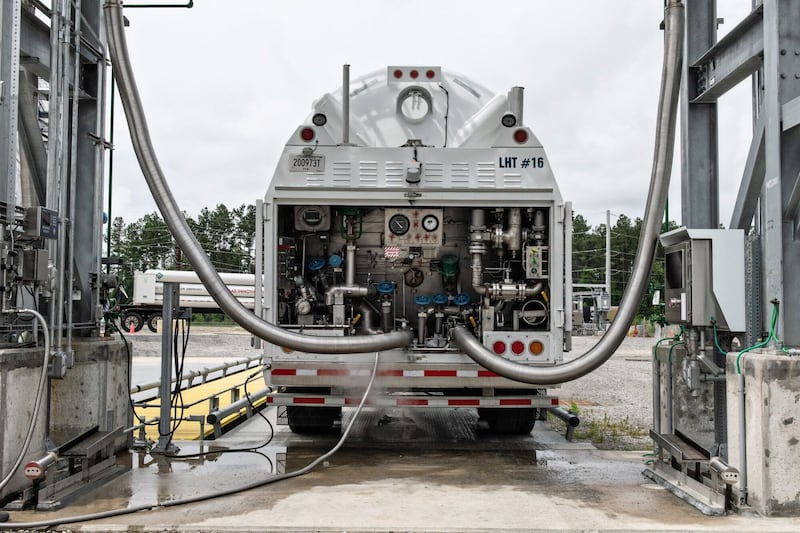
According to the outline seen by CTV News, phase one is set for a 2030 start and would involve the construction of a hydrogen liquefaction plant in British Columbia, which would turn the gas into liquid. Thirty-two charging stations would be built in B.C. and Alberta, while a hydrogen transport vehicle manufacturing plant would likely be constructed in Ontario.
After 2035, 160 more charging stations would be added. There is also the possibility that Canada could help South Korea manufacture its hydrogen trains, currently in testing, for future export.
Why not a Korean EV plant?
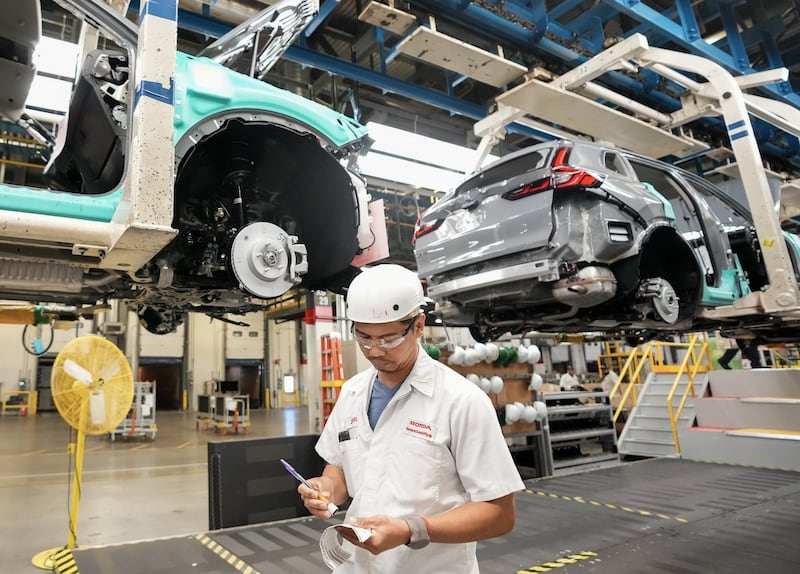
The federal government has been explicit about its desire to diversify and build resilience in Canada’s auto industry, given the impact of the U.S. tariffs. Canada is making 30 per cent fewer cars than it did before U.S. President Donald Trump launched his trade war.
In January, Industry Minister Melanie Joly and South Korean Trade Minister Jung-Kwan Kim signed a memorandum of understanding with an “intention to co-operate on advancing a Korean automotive industrial footprint in Canada.”
Kang says South Korea sees hydrogen vehicles as a “growth engine,” and has even constructed a hydrogen charging station on the grounds of its National Assembly to demonstrate its commitment to expanding the clean technology.
CTV news asked Kang why Hyundai couldn’t be persuaded to build electric vehicles for consumer use instead of hydrogen freight trucks. South Korean auto makers account for 12 per cent of vehicle sales in Canada, and Hyundai had previously operated an assembly plant in Bromont, Que., before shuttering it in 1993.
Kang cited U.S. pressures and Chinese access to Canadian markets.
“During Prime Minister Carney’s visit to China, he committed to the Chinese side to import a certain amount from EVs from China,” Kang said, adding that it’s difficult for South Korea to compete with China “who has taken the lead” on EVs.
The special envoy also said South Korean automakers were facing the same pressures as Stellantis. Last October, Stellantis announced that it was shifting production of its Jeep model from Brampton, Ont. to Illinois.
“The U.S. told (Stellantis) it will be more beneficial for them to come to the United States … our companies are under similar pressure.”
Diversifying auto industry
The proposal to make hydrogen transport trucks is in addition to an agreement signed by Hanwha and the Automotive Parts Manufacturers’ Association to build armoured artillery vehicles in Canada.
During his interview, Kang also emphasized that an independent analysis by KPMG of Hanwha’s submarine bids shows that it will create 430,000 jobs and add $96.3 billion to Canada’s economy from 2026 to 2044.
The special envoy said that Hanwha has signed 75 MOUs with Canadian companies to help build Canada’s defence industrial base. Kang said South Korea is also committing to importing 3.4 million tons of LNG annually, more than five times the current amount, and expanding investment in LNG Canada. South Korea is Canada’s third largest market for crude oil, and the Asian nation says it will also buy $9 billion in critical minerals.
Last week, Germany’s defence minister Boris Pistorius said that the TKMS bid would give Canada an $86-billion economic boost and create more than 650,000 job years. The German shipmaker has not provided CTV News with a breakdown of its calculations.
The government will need to weigh all economic factors before the prime minister announces the winner of the submarine contract before the end of June.
Correction
A previous version of this story said South Korea is committed to importing 3.4 billion tons of LNG. The story has been updated to correct the figure to 3.4 million tons.

