TORONTO — Christina Notario doesn’t need a government report to tell her food keeps getting more expensive. She sees it every time she goes to the checkout counter.
“I live on my own, but my grocery bills, I would say, are maybe close to $400 a month, and it’s just for myself,” she said outside a produce market in downtown Toronto. “It’s insane.”
The latest numbers back her up. Canada’s inflation rate climbed to 3.2 per cent in May, its fastest pace in more than two years. Statistics Canada noted food was again a contributor.
Groceries were up 4.3 per cent compared with a year ago. That’s the 16th month in a row that food has risen faster than inflation overall, a streak that has steadily eaten into household budgets.
Produce was the worst of it. Fresh fruit rose 5.3 per cent and fresh vegetables jumped nine per cent, with steep increases for staples like lettuce, broccoli and cauliflower. Tomatoes alone soared 45 per cent, which Statistics Canada blamed on poor growing weather in Mexico and farmers there planting less amid worries about U.S. tariffs.
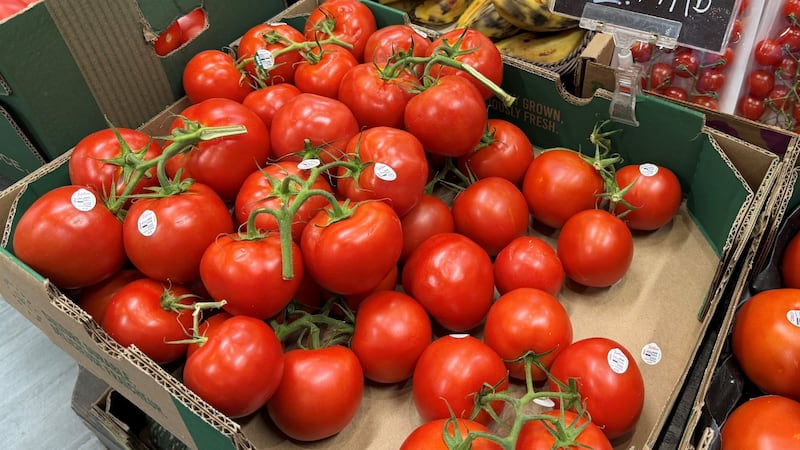
Notario said she tries to buy her produce outside downtown Toronto, where she says it’s cheaper.
“Like, no wonder people go for junk food instead,” she said. “It’s just crazy expensive for produce.”
Doug Porter, chief economist at BMO, said it isn’t normal to get hit on both fruit and vegetables this time of year.
“Fruit and vegetables in general both popped in May,” he said. “Usually that’s kind of the month where we get a little bit of relief.”
Other shoppers told the same story. Olivia Cross, who CTV News spoke to while shopping at a produce market, called rising prices “definitely frustrating” and said she shops around for cheaper grocers. Alisson Zani, who also hunts for deals from store to store, said it’s the gap between prices and paycheques that gets to her.
“The price is increasing. The rent is. The food. But our salary is not changing,” she said. “So I have a big frustration about that.”

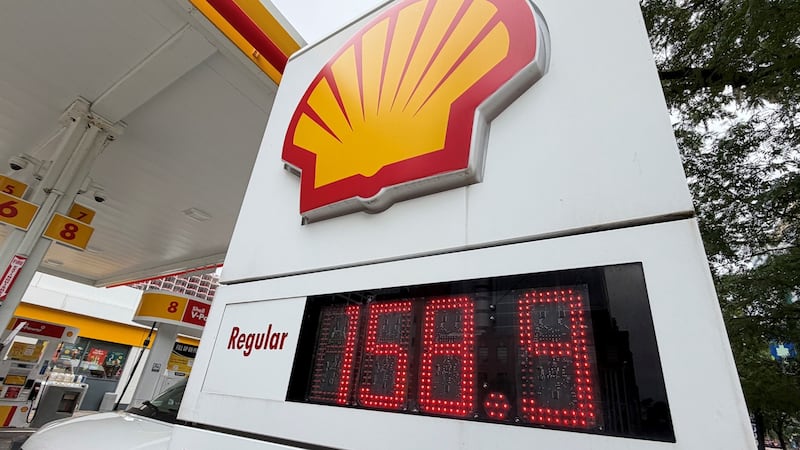
Of late, there has been a bright spot. At a downtown Toronto gas station where the price was closer to $2 a litre last month, it has slipped below $1.60, and motorist Kam Naidoo is relieved.
“Honestly, it’s awesome,” she said while topping up her vehicle. “I haven’t filled up with gas in a while because it’s been a bit unaffordable. But this is great.”
The soaring price of fuel in May is what largely drove overall inflation higher. Pump prices were up more than 33 per cent year-over-year after the Middle East conflict between the United States, Israel and Iran led to the closure of the Strait of Hormuz.
With gas down about 10 per cent this month, Porter said the May inflation number could be a peak that will now ease.
“This might represent the high-water mark for inflation this year,” he said.
He noted with gas stripped out, prices were up a much more modest 2.2 per cent. The cost of air travel did climb 7.4 per cent as airlines paid more for jet fuel.
Even computers and tech got pricier – up 3.9 per cent – as the data centres powering artificial intelligence gobble up parts like memory and solid-state drives.
Porter said that last one is a slightly worrying sign, because tech has spent years helping to hold inflation down.
“There’s a lot of demand for memory chips, of course, which even companies like Apple have warned are starting to lead to higher prices,” he said. “It’s been an area that for years and years has tended to dampen inflation. It’s not good news that it’s actually starting to add a little bit to inflation.”
Shelter prices rose a more modest 1.7 per cent and household appliance prices fell 2.1 per cent.
As for where things go from here?
“I suspect even with some relief at the pumps, we’re still going to end up with inflation close to three per cent in the next couple months,” said Porter.
“If there’s some good news, it’s that there really aren’t that many signs that this is broadening out to a lot of other areas, but there are some problems.”

