OTTAWA -- The federal government is exploring possible guardrails or alternatives to using what she says is a “contentious” section of the Labour Code that allows Ottawa to intervene in bitter bargaining conflicts, Jobs Minister Patty Hajdu said this week.
Hajdu’s department launched broad consultations with employers, unions and other stakeholders this spring about changes they’d like to see to the Canada Labour Code.
In an interview Thursday, Hajdu said the initial feedback was fruitful but Ottawa has decided to do a second, more focused round of consultations over the summer to go deeper on certain questions.
The federal government wants to modernize the Labour Code to promote earlier engagement between parties and cut down on the number of times bargaining ends with a prolonged work stoppage warranting Ottawa’s intervention, Hajdu said.
“The goal of these consultations is to understand how to minimize those times where relationships are so frayed, where people are so angry with each other, that coming to an agreement about the next five years seems like an impossible task,” she said.
“And then also to provide tools that when, in those rare cases that have broken down, there is a path forward with help from the (Canada Industrial Relations Board).”
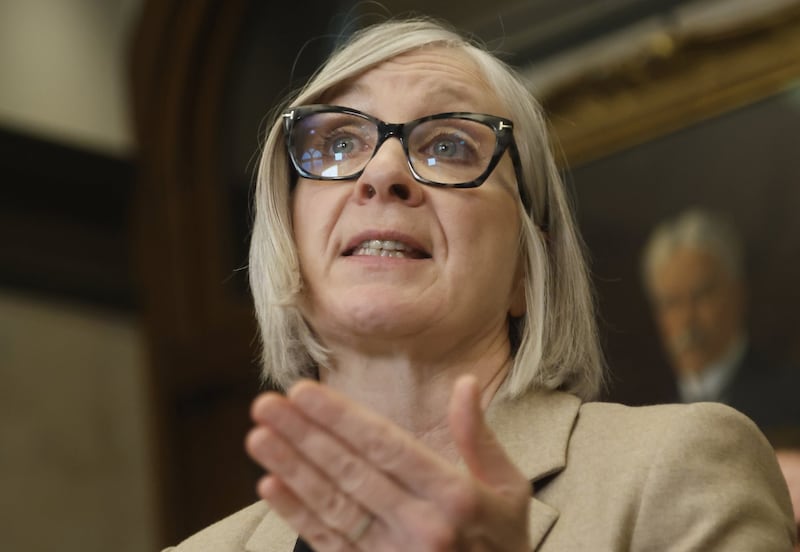
Bea Bruske, president of the Canadian Labour Congress, said in an emailed statement Friday that the first round of consultations were rushed but she trusts the government heard “loud and clear that the right to strike is a fundamental right we will not negotiate on.”
“In the rare occasions when bargaining requires job action, Canadians expect the government to act as a referee, ensuring fairness and respect for the rules,” she said.
“But more and more, the employers have expected the government to get in the game and tip the scales on their behalf.”
Ottawa has intervened in a number of high-profile labour disputes in recent years by invoking Section 107 of the Labour Code, which allows the minister to refer parties to the industrial relations board when they’re at odds. Those included labour stoppages involving railways, ports and Canada Post.
The board can then put the two parties into binding arbitration if warranted to end a strike or lockout.
The labour department got an earful about Section 107 from employers and unions alike during the spring consultations. Hajdu said the second round will delve deeper into how the tool should or shouldn’t be used.
“We heard deep differences between employers and unions about the importance of Section 107 and whether or not it should be kept,” she said.
Hajdu asserted there was a “quiet consensus” during the consultations on the need for a tool to give the minister the power to “foster industrial peace” in the roughly five per cent of cases where the parties are unable to get to an agreement at the negotiating table.
So far, Hajdu said, the government has heard there should be more transparency about when Section 107 should be deployed, and more advance consultations with parties before it’s used. Hajdu said the federal government will also be open to hearing about alternatives to Section 107 in the review’s next phase.
In her statement, Bruske said that Section 107 is effectively dead, since it was invoked to quash the Air Canada flight attendants strike last summer but workers stuck to the picket lines anyway.
She disagreed with Hajdu’s claim that a tool like Section 107 is necessary when the government has the power to pass back-to-work legislation.
“If you’re going to break a strike, at the very least debate it in Parliament and let Canadians see where their MPs stand on protecting workers’ rights,” Bruske said.
Other topics Ottawa will ask about during the review are expediting grievance arbitration, bad faith bargaining and accusations of wage theft. Issues already covered in the first round of talks included AI and automation and health and safety precautions.
Hajdu said the federal government has also been approached by unions seeking a change to the Labour Code for workers organizing for their first collective agreement -- an area she said the legislation hardly covers in its current form.
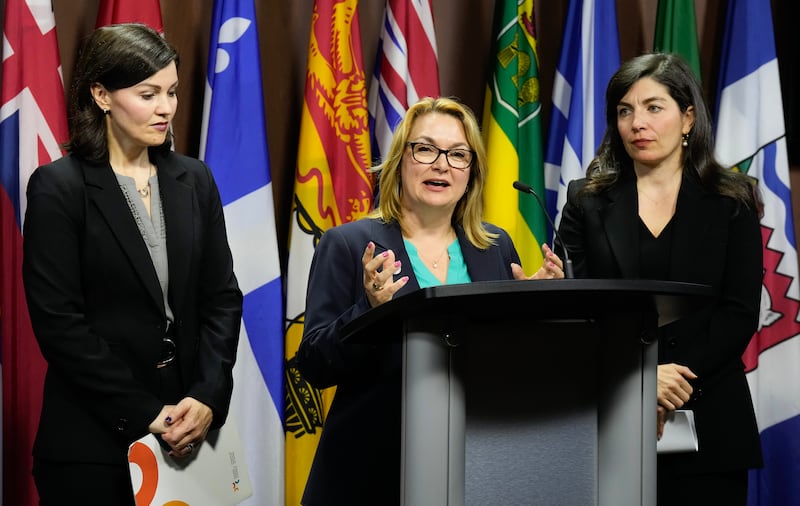
Bruske said her main fear is that the consultations will be used to weaken the right to strike. She said the Canadian Labour Congress’s submissions offer legislative and non-legislative ways to improve labour relations in federally regulated industries.
Hajdu said the right to strike is protected by the Charter of Rights and Freedoms and it’s not something she or the government is looking to touch.
The Senate transport and communications committee published a report last month arguing that Canada needs tools to avoid major labour disputes like the ones that shut down national railways in 2024. Those disruptions put Canada’s reputation as a reliable trading partner at risk, senators on the committee argued.
But Hajdu offered a different take when asked how current economic anxieties collide with labour rights.
She said while the government is focused on building a strong economy, that economy is not separate from its workers, their wages, benefits and their pensions.
Hajdu pointed out that union representatives are often beside Prime Minister Mark Carney and his ministers during major project announcements, reflecting the critical role the unionized trades will play in fulfilling Ottawa’s infrastructure agenda.
Canadians, even those not in unions, rely on strong unions to advocate for the kinds of collective benefits some might take for granted today, Hajdu said. Most Canadians didn’t enjoy the concept of a “weekend” until unions fought for it, she noted.
“We need strong labour relations to reassure the world that we can get our products to market … but we also need the protections for unions when they feel their rights have been violated,” Hajdu said.
The minister said there’s currently no timeline for tabling legislation to amend the Labour Code based on the ongoing consultations. Her department is expected to product a report about what stakeholders said during consultations.
By Craig Lord
This report by The Canadian Press was first published July 3, 2026.