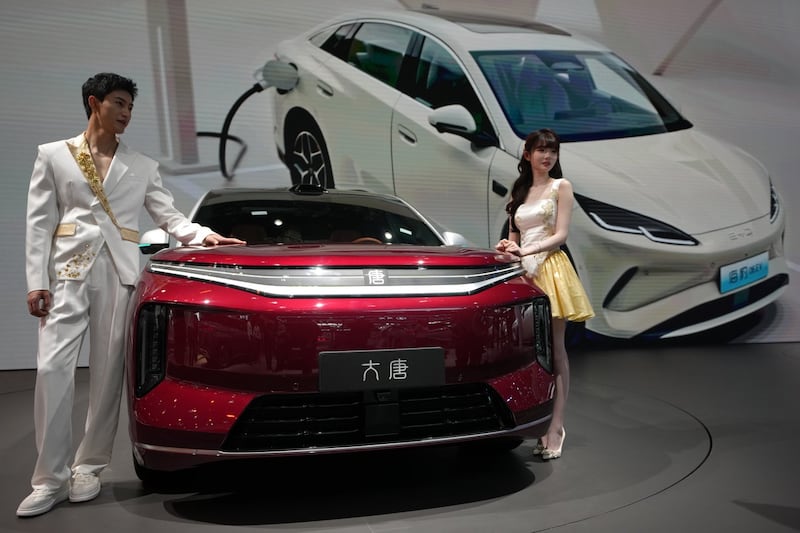
Dongfeng Motor Corporation Ltd. is the latest Chinese automaker preparing to enter the Canadian market, and its planned entry likely represents a broader effort by Chinese automakers to establish a strong presence in North America, says one auto analyst.
Intense domestic competition is pushing China’s automakers to pursue growth abroad, Dominic Chiu, a senior analyst at Eurasia Group, told BNN Bloomberg.
“They’re running on very thin margins, and that’s a main reason why they are expanding to international markets. Not just exporting, but also investing in manufacturing directly in other countries to produce EVs,” says Chiu.
“And Canada is a hotspot.”
- China’s carmakers rush to Canada as a ‘practice run’ for U.S. sales
- First Chinese EVs arrive in Canada, but they come with a high price tag
Chiu describes Dongfeng as one of the big four auto companies in China. The company is headquartered in Wuhan and operates in more than 100 countries.
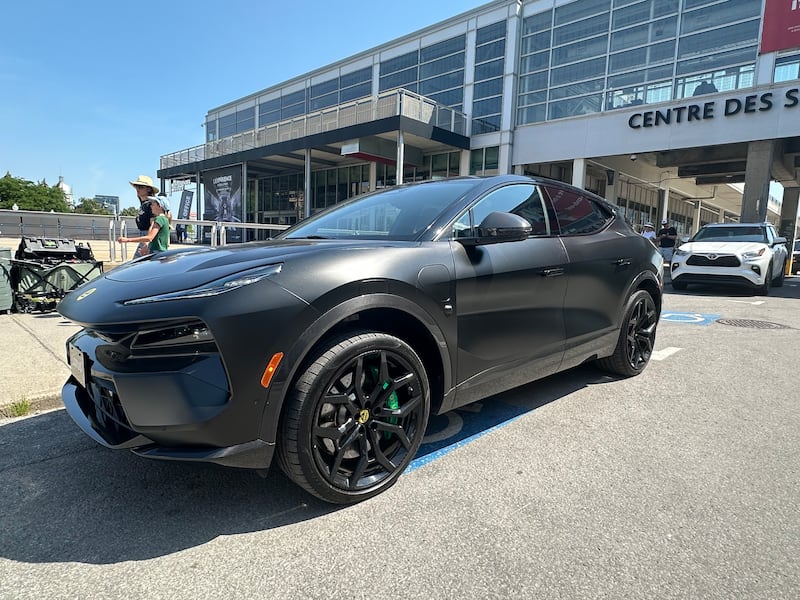
It is reportedly currently working to certify vehicles for sale in Canada. Last week, Lotus, owned by the Chinese Geely Group, became the first Chinese-built EV available for sale in the country after it shipped its first Eletre EVs that ranges from $119,000 to $159,000.
All this comes months after the federal government’s decision earlier this year, to lower tariffs on a limited number of Chinese electric vehicles to save Canada’s agricultural sector from Chinese trade retaliation.
Canada becoming a ‘hotspot’
Canada has become particularly attractive following the trade arrangement reached by Prime Minister Mark Carney and Chinese President Xi Jinping, says Chiu.
Under that arrangement, Canada will initially allow up to 49,000 Chinese EVs per year to enter the country at a reduced tariff rate of 6.1 per cent. The vehicles had previously faced an additional 100 per cent surtax imposed by the former federal government.
“We’re seeing a multi-year roadmap for Chinese EV companies, regardless of whether it’s state-owned or private, to eventually invest and gain a manufacturing foothold in the North American market, starting with Canada,” says Chiu.
‘A hard bargain’
The federal government says it expects the arrangement to encourage Chinese joint-venture investment in Canada, while supporting domestic auto manufacturing and the development of the country’s EV supply chain.
However, Chiu says Chinese automakers may seek significantly more control over any Canadian operations than Ottawa or domestic manufacturers expect.
“I think they’re willing to put up money, given the interest that multiple Chinese EV and car companies have expressed in recent months,” he says.
“They are more likely going to drive a hard bargain.”
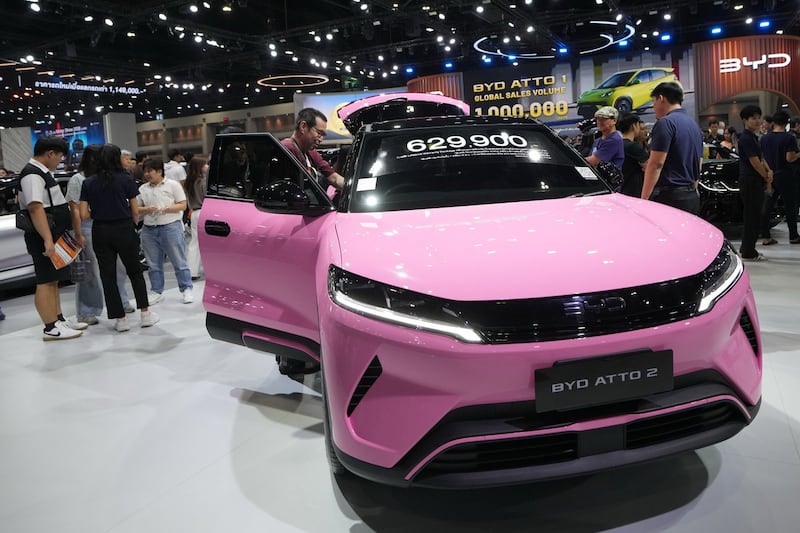
Chiu gives the example of Chinese automaker BYD, whose executives have indicated the company would prefer to own its Canadian manufacturing operations outright or enter the market through an acquisition rather than through a joint venture.
“So it’s going to be rough for Canadian manufacturers to negotiate with their Chinese counterparts,” he says. “But the interest is definitely there, and I don’t think it’s going to be withered away by complications between Ottawa and Washington.”
U.S. market remains difficult to access
Chinese automakers’ expansion into Canada comes as Ottawa prepares for further negotiations over the Canada-U.S.-Mexico Agreement (CUSMA) and Washington maintains strict restrictions on Chinese-connected vehicles.
Chiu says Chinese companies ultimately hope to establish a presence in the U.S., but Canada is not necessarily intended to serve as a back door into the American market.
“I think that is the long term hope. The first step, of course, is to establish a foothold in the broader North American market through Canada,” he says.
“Normalize the presence of Chinese EVs first by imports and then by manufacturing.”
The U.S. Commerce Department’s Bureau of Industry and Security issued a rule in January 2025 restricting the import and sale of certain connected vehicles and related technology linked to China or Russia. The department cited concerns that cars collect sensitive data and can be controlled remotely.
“The entire U.S. market is a different kettle of fish,” Chiu says.
“I think negotiations between Beijing and Washington are happening on a separate track from Canada’s.”
Lower-priced vehicles expected
The first Chinese-made EVs entering Canada under the new framework have largely been positioned at the luxury end of the market, Chiu says.
Chiu argued that introducing luxury models first could ease political resistance to the policy change in both nations.
“You know, a six-figure luxury car is politically more inert in Washington and domestically more palatable in Canada,” he says.
More affordable vehicles are likely to arrive as companies such as Dongfeng and BYD expand their Canadian offerings, Chiu says.
“The price point will go down. In fact, I think the quota that was agreed upon by the two governments have a built-in affordability escalator,” he says.
He highlights that the trade deal dictates that the share of imported Chinese EVs priced under $35,000 will scale up from 10 per cent to 50 per cent over five years.
“Which means that the Chinese EVs that are available in the Canadian market will become cheaper as time goes on,” says Chiu.

