CHURCHILL, MAN. – Prairie grain is once again being shipped out of Churchill in northern Manitoba.
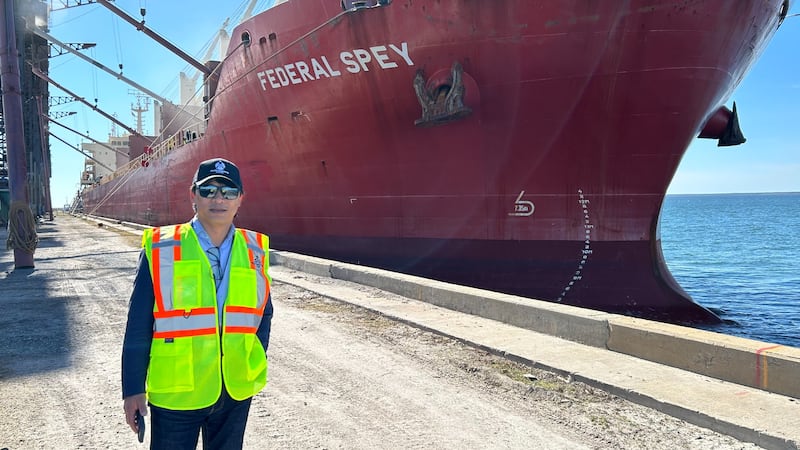
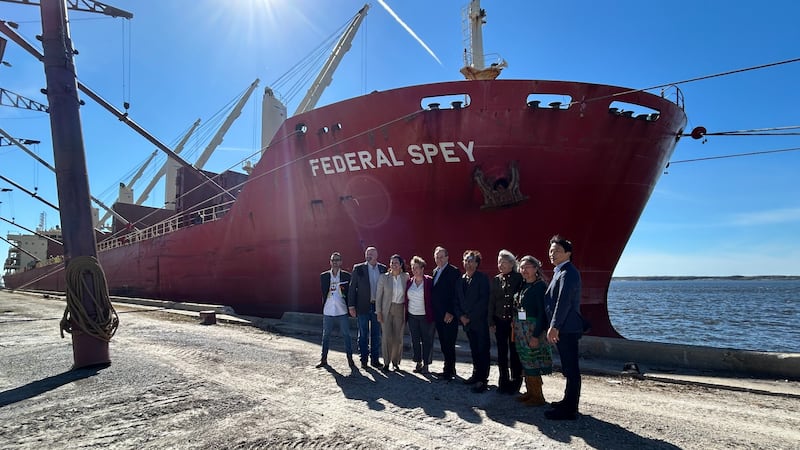
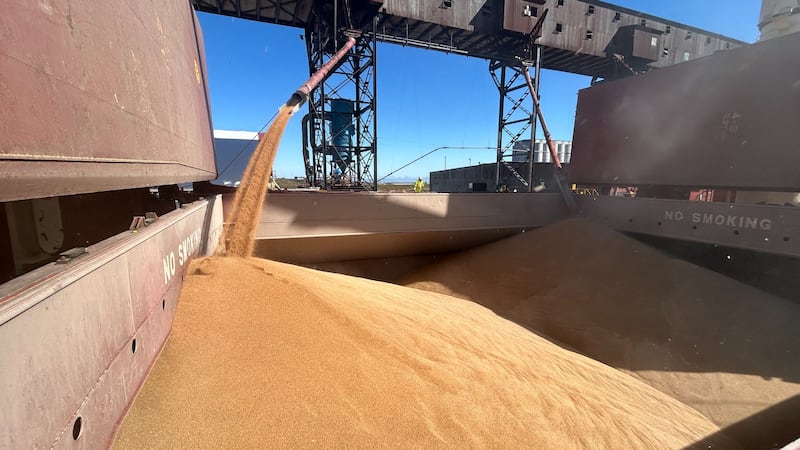
Approximately 30,000 tonnes of Canadian durum wheat, supplied by Saskatchewan-based AGT Foods, is being loaded at the Port of Churchill and will be shipped to customers in Europe this week.
This marks the first shipment through the Port of Churchill since 2020, and is the first of three grain shipments expected out of the port this season, which will send more than 100,000 tonnes of grain to Europe.
“Seeing Prairie grain once again moving through the Port of Churchill to European markets is an important milestone for Manitoba agriculture,” said Manitoba Agricultural Minister Ron Kostyshyn.
“Our producers need more ways to reach customers around the world, and Churchill provides an important northern gateway that can help diversify our trade, strengthen our supply chains and create new opportunities for Manitoba and Western Canadian agriculture.”
Grain shipments to the port were halted in 2020 due to the COVID-19 pandemic and the failing rail line, which has now been largely completed.
Chris Avery from Arctic Gateway Group (AGG), which owns and operates the port, says this will be the most diversified shipping season in the port’s history.
“We’re very much open for business,” he said. “We’re once again a strategic asset to Canada, but that set of commodities is a mix of commodities. It’s critical minerals, potash, Arctic resupply. It’s many other goods as well.”
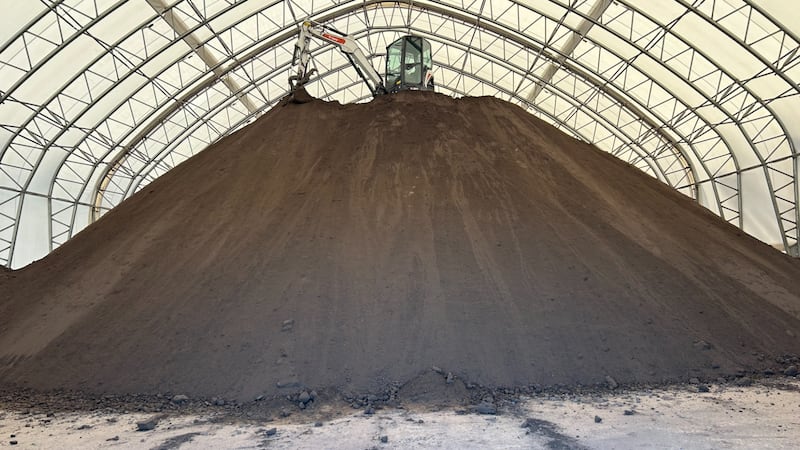
Another vessel is set to arrive at the port this week, which will load zinc-concentrate and the first-ever shipment of potash, mined in Manitoba, by Potash and Agri Development Corporation of Manitoba (PADCOM).
Avery says AGG is also loading another resupply vessel this season destined for Nunavut, which he says shows how important of a role the port can play for the Arctic.
Churchill Mayor Mike Spence hopes resurfacing grain shipments out of the port will help play a bigger role in Canada’s economic strategy, but says Indigenous voices are needed at the table.
“It’s time that we play and take a role in shaping where we need to go,” he said.
“There is still much more work ahead, including building up our presence as a supply base for the Canadian Arctic, but this season is showing the potential of this Indigenous and community-owned trade corridor to diversify Canadian trade and connect northern and western Canada with new markets.”
Churchill is building global connections and AGG has also been working to strengthen international partnerships, recently signing an agreement with Port of Antwerp-Bruges International in Belgium, one of the world’s largest cargo-shipping hubs.
‘Getting grain back is huge’
Longtime Churchill resident Joe Stover, who previously worked a decade at the port, says he is delighted to see grain being shipped out of the port again.
“With Churchill being in many conversations over the last couple of years, this is a chance to prove that we are indeed a crucial asset for Canada going forward,” said Stover.
“I have always believed in Churchill, and I have always believed the location services industry. It is about time Churchill finally realizes its potential.”
Stover has worked the last number of years in tourism and has seen quiet rail lines and empty grain elevators. He believes the return of grain will change that.
“To see grain back after all these years just feels right,” he said.
Renewed interest
Interest in revitalizing the port has increased in recent years as Canada works to diversify its global trade markets and lessen its dependence on the U.S.
The port was shut down by its previous owner, U.S.-based OmniTrax, in 2016. It was then sold to the current operator, AGG, in 2018.
Earlier this year, Ottawa said it’s considering a major expansion of the Port of Churchill that would transform the northern Manitoba facility into a year-round, multi-commodity trade hub.
“At a time when the United States has fundamentally changed all of its trading relationships, we are focused on what we can control,” said Rebecca Chartrand, who is the federal minister of Northern and Arctic affairs.
“The return of grain exports is another example of what this northern corridor can deliver as we strengthen and diversify Canada’s trade infrastructure.”
Currently, the shipping season out of Churchill is around four months, but new studies show year-round shipping is possible from the Port of Churchill.
A recent report by the University of Manitoba, Fednav Ltd. and the Arctic Research Foundation, say advances in marine technology and declining sea ice due to climate change mean shipping can be greatly expanded from the current four-month window.
It shows waterways could be navigated year-round by icebreakers costing between $100 million and $410 million, rather than the billions of dollars it would cost for more heavy-duty ships.
Ottawa said that upgrading the port is still of significant interest, but the plan needs more development.
“We know that there is needed investment and infrastructure to build up the port and those are things that are under review right now,” Chartrand said.
Manitoba Premier Wab Kinew said earlier this year that Ottawa had indicated it wants to see liquefied natural gas shipped from Churchill by 2030, or federal support for a larger port expansion could be reconsidered.
The federal government has set a target of increasing Canada’s LNG production capacity to 50 million tonnes annually by 2030 and says it is working with provincial, territorial, and Indigenous partners to reach that goal.

