Fuel cells are gaining traction among U.S. hyperscalers racing to build data centres for the AI boom but struggling with grid constraints to secure quick and reliable power.
Energy research firm Rystad Energy projects investments in fuel cells for data centres to rise to about US$30 billion by 2030 from US$2.8 billion in 2025.
What are fuel cells?
A fuel cell generates electricity through a chemical reaction between a fuel, such as natural gas or hydrogen, and oxygen, converting the fuel’s energy directly into electricity rather than burning it.
Bloom Energy operates solid-oxide technology ready for 100 per cent pure hydrogen, while FuelCell Energy uses molten carbonate technology capped at 40 per cent hydrogen blends, even as both systems are fuel-flexible.
Why is demand growing?
Data centres require massive amounts of reliable electricity to run computing equipment and cooling systems around the clock.
Linking large electricity loads to the U.S. grid can take three to six years, according to Rystad estimates, prodding developers to explore on-site power sources.
“We announced our first project with Oracle and delivered power to their Utah site in less than two months,” Bloom CEO KR Sridhar said on a post-earnings call on Thursday.
“We are achieving the same thing with Nebius in New Jersey. We were able to get planning board approvals for our fuel cells within three months of signing the contract.”
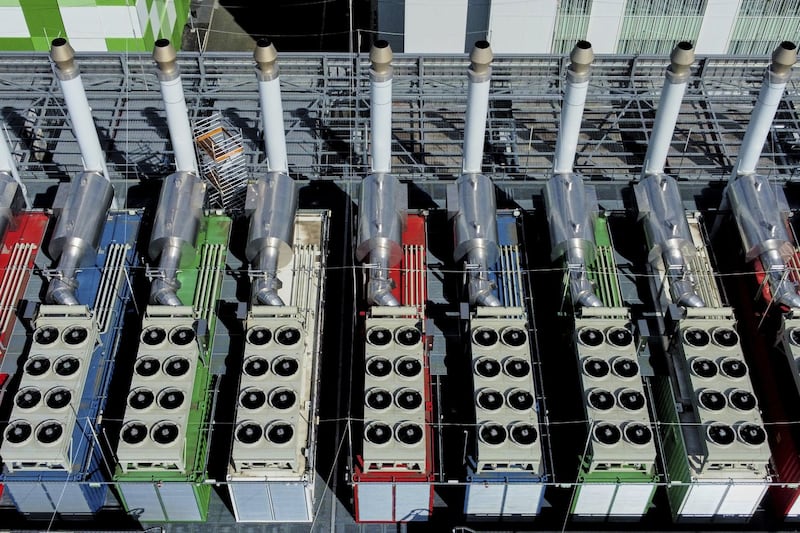
Rystad predicts that about 40 per cent of projected US data-centre capacity in 2030 could pursue dedicated on-site power rather than rely entirely on the grid.
Fuel cells also produce lower local emissions than conventional gas-fired generation, as they avoid combustion within the stack.
Which companies stand to benefit?
Bloom’s third-quarter revenue surged 138 per cent to US$1.24 billion. The company posted net profit of US$250.3 million, compared to a year-earlier loss of US$23.1 million.
It raised its 2026 revenue forecast to US$4.4 billion to US$4.6 billion.
US cloud computing giant Oracle intends to procure up to 2.8 gigawatts (GW) of Bloom fuel-cell systems, of which 1.2 GW has been contracted.
FuelCell is also targeting data centres. CEO Jason Few told Reuters that “time to power has really become as important as cost of power.”
The company expects data centres and related business to account for 75 to 85 per cent of its business within two to three years, up from 25 to 30 per cent currently.
Rystad estimates the industry’s order book at roughly 9 GW, including framework agreements involving Oracle, AEP, Equinix and Brookfield.
Such agreements do not necessarily represent firm orders for the full stated capacity.
Can the industry scale fast enough?
Rystad expects annual fuel-cell manufacturing capacity to rise to 4 GW by 2030 from about 1.8 GW currently.
“For 100 MW-plus projects, the biggest determinants of timeline are typically site readiness, permitting, and supporting infrastructure, not the fuel-cell technology itself,” Bloom Chief Commercial Officer Aman Joshi told Reuters.
Projects still need gas connections, permits, transformers and switchgear, which can delay deployment.
Fuel cells can complement grid power, even as they compete with other on-site generation technologies.
Growth depends on whether suppliers can deliver systems at competitive costs and developers can build projects and secure fuel.
---
Reporting by Arunima Kumar and Shivansh Tiwary in Bengaluru; Editing by Sriraj Kalluvila

