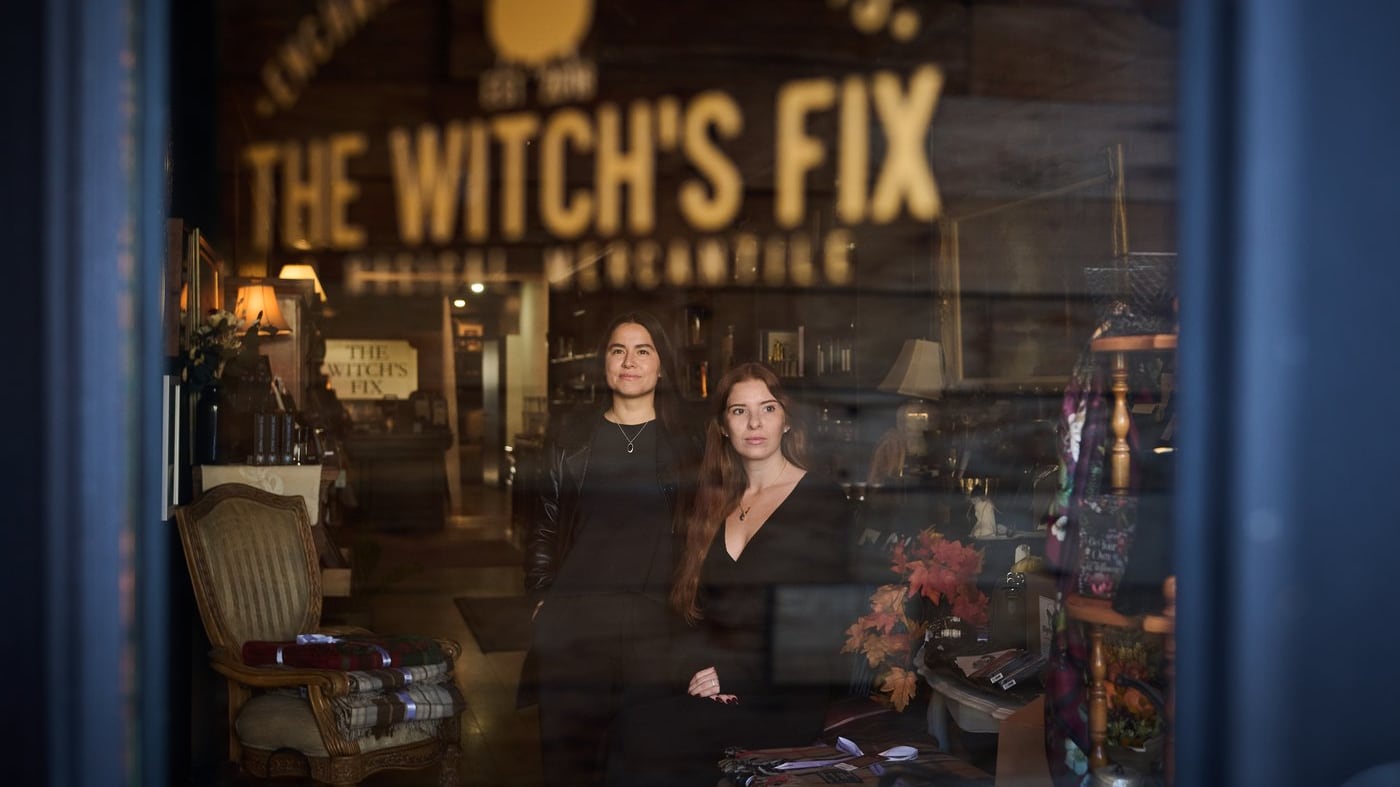
A whiff of palo santo incense, cosy lighting and Pinterest-worthy vintage cabinets may have drawn you into this newly opened store in downtown Oakville, Ont.
But there’s more than just witchy esthetics, energy-cleansing smoke bundles and spell kits at The Witch’s Fix.
It’s what happens in the backroom of this store: A herbalist teaching ways of plant magic and plant medicine, a candle-making workshop, tarot reading sessions and a lesson on leather bookbinding on a weekend afternoon.
“We really did want to create a space where people can come and hang out and just try something different,” said co-founder Maria Cavero, who bought the first location of The Witch’s Fix in Hamilton, Ont., in 2021 with her best friend Gabriela Rosas.
“We just wanted to give people more of a community feel.”
That’s been the secret potion to their success — and the reason why the co-owners opened a second location in Oakville last fall.
“We were somewhat surprised, but blessedly validated,” Rosas said of their success.
Witchcraft stores have found a new customer base as they charm younger generations who have sworn off bars and late-night drinks for early nights in and self-care.
Spirituality-led witchcraft became more popular early in the COVID-19 pandemic, when people turned to the mystical worlds of tarot and astrology for answers as uncertainty about the world grew. Today, a quest for community and spiritual connection has manifested in the opening of stores across the country.
Julie Saunders and her husband took the online Witch Chest to a brick-and-mortar shop in Ottawa three years ago and began hosting witches’ gatherings once a month.
“I know I sound strange when I say I didn’t open it for money,” said Saunders, who works with healing properties of herbs and plants to make bath salts, calming oils and beeswax candles.
“Yes, I get you open a business to support yourself and your family, but my reason behind it — my first reason was to have a community.”
Since then, their store has expanded as sales rose and more people joined monthly events. But it’s still not big enough to make their concoctions of soothing oils, candles and herbal remedies — or to accommodate her husband’s growing class size for a 13-week witchcraft course.
“We’re trying to scout another location for an off-site where we would be making our products,” Saunders said. That place would also serve as a spot for gatherings and events.
There’s a growing number of religious nones in North America — people who don’t ascribe to a specific religion but are searching for spirituality — and these esoteric stores cater to them, said Sabina Magliocco, professor emeritus in the University of British Columbia’s anthropology department.
“They are not members of a single religion or congregation, but may put together beliefs and practices from a number of different religious and spiritual traditions,” said Magliocco, who has researched rituals, folklore and modern pagan religions.
“It’s those people who may be attracted to practising spells and some of the material culture that is associated with Wicca and witchcraft.”
Social media has also broadened the reach of modern pagan witchcraft, making it socially acceptable and more like a visible religious movement, Magliocco said. It has allowed people to connect and shop at esoteric stores worldwide.
When Lexa Palacio started her online crystals business during the pandemic, most of her clients were Americans, Europeans and even Australians, she recalled.
But as COVID-19 restrictions lifted, her online sales slowed. Then she decided to take it off-line and set up the brick-and-mortar Apothecary of Crystals in Cambridge, Ont.
“I interviewed some (owners of similar shops), just asking them how long they had been in business. And most of them had been in business more than 10 years,” she recalled. “So I thought, ‘OK, the business has legs.’”
“Even if there’s ebbs and flows, it looks like people will always want to go to a crystal shop to touch and feel and purchase their own crystals in person,” Palacio said.
Kiki Keskinen, who runs WitchSchool Canada, agrees. She said witchcraft-related stores serve a different purpose today.
“(People) are not buying right away and they’re perhaps perusing online to see where they can get it cheaper or (where) they can buy it.
“But what they can’t replace is the in-person connection.”
Last month, Palacio expanded her store after the neighbouring location became available. She can now host workshops and classes — a popular demand from her customers.
“Since we’ve moved into our space in September, we’ve posted broom decorating workshops, tarot workshops, mediumship night,” she said.
The month also delivered record-breaking sales, Palacio added.
Six years since the pandemic, Magliocco said there’s a whole generation of people who have had very little face-to-face community interaction, which has “created a vacuum.”
“These shops may be trying to create a community to bring people together in a time where people are hungry for that,” she said.
This report by The Canadian Press was first published Oct. 29, 2026.
Ritika Dubey, The Canadian Press

