
Capital Dispatch is a weekly newsletter, sent when Parliament is in session every Friday. To stay on top of what’s happening on the Hill, you can sign up to receive the latest political news and insights directly in your inbox, here.
It’s complicated between Canada and the EU; U.S. trade talks gain momentum
Canada and the European Union are still in the talking stage when it comes to how to label their fledgling transatlantic partnership. U.S. President Donald Trump may be changing his tune on Canada, but his ambassador doesn’t seem to be. Plus, the federal government is both limiting and expanding eligibility for a medically assisted death, in one bill.
The week that was
“Canada is learning their lesson… They’re treating us extremely nicely lately.” That was Trump speaking at a rally in South Carolina on Thursday afternoon.
The momentum of the talks, just recently restarted in earnest, combined with Trump’s political vulnerabilities ahead of the U.S. midterms,, just recently re-started in earnest, combined with Trump’s political vulnerabilities ahead of the midterms has led to the belief there is considerable appetite from the White House to strike a deal with Canada. That’s what multiple government and industry sources close to trade discussions between Canada and the United States told colleagues Vassy Kapelos, Marieke Walsh, Graham Richardson, and Mike Le Couteur.
All the sources cautioned an agreement of any sort was far from certain given the past behaviour of Trump and his trade delegates, including U.S. Commerce Secretary Howard Lutnick. But over the last week, the White House has shown much more interest in arriving at an agreement “than in all the weeks prior,” according to one of the sources, who also intimated progress on auto tariffs looked possible relative to where things were at when talks broke down in August.
Midweek, the state of play was that cabinet ministers briefed on the increased pace of talks remained skeptical that Trump will make the necessary concessions to secure a deal. However, many who spoke to CTV News were convinced he wants one, given the political pressure he faces in the midterms.
One minister, who was not authorized to speak publicly on the issue, told CTV News it’s “now or maybe never” that a window exists to get Trump to make concessions to Canada on issues, particularly auto tariffs, that are not only dominating key U.S. Senate races in places like Michigan, but have been identified as red lines by the prime minister.
Other red-line issues include French language and culture, and Canada’s ability to trade with other countries. Two sources told CTV News they expect Trump could move on the latter two, but autos remain the toughest negotiating issue.
Two others were unsure if Canada should hand Trump any kind of win in advance of the midterms.

On Parliament Hill Wednesday, yours truly asked Prime Minister Mark Carney why Canada was willing to entertain a deal with the United States, when Trump’s delegates were setting Canada up to take blame for midterm losses.
“We think there are deals that are in the best interests of Canada first and foremost, but also are in the interests of the United States. That’s always been the case,” Carney said. “We’ve been consistent. If those deals present themselves, we will pursue them. But we’re not at that position right now.”
As of sending this Friday morning, any breakthrough remains to be seen, with the window of political opportunity likely closing quickly. It could slam shut if Trump does what his ambassador to Canada told a closed door meeting this week: Blame Canada if key races don’t go the Republican’s way next week.
The other major “deal or no deal?” discussion of the week was around how cozy Canada and the European Union are willing to get. After months of speculation around how a new alliance between the two bodies will take shape, the much-anticipated Canada-EU Summit started Thursday with even more mixed messaging.
After making headlines last month when European Commission President Ursula von der Leyen invited Canada to become an “associate member,” of the EU, there was pushback both within Europe and in Canada, where officials prefer to describe the partnership as an “alliance for the future.”
Heading into this week’s summit, sources confirmed that the controversial “associate member” label was not in the draft statement set to be released at the conclusion of this week’s confab.
Cue von der Leyen doubling down, using the term again in her speech Thursday, calling the proposed status for Canada “association without accession,” while also articulating the areas for potential co-operation and stronger alignment.
Questioned on the confusion, Carney asserted “the nomenclature doesn’t matter,” and what does is what goes into the agreement. That perhaps would have been the line of the day, if he then didn’t hours later also slide both acrimonious terms into one sentence.
“We’re in the process of forging a new alliance, an alliance for the future, with Canada as an associate member.”
This is hitting your inboxes just ahead of another full day of summit events, including a mid-day signing ceremony and joint press conference with von der Leyen and President of the European Council António Costa. CTVNews.ca will have the latest for you.
Spoiler alert, as colleague Spencer Van Dyk reports, while some pieces of policy could be agreed to coming out of this summit, the exact details of the agreement will not be finalized this week. The aim is to make an official announcement next year.
Not to be missed
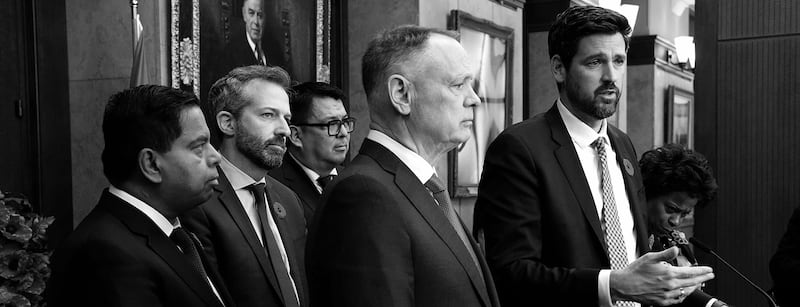
Justice minister tables MAID reforms, rejects pushback
On Tuesday, Justice Minister Sean Fraser tabled Bill C-41, the MAID Safeguards Act, a 12-page piece of legislation that proposes to indefinitely exclude those whose sole underlying condition is a mental illness from qualifying for assisted death, and to allow people to make advance plans to pursue medical assistance in dying in certain cases. Facing pushback from some advocates over the decision to include those two policy changes in one piece of legislation, the minister told CTV News outside a Liberal caucus meeting that he’s “not interested” in splitting apart the government’s new legislation on MAID. He rejected critics saying the plan to allow advance directives has not been studied as much in Canada as the issue of excluding mental illness as a sole qualifying condition. “We have a unique opportunity to move forward on two important issues, which are both the source of extensive study, both by government departments and the parliamentary committee. And we have an opportunity to address two major outstanding questions at the same time,” Fraser said. The parliamentary push is now on, with the minister asking for cross-party collaboration on one of the most divisive issues in the country.
Time to move beyond the Indian Act?
While attending a meeting with First Nations chiefs and premiers in Ottawa on Monday, Carney was pressed to respond to a call from Manitoba Premier Wab Kinew to repeal the Indian Act. As The Canadian Press reports, the prime minister said he was tasking his ministers to work with First Nations to move the country beyond the Indian Act, which could mean reforming or abolishing it. “The suggestion of reforming, potentially abolishing and fully modernizing governance, is that a process, co-developed, needs to be put in place, and the federal government is open to that process,” Carney said. The next day, he indicated Ottawa’s process to determine the legislation’s future has no “fixed conclusion.” As my colleague Allison Bamford reports in the wake of this conversation, Indigenous Peoples are questioning what that change would look like.
Joly will only meet with Stelco if workers recalled
And, the Stelco saga continues. This week, Industry Minister Melanie Joly said she’s open to meeting the top executives at Stelco’s parent company, but only if it recalls laid off workers. “The workers who have been laid off or received layoff notices must be recalled immediately,” she wrote in a letter to Stelco president and general counsel Paul Simon. “Accordingly, I expect Stelco and Cleveland-Cliffs to provide a concrete and credible plan for the re-engagement of those workers,” she added. Cleveland-Cliffs, which owns Stelco, announced last month that it would eliminate 500 jobs and close part of its plant in Hamilton, Ont. A war of words has ensued ever since. Last week, Joly demanded that the company address alleged violations of those commitments under the Investment Canada Act, including employment guarantees, or face potential legal action. In a statement to The Canadian Press on Wednesday, Cleveland-Cliffs Inc. CEO Lourenco Goncalves said he hopes to bring laid-off Stelco workers back before Christmas if a plan to boost domestic sales is successful.
Quote of the week
“Whether it’s… the cycle of European elections, American midterm elections, provincial elections in Canada, our responsibility as government and my responsibility as prime minister, is to work with whatever government people have chosen… And we look to do that in a co-operative way. I’m not going to speculate on the outcome of U.S. midterms. That outcome will be decided by Americans soon enough, and we’ll move forward from there.”
— Prime Minister Mark Carney, responding to a question on Thursday about how he plans to navigate the results of the U.S. midterms, and whether he is ready to retaliate, should Trump put blame for a bad Republican result on Canada.
The week ahead

The major moment of the week ahead will be the U.S. midterms. CTV’s Power Play will have special coverage with host Vassy Kapelos starting at 9 p.m. ET, on Tuesday, Nov. 3.
Will Trump lose the House and Senate? What are American voters telling CTV News correspondents stationed in key battleground states? And what does this all mean for Canada? I’ll be watching and hope you will too.
Then on Thursday, Nov. 5, another major news day awaits. Finance Minister Francois-Philippe Champagne will table his second fall federal budget.
A departure from having the big front cover reveal happen when the finance minister walks into Parliament alongside the prime minister on budget day, this time Champagne opted to unveil the front page on social media.
Lastly, as I flagged in last week’s edition, this is my final Capital Dispatch for the next year or so. I’m now on maternity leave anticipating the arrival of my first child, which multiple reliable sources confirm will be an assignment unlike any other.
In the meantime, and as always, CTV News will have you covered with the latest political news and why it matters across all platforms.
Covering the latest political news from CTV’s parliamentary bureau in Ottawa, Rachel Aiello offers exclusive analysis on political developments straight from Ottawa.

