Look at this photograph — now listen to the AI version.
Canada’s largest member-owned music rights organization is suing U.S. artificial intelligence company Suno, alleging the AI music generator copied songs in its repertoire — including Nickelback’s 2005 hit “Photograph” — without permission or compensation.
The Society of Composers, Authors and Music Publishers of Canada, known as SOCAN, filed the lawsuit with the Federal Court of Canada on Wednesday, arguing Suno infringed the performing rights in musical works by generating and streaming AI outputs that replicate human-created songs.
“We want to make sure people get paid when their music is being used,” said SOCAN CEO Jennifer Brown in an interview.
“We don’t want to see these big platforms building on the backs of our creators and then not compensating them at all.”
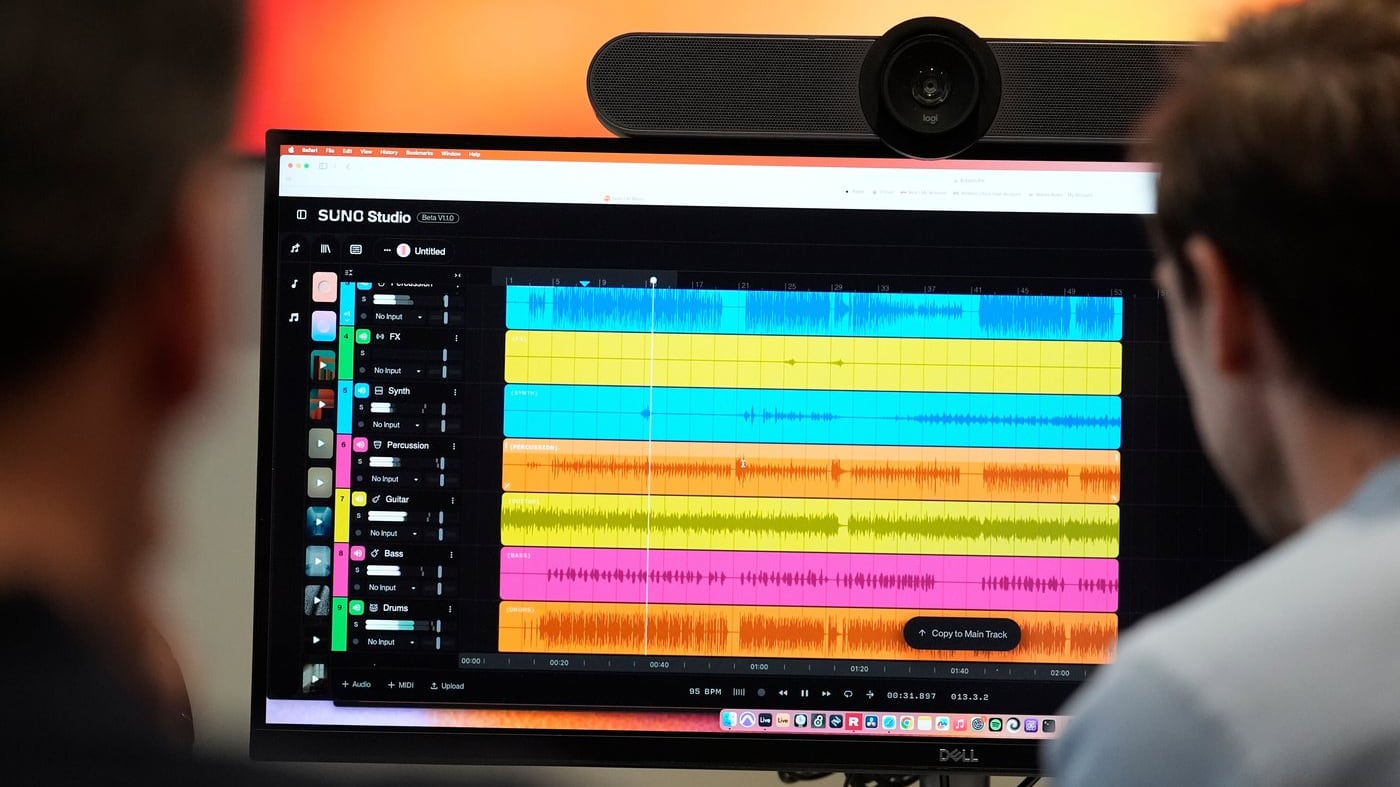
Suno, valued at US$5.4 billion in its latest funding round, generates music from text prompts. Earlier this year, its CEO said in a LinkedIn post that the company surpassed two million paid subscribers and that more than 100 million people have used the platform. On its website, the company says it trains its AI models on “publicly available music files and related metadata accessible on third-party websites on the open Internet.”
The company did not respond to an email request for comment and direct message to its CEO on social media by deadline on Wednesday.
Court documents say a defendant has 30 days to file a statement of defence, and an additional 10 days if they file an intention to respond.
In its claim, SOCAN says it has identified hundreds of Suno outputs that have substantially similar elements to songs in its repertoire. The claim cites 150 examples, including AI-generated versions of Avril Lavigne’s “Sk8terboi” and Tom Cochrane’s “Life Is a Highway.”
The allegations have not been proven in court.
The organization has launched a website showcasing a handful of AI-generated outputs alongside the songs they allegedly replicate. The Lavigne and Cochrane examples sound strikingly similar to the originals, with the same melody, rhythm and chord progressions and much of the same lyrics, but with different voices — and, in Lavigne’s case, some Korean words.
“For a lot of these songs, you can just put on the Suno output, and you already know the song,” said Brown.
“You’ll hear ‘Photograph’ by some AI output, but you already know all the words to it. It’s not a new song.”
SOCAN wouldn’t comment on the specifics of how they found their evidence, but said all of the infringing outputs “were available through the ordinary use of the Suno platform.”
The lawsuit filing provides links to 150 examples that appear to be generated by various users and posted on Suno’s streaming platform.
SOCAN alleges Suno infringed its performing rights by allowing its works to be replicated and for those resulting songs to be streamed to users. The claim says Suno encourages users to publish their creations on its platform and upload them to Spotify, YouTube and Apple Music for “commercial exploitation.”
For Brown, the fight is also about cultural sovereignty — an issue she noted Prime Minister Mark Carney has frequently raised as Canada navigates an escalating trade war with the United States.
“You have large American tech companies treating our songs and stories like it’s big data to train their machine,” she said.
“Where does your culture come from? It comes from your songs, your stories, and what we create as Canadians. So, absolutely, that needs to be protected.”
Brown said SOCAN had pursued licensing discussions with Suno but had been unable to make meaningful progress.
“We’ve been open for licensing since Day 1,” she said.
“You can’t force another dance partner. You can’t make someone come to the table.”
SOCAN is seeking damages and asking the court to require Suno to comply with copyright law, to stop making infringing outputs available, and “respect the rights of music creators and publishers whenever their works are used.”
The lawsuit comes as Suno faces several separate legal challenges in the United States.
On Tuesday, singer-songwriter Jason Isbell and three other artists filed a proposed class-action lawsuit alleging the company commercially exploited their identities without consent.
Suno, which is based in Cambridge, Mass., also faces copyright lawsuits from U.S. labels including Universal Music Group, Sony Music Group and Round Hill Music on allegations of mass copyright infringement. The AI company has argued that training models on publicly available material qualifies as fair use under U.S. copyright law.
Fair use is not part of Canadian copyright law, says Halifax-based entertainment lawyer Matthew Gorman. Canada instead has a “conceptually similar” fair-dealing framework that allows certain uses of copyrighted works for specified purposes, including research and private study, he said.
“It is yet to be seen whether or not a fair dealing or a fair use argument is going to be successful when it comes to the input discussion and the training of AI models, and whether or not that is in fact an infringement,” Gorman said.
“My position is that it is, and I think a lot of creators would take that position as well, but we’ll see.”
Brown argues that Suno’s commercial use of music is fundamentally different from the kinds of uses protected under fair-dealing provisions.
“That output, every day it is actually standing alongside other songs and competing with them,” she said.
In Germany, a court recently ruled against Suno in a case brought by rights organization GEMA, finding that the company had unlawfully used copyrighted works to train its AI music system. Suno has said it disagrees with the ruling.
Brown said SOCAN was already pursuing its own case when the German decision came down, but welcomed the ruling as an example of copyright law applying to emerging platforms.
“Copyright law still exists and yes, you can apply the copyright law to these new technologies,” she said.
SOCAN is also working with tech company Musical AI on a project aimed at developing tools to identify the music underlying AI-generated outputs and establish a framework for compensating rights holders.
But for Brown, the stakes go beyond compensation for songs being streamed today. She said it’s also about whether Canadian creators can envision a future in making music.
“We want future generations to see that creation is actually a viable career,” she said.
“But if all you’re doing is putting out something to feed a machine that makes the money, where do our future songwriters go?”
---
Alex Nino Gheciu, The Canadian Press
This report by The Canadian Press was first published Sept. 2, 2026.

