HALIFAX — Julissa Stewart says she panicked when she learned about plans for an 18,600-square-metre AI data centre at an industrial site about 20 minutes away from her home in southern Cape Breton.
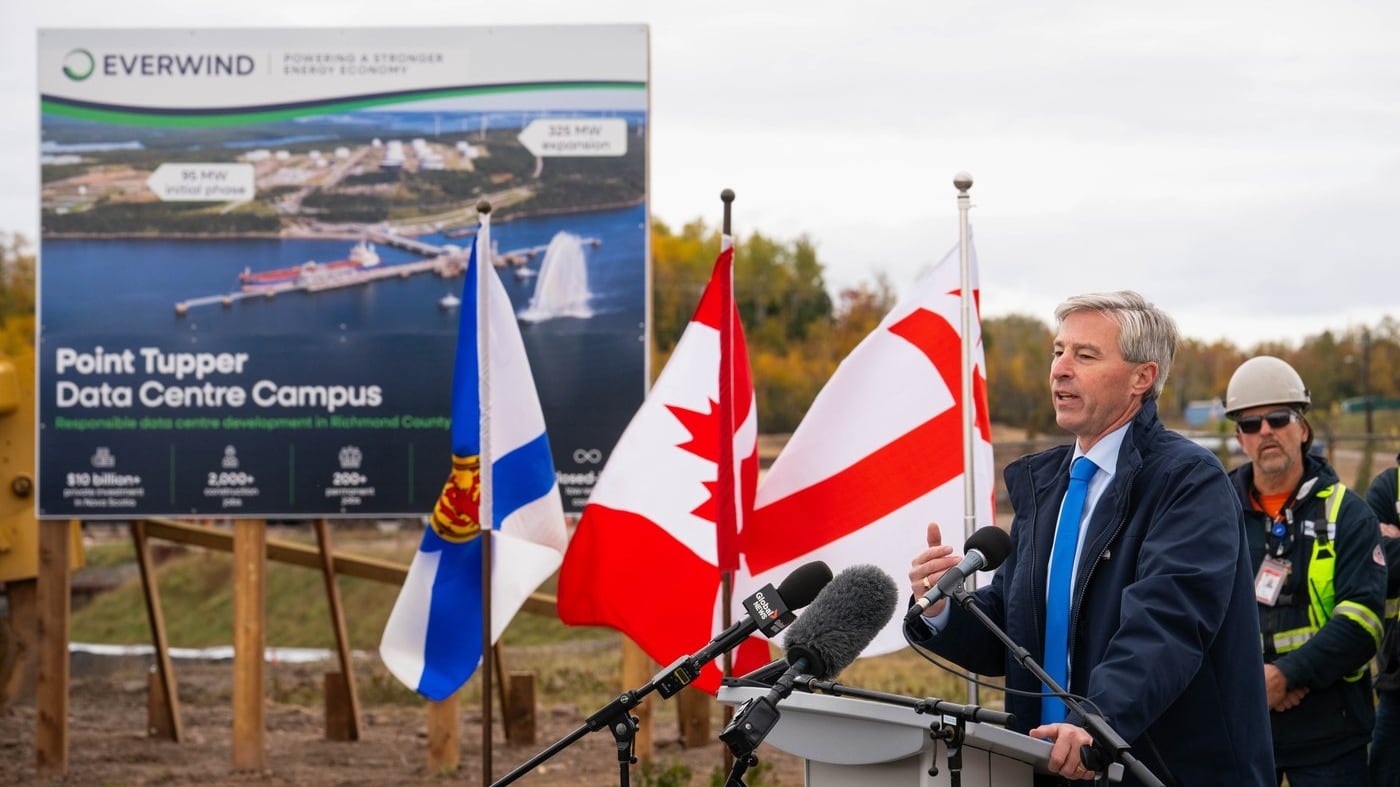
Earlier this month, EverWind Fuels announced it intends to set up a $10-billion AI data centre in Point Tupper, N.S., that would come online by the end of 2027.
The American AI company Anthropic has signed a 20-year lease for the centre, which would draw 95 megawatts of electricity during its first phase. The company says a 325-megawatt expansion is expected in mid-2028, which would bring the development’s total energy demand to 420 megawatts.
“I’ve been paying attention to what’s happening with AI data centres in other places in Canada and in the States … then hearing that it’s coming here, so close to where we live, I have serious concerns. Not because I’m against economic development, but because of how this is being rolled out,” Stewart said in a recent interview.
The project by EverWind and Anthropic has thrust Nova Scotia into a debate that is playing out across Canada and the United States, as technology companies scramble to find locations for data centres needed to deliver the power for artificial intelligence and other computing infrastructure.
In many cases, it has placed politicians eager for major industrial investments at odds with neighbourhoods filled with suspicion and anxiety about what’s planned in their backyards.
Stewart said she’s been shocked by the speed of EverWind’s plan and lack of consultation with the community.
EverWind’s chief financial officer said Tuesday the company was unable to start community consultation ahead of the Oct. 16 announcement because of a strict non-disclosure agreement with Anthropic. Information sessions hosted by EverWind are scheduled to begin in the Richmond County area next week.
Stewart, who plans to attend, is also skeptical about how Premier Tim Houston appears to have shifted his views about data centres over the past few months.
“The way this has been rolling out has been very upsetting to people,” Stewart said.
On June 18, Houston said it was too soon to turn his government’s attention to the matter, and a discussion about data centres would happen “far out into the future.”
By late September, he softened that stance, opening a door to consider proposals from the sector in a post on social media.
“Then all of a sudden, we’re finding out this is coming to our backyard,” Stewart said.
She said her biggest concern is the lack of environmental assessment for the project and a shortage of regulations. Houston told reporters Wednesday it’s not clear to him if any new legislation is needed.
“Do we want to do a piece of legislation for every business that sets up in Nova Scotia? Probably not. I mean, we’ve got to be realistic about these things. We have guidelines. We have approval processes. And they’ll be followed,” the premier said.
Lora MacEachern, deputy minister of environment and climate change, said Tuesday the data centre doesn’t need to go through an environmental assessment and the industrial approval process is sufficient.
AI data centres are not on the list of projects that would automatically trigger an environmental assessment in Nova Scotia. This list includes quarries, mines, energy generation projects and other industrial facilities.
The premier suggested AI data centres do not need to be on the list.
“We have guidelines that have to be met around water usage ... around power rates. The government shouldn’t care what type of company it is, the government should care that the requirements of the province are met, and we’ll make sure that’s the case,” he said.
Stewart said legally binding regulations could help reassure residents about EverWind’s promise to behave responsibly.
“We can’t just rely on a company’s word. It’s not good enough,” Stewart said. “What if this project gets built and it’s not what was advertised?”
Less than two weeks after EverWind’s announcement, a petition to stop the development of AI data centres in Nova Scotia on Change.org garnered more than 24,000 signatures.
Opposition parties have also called for legislated regulations for AI data centres and for an environmental assessment to be conducted.
NDP Leader Claudia Chender said legally binding regulations are essential given the “long history of large industrial projects in Nova Scotia leaving us with ... decades of pollution, huge environmental implications, huge social implications.”
EverWind’s chief financial officer, Matthew Tinari, told a Nova Scotia legislature committee Tuesday that residents deserve clear and factual answers to their questions and the company is committed to addressing concerns.
Tinari said this includes a commitment to prevent rate hikes for residential electricity customers as well as a promise to protect the water supply and minimize water use. He also said the project would follow federal and provincial guidelines for data centres.
“What we’ve heard from community is (that) industry should have binding commitments. So we were proposing to the province some type of agreement like that,” Tinari said.
Houston would not say if his Progressive Conservative government would require a legally binding agreement.
Vaibhav Bahadur, a professor in mechanical engineering at the University of Texas at Austin, specializes in AI data centres in a state that has welcomed massive data centre development. He said “industries don’t like regulations, but in my opinion, you do need to balance what industry wants with environmental concerns and obviously concerns from the general public.”
The University of Texas maintains a database of all data centres in the state. Bahadur says there are more than 200 of them running and another 450 or so in various stages of planning or development.
While America is home to far larger data centres than the one EverWind is proposing in Cape Breton, Bahadur said the 95-megawatt facility is significant.
“There’s bound to be concerns when you’re talking about that amount of power going into one facility,” he said in a recent interview.
EverWind says it will cover the cost of all electricity infrastructure, which is why the project will not increase power rates for customers.
The company also says the project will include a closed-loop cooling system using recycled water as well as an external cooling system that would require the use of additional water on very hot days.
On average, EverWind estimates the system would use an average of 100,000 litres of water per day from the nearby Landrie Lake in the first phase and an average of 500,000 litres per day when the expansion is complete. Tinari said the peak demand represents 1.5 per cent of the lake’s estimated sustainable daily yield.
Bahadur said based on the location of the planned data centre in Point Tupper, he expects it would use far less water compared to AI data centres in hotter climates, such as Texas.
Paris Marx, a Newfoundland and Labrador-based tech critic and author of “Hyperscale: The Ambition and Excess of Big Tech’s Data Empires,” says AI companies have learned from the opposition they’ve encountered in the United States over the past couple of years and are trying to head off environmental criticism before it starts.
He said companies are aware of concerns around water use, which is why they’re pivoting from evaporative cooling systems and constant water use in favour of closed-loop systems.
Marx said those closed-loop systems have only seriously been contemplated over the last six to eight months.
“Right now it sounds good because it’s just like, ‘Oh, we’re using less water,’” Marx said in a recent interview.
“But the companies aren’t coming out and being completely transparent about what the trade-offs of that are.”
He said the trade-offs could include the need for using substances such as coolants and the need for more energy to keep the system running.
Stewart said she’s worried about what may happen to Richmond County’s environment and water supply if the project is not held to high environmental standards that extend into the future.
“I have a six-year-old daughter, and I have concerns about this down the road. If we don’t put proper regulations in place, what is that going to look like for her? ... What are the health risks? We don’t have enough information,” she said.
A recent United Nations University report says the environmental footprint of data centres globally already rivals some of the world’s largest countries. The report also predicts their water and energy use and pollution will double in just four years as use of artificial intelligence grows.
This report by The Canadian Press was first published Oct. 30, 2026.
— With files from Devin Stevens
Lyndsay Armstrong, The Canadian Press

