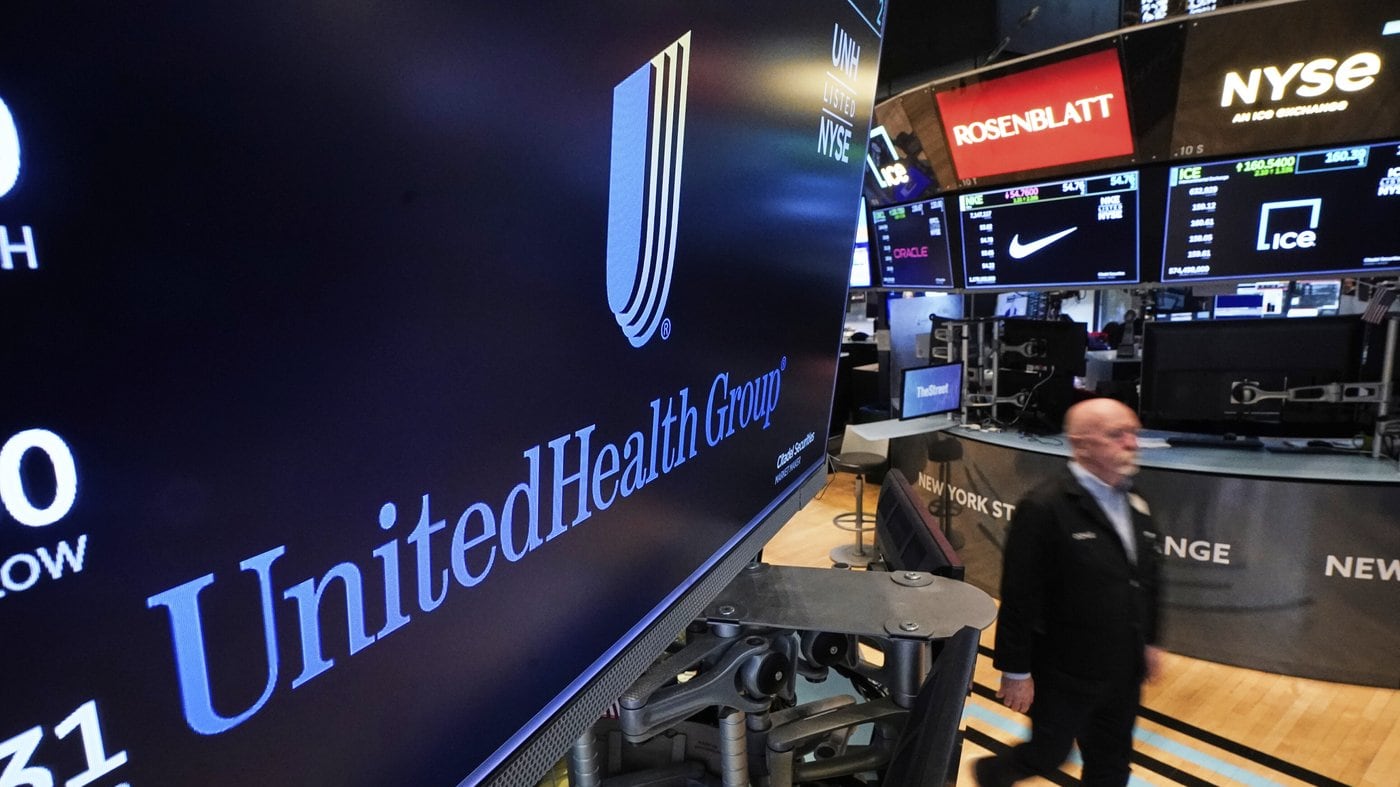
NEW YORK — UnitedHealth raised its annual profit forecast and beat expectations for first-quarter results on Tuesday, and its shares jumped more than 10 per cent as the company took steps toward its promised turnaround.
UnitedHealth said it kept costs in check and received improved government payments for its health insurance services, a sharp contrast to last May, when it pulled its financial outlook and dismissed the CEO as unexpected medical services demand by members hurt profits.
CEO Stephen Hemsley, who returned to lead the company almost a year ago, has sought to rebuild investor confidence and reassure employees after the killing of a senior executive in late 2024 led to an outpouring of criticism of health insurance practices.
In the last year, it has exited non-U.S. businesses and some health plans, reshuffled leadership roles, and said on Tuesday it is spending $1.5 billion on artificial intelligence.
“This was a solid quarter across all segments, positioning us for similarly solid progress going forward,” Hemsley said.
The results of the nation’s largest health insurer also boosted shares of rivals, with CVS Health CVS.N up more than 2 per cent and Humana HUM.N up 5 per cent.
“Shares are rallying, as investors recognize that margins may have troughed in 2025, and 2026 guidance is moving up rather than down, which is a nice change of pace from last year,” Morningstar analyst Julie Utterback said.
KEEPING COSTS IN CHECK
The industry has been grappling with increased costs since mid-2023 due to a surge in demand for healthcare services under government-backed Medicare plans for older adults or individuals with disabilities.
Tim Noel, CEO of the UnitedHealthcare insurance business, said on a conference call that the company expects 2026 medical use in its Medicare Advantage plans for people aged 65 and older to be about the same as 2025 levels.
UnitedHealth said the U.S. government’s proposed increase of 2.48 per cent in payments to insurers for 2027 is still too low and that it is in active discussions with the Medicare agency.
Optum CEO Patrick Conway said during the call that the technology services unit has begun offering AI-backed digital health products to payers and providers.
Changes in enrollment for Medicaid plans for lower-income Americans have also left insurers with members who require more medical care, adding to costs.
UnitedHealth reported a first-quarter medical cost ratio - the percentage of premiums spent on medical care - of 83.9 per cent, an improvement on analysts’ estimates of 85.70 per cent.
“We actually think we’re going to do a little bit better than we anticipated,” UnitedHealth Chief Financial Officer Wayne DeVeydt said in an interview, adding that the company expects to lose 1.3 million Medicaid members. “Still losing membership, but retaining a little bit more than we thought,” he said.
UnitedHealth expects 2026 adjusted profit to be more than $18.25 per share, an increase of 50 cents from its prior forecast. Analysts were expecting a profit of $17.86 per share, according to LSEG data.
First-quarter adjusted profit came in at $7.23 per share, beating estimates by 66 cents.
During the quarter, UnitedHealth agreed to acquire Alegeus Technologies, a healthcare technology platform, and sold its Optum UK business. The company also said it will buy back at least $2 billion of its stock by the end of the second quarter.
OPTUM FOCUS
Operating income at the company’s Optum health services unit fell 15 per cent to $3.3 billion, due to higher medical costs and ongoing investment. The unit also enrolled fewer patients in its coordinated care plans.
The dip in enrollment is intentional, DeVeydt said, as the company exited less favorable contracts. UnitedHealth earlier this year said Optum had faced regulatory and cost challenges, representing an $11 billion blow to the unit over a three-year period.
First-quarter revenue at Optum Health, which provides primary care, was $24.1 billion. Revenue at Optum Rx, UnitedHealth’s pharmacy benefit manager, rose 2 per cent to $35.7 billion.
The results are starting to provide confidence to investors that Optum Health is on the mend, Evercore ISI analyst Elizabeth Anderson said.
(Reporting by Amina Niasse in New York, Sneha S K and Sriparna Roy in Bengaluru; Editing by Matthew Lewis, Anil D’Silva, Caroline Humer and Bill Berkrot)

