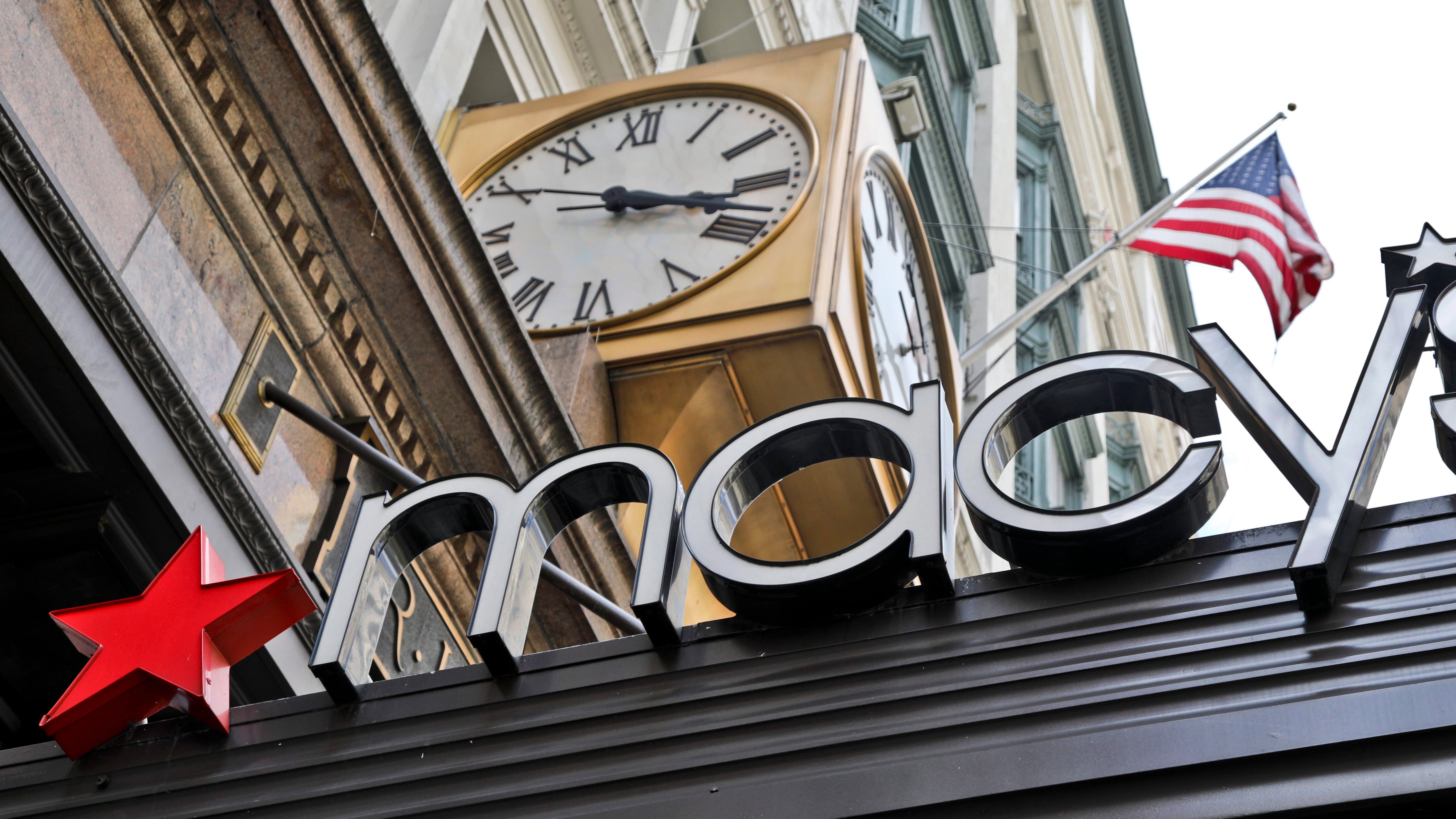
Macy’s raised its annual forecasts and posted its first quarterly sales growth in nearly four years on Wednesday, driven by strong demand for high-end apparel and accessories, particularly at its Bloomingdale’s stores.
The results from the department-store operator underlined the K-shaped recovery in U.S. consumer spending, with higher-income shoppers continuing to splurge on discretionary and luxury goods while lower-income households pull back amid rising economic uncertainty.
“The Macy’s Inc customer, who is predominantly middle to upper income, remained resilient in the first quarter,” CEO Tony Spring said in a call with analysts.
Under Spring, the company has pushed ahead with its “Bold New Chapter” turnaround launched in 2024, focusing on higher-end labels, growing full-price sales, reinvesting in stronger locations and closing weaker stores.
“We have seen a difference in the higher-income consumer being more ready to spend and the lower (income consumer) being more choiceful, but what we’re seeing across all of them is that they’re responding to good product and to newness,” finance head and Chief Operating Officer Tom Edwards told Reuters.
Edwards picked fragrance, women’s contemporary apparel, shoes and handbags as the standout categories in the first quarter.
PRESSURE FROM TARIFFS, HIGHER FUEL
Shares of the company were flat in choppy early trading, after Macy’s said it expects tariffs and higher fuel costs due to the disruptions caused by the conflict in Iran to have a roughly 3 per cent to 4 per cent negative impact on annual profit.
“While rightsizing the store base should improve long-term profitability, macro pressure, traffic and tariff headwinds and a competitive and promotional retail landscape are potential pressures to near-term results,” Telsey Advisory analyst Dana Telsey said.
Still, Macy’s raised its fiscal 2026 adjusted per-share profit to $2.00 to $2.20, from $1.90 to $2.10.
Macy’s also forecast annual net sales of $21.50 billion to $21.75 billion, compared with its prior forecast of $21.40 billion to $21.65 billion.
The company said its forecast accounts for the strong first-quarter results, as well as a modest increase in sales for the rest of the year, while “recognizing macroeconomic and ongoing geopolitical uncertainty.”
At Bloomingdale’s, comparable sales jumped 10.2 per cent in the first quarter ended May 2, while they rose 6.4 per cent at Bluemercury. Overall comparable sales grew 3 per cent.
Quarterly sales rose 1.8 per cent to $4.68 billion, ending 15 straight quarters of declines and beating analysts’ estimate of $4.61 billion, according to data compiled by LSEG.
On an adjusted basis, Macy’s posted earnings per share of 13 cents, beating estimates of 3 cents.
(Reporting by Neil J Kanatt in Bengaluru and Danielle Kaye in New York; Editing by Sriraj Kalluvila)

