Along the shore of the St. Mary River, you’ll find the northern Ontario city of Sault Ste. Marie. For more than a century, those who call “The Soo” home have had their local economy propped up by the steel industry.
The recent 50 per cent tariffs placed by the White House on Canadian-made steel has forced the city of roughly 78,000 to bend, though it hasn’t broken just yet.
“It’s bent, it’s bent pretty sharply, but I think it can snap back,” said Local 2251, United Steelworkers union president, Michael Da Prat.
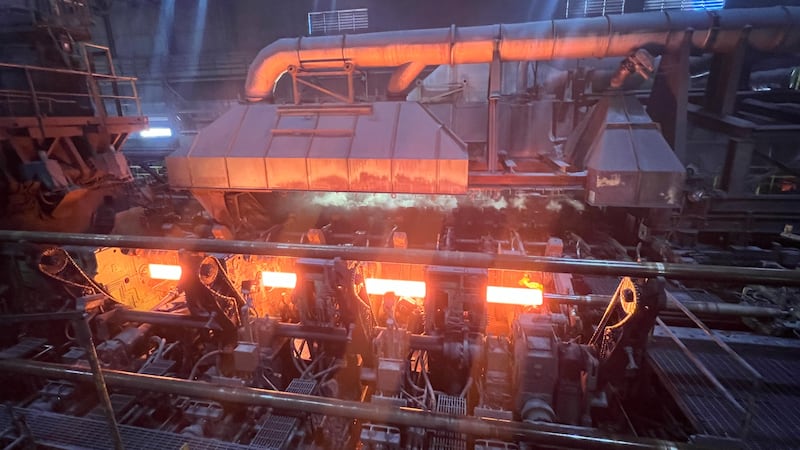
The U.S. tariffs have forced Sault Ste. Marie’s largest employer, Algoma Steel, to accelerate plans to pivot to electric steelmaking.
In December, the company announced roughly 1,000 workers would lose their jobs, marking the largest layoff in Algoma’s more than 125-year history.
Walk through the core of the small city, and you’ll find boarded up businesses, from the local theatre to appliance stores and laundry mats, all shuttered.
The concern among many here is the Algoma layoffs will make a difficult economic outlook even worse.
“The huge impact will be when employment insurance starts running out,” said Da Prat.
Now the local union boss, Da Prat spent 56 years working at Algoma. He now represents more than 1,200 Algoma workers.
Speaking to CTV News outside his union office, next door to a derelict part of the city, he says it’s imperative that Canadian steel producers like Algoma diversify from their reliance on the U.S. market.
“We need to develop our own economy, Canada can’t be a vassal to the U.S.,” Da Prat said.
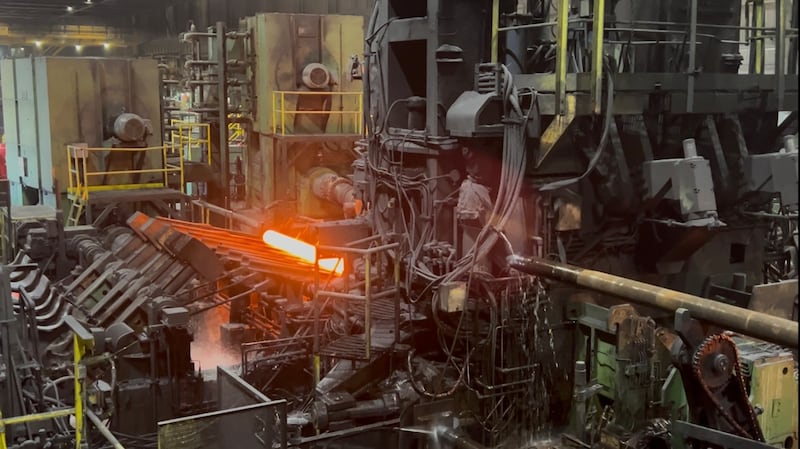
South Korean defence company Hanwha has announced that it will use steel made at Algoma’s Sault Ste. Marie plant to build armoured weaponized military vehicles in Canada. The deal is contingent on Hanwha winning the lucrative bid to build Canada’s next-generation submarine fleet.
Hanwha also announced that it has also signed a memorandum of understanding with Algoma Steel to buy its steel products and provide the company with a low-interest loan to convert its Sault. Ste. Marie plant into one that can make steel beams.
Sitting in his office, Sault Ste. Marie Mayor Matthew Shoemaker tells CTV News the Hanwha offer is exactly the type of multi-purpose procurement deal the struggling Canadian community needs.
“This (submarine bid) process needs to be wrapped up so there is some certainty for Algoma and their business outlook,” Shoemaker said. “Frankly, we think the bid that benefits our community is the one that should be selected. I’m aware there’s multiple factors, but this deal would be a big win for Sault Ste. Marie.”
There are other promising opportunities propelling Sault Ste. Marie’s steel industry. Also in town you’ll find Tenaris, the steel pipe producer employs 800 people in the Ontario town. In May, Tenaris announced a public-private $300-million investment to expand steel pipe production to keep pace with Canada’s oil and gas expansion plans.
At a recent press conference in May, Industry Minister Melanie Joly told those in attendance that Canada is “fighting back” against stateside economic policies that are hammering Canadian industries.
The deal,which includes a pledge of more than $70 million from both the Ontario and federal governments, will bring an additional 200 full-time jobs to Tenaris, plus hundreds of separate, spinoff contractor positions over the next three years.
“This investment comes at a time that we are seeing more activity in the oil and gas industry, our steel pipes are a vital component, and at a time when ‘the Soo’ is going through a rough patch, due to the U.S. steel tariffs that were put in place,” said Tenaris Canada president Martin Castro.
Speaking to CTV News from his office, Castro says Tenaris is weaning itself off its reliance on the U.S. and is focused on building its domestic output for Canada’s oil and gas sector, and also supports the federal government exploring business opportunities in Asia and Europe.
“We’re developing more and more of our domestic production for Canada, so our exposure to tariffs is going down,” he said. “Hopefully in a couple months it will be going down to zero.”
With steely determination, the resilient workforce who call Sault Ste. Marie home are pressing forward.
With files from CTV News correspondent Judy Trinh

