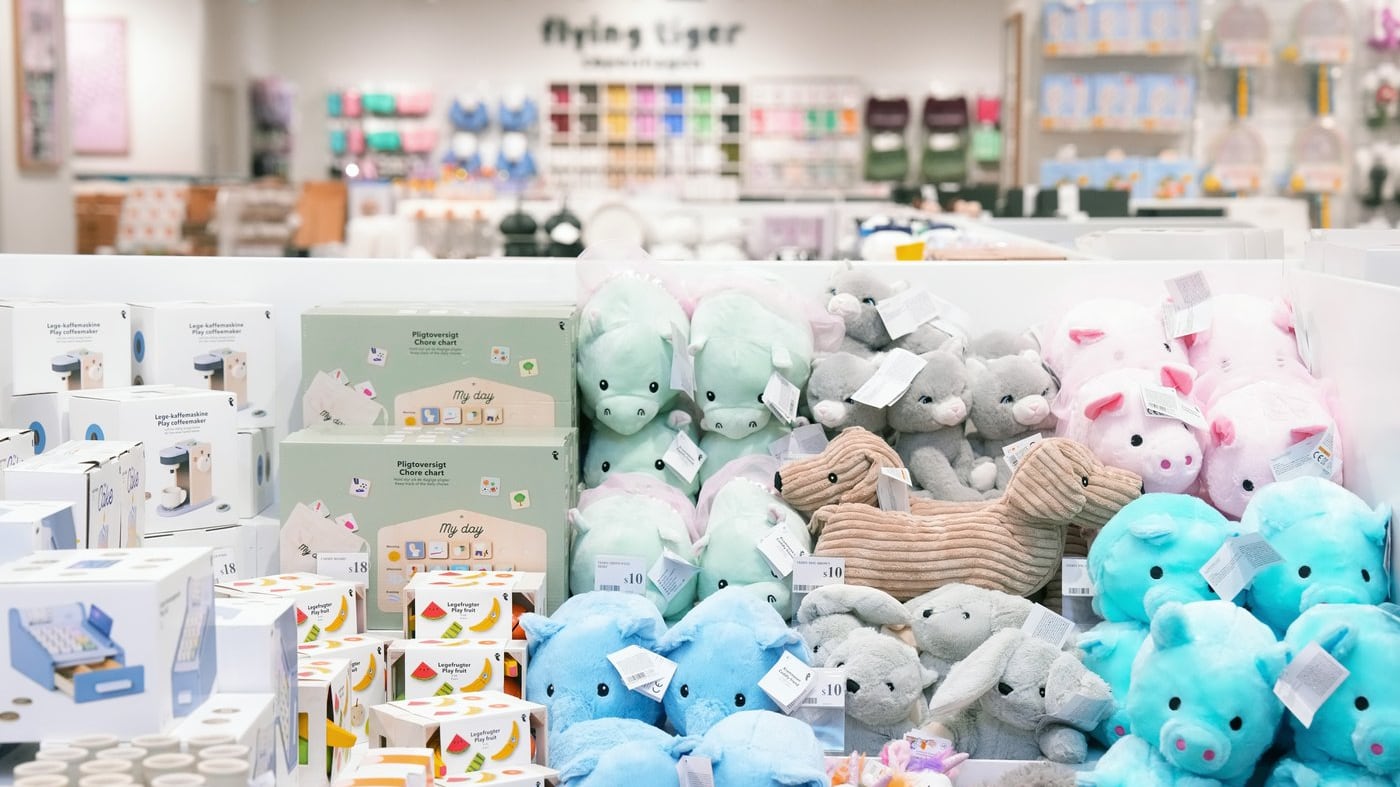
TORONTO — A Scandinavian home goods brand is gliding into Canada and if it picks up enough momentum, retail experts say competitors will have reason to worry.
Flying Tiger Copenhagen is a Danish retailer that has edged into 44 global markets over the last 31 years by selling dish towels in fruit motifs, animal-shaped erasers and jewelry boxes resembling fancy sofas for low prices.
Canada will become the 45th market, when the brand opens its first store here on Friday at the Eaton Centre in Toronto. At least four more will follow this year and the retailer wants to keep expanding from there.
“Quality over quantity, but we have great plans for Canada,” said Jens Aarup Mikkelsen, Flying Tiger’s chief executive. “We really believe it’s going to be one of the leading markets in the Americas.”
His chain’s push into the country is expected to shake up a segment of the retail market that’s long been dominated by Dollarama but has increasingly come under attack from Asian entrants Miniso, Daiso and Muji and, in some categories, stalwarts Giant Tiger and Walmart.
“Arguably, there are limits to what the consumer will spend on what could be termed fun frivolities, so the ongoing expansion of chains that focus on this will eventually produce a crunch,” said Neil Saunders, managing director of retail at research firm Global Data, in an email.
What will set Flying Tiger apart is not its prices — 80 per cent of its 1,800 products will cost under $10 — but its predilection for pretty and its ability to stay on trend, said Lisa Hutcheson, a J.C. Williams Group retail strategist.
“It’s a bit more elevated, curated. It doesn’t come off quite as cheap,” she said of Flying Tiger’s merchandise. “Some of the products are more artistic and to spend $5 or $7 on something, might be that answer to feel good, to scratch that itch.”
Flying Tiger is known for playing with colour and patterns and it often takes cues from viral merchandise. Lately, that’s meant selling bullet journals, hand fans and mini washing machines for makeup sponges.
Every product the company makes is designed in-house and there’s a constant flow of new merchandise. About 300 new items are introduced each month and many don’t get rereleased when they sell out because the brand has already moved onto the next crop of “it” things.
By comparison, it’s “more aspirational than a chain like Dollarama,” Saunders said.
While there’s overlap with Muji, which moved into Canada in 2014 and now has eight stores, he said, “Flying Tiger tends to be quite maximalist with a focus on fun and colourful products, whereas Muji is minimalist and more sombre.”
Miniso and Daiso, however, have even more overlap and thus create more competition, Saunders and Hutcheson agreed.
Miniso, a Chinese retailer selling tchotchkes, beauty products and plushies, has opened more than 100 stores since coming to Canada in 2017.
Japanese-founded Daiso has just four Canadian stores, all in B.C., but a massive global footprint of more than 5,000 locations.
“Miniso might be a bit of a competitor. As they continue to open stores, will people understand the difference?” Hutcheson said. “I think that’s maybe something that’s a bit of a risk.”
Daiso and Miniso did not respond to requests for comments. Dollarama declined to comment.
Mikkelsen isn’t worried about the incumbents. In fact, he relishes the faceoff.
“We like a good competition and we’re ready to take on what Canada brings,” he said.
He’ll have Fox Group to lean on. The Israeli company is Flying Tiger’s Canadian franchise partner. It quietly shuttered its own Fox Home stores earlier this year before turning over some of the spaces for Flying Tiger.
Fox Group, which is operating Mango and Laline stores in Canada, has also been working to introduce Greek discount chain Jumbo to the market and recently secured a former Toys “R” Us Canada lease north of Toronto.
Mikkelsen said he could not discuss Fox’s strategy but feels his company is benefiting from partnering with one already in Canada.
Given that Flying Tiger is more like a boutique with a curated assortment and Jumbo is a much bigger store rammed with product, Saunders said one won’t cannibalize the other.
“There’s probably room for both in the Canadian market,” he said.
This report by The Canadian Press was first published June 26, 2026.
Tara Deschamps, The Canadian Press

