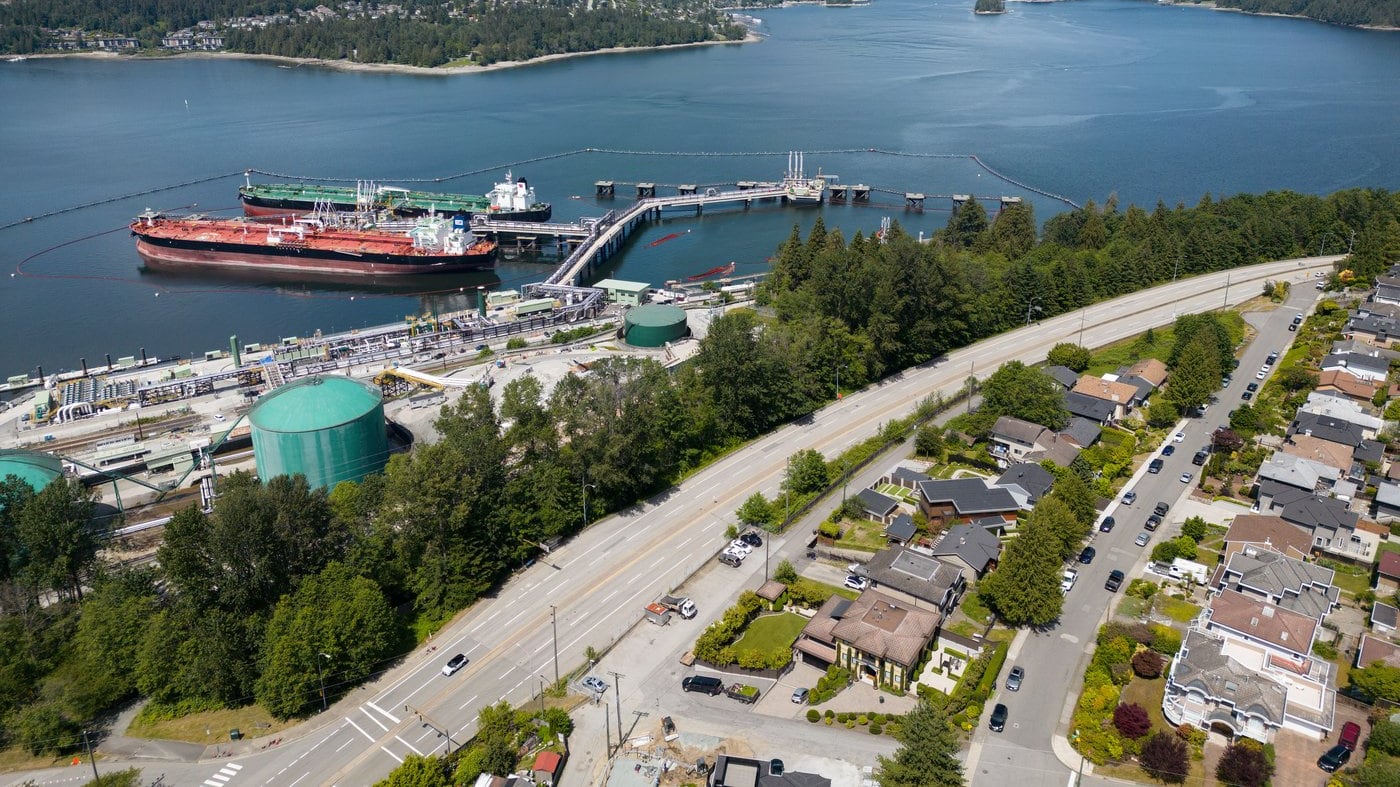
Trans Mountain Corp. says it has reached a settlement agreement on tolls customers pay to use the Trans Mountain Pipeline.
The Crown corporation said Tuesday it had filed a negotiated settlement with the Canada Energy Regulator that, if approved, would establish a long-term framework for tolls and services and more. It said the settlement would also increase the level of firm capacity on the system from 80 per cent to 90 per cent of nominal pipeline capacity.
Trans Mountain said the settlement came after 18 months of extensive engagement and negotiations with shippers.
“This long-term framework provides greater certainty and predictability for customers and stakeholders while supporting Trans Mountain in connecting Canadian crude oil to global markets,” CEO Mark Maki said in a news release.
- Sign up for breaking news alerts from CTV News, right at your fingertips
- The information you need to know, sent directly to you: Download the CTV News App
Trans Mountain said it requested that the Canada Energy Regulator approve the settlement by Oct. 1 to support the implementation of the new framework by Jan. 1, 2027.
The Calgary-based company said the framework includes tolls for 15- and 20-year transportation service agreements, along with opportunities for firm shippers to extend contracts.
The company has also said it expects to add up to 300,000 barrels per day of incremental capacity by the end of 2028.
“With the system running at full or near full capacity for months, our optimization program is focused on increasing capacity on existing infrastructure and providing additional competitive and reliable transportation opportunities for customers,” Maki said.
Last month, Trans Mountain said oil shipments through its pipelines reached 83 per cent of capacity in the first quarter and was expected to rise to 90 per cent in the second quarter.
In 2024, Trans Mountain completed an expansion project that increased its shipping capacity from 300,000 barrels per day to 890,000 barrels per day. Since then, a tolling dispute emerged where oil companies pushed back against higher fees.
The Trans Mountain pipeline, which was bought by the federal government in 2018, is Canada’s only oil pipeline to the West Coast.
This report by The Canadian Press was first published July 7, 2026.
Daniel Johnson, The Canadian Press

