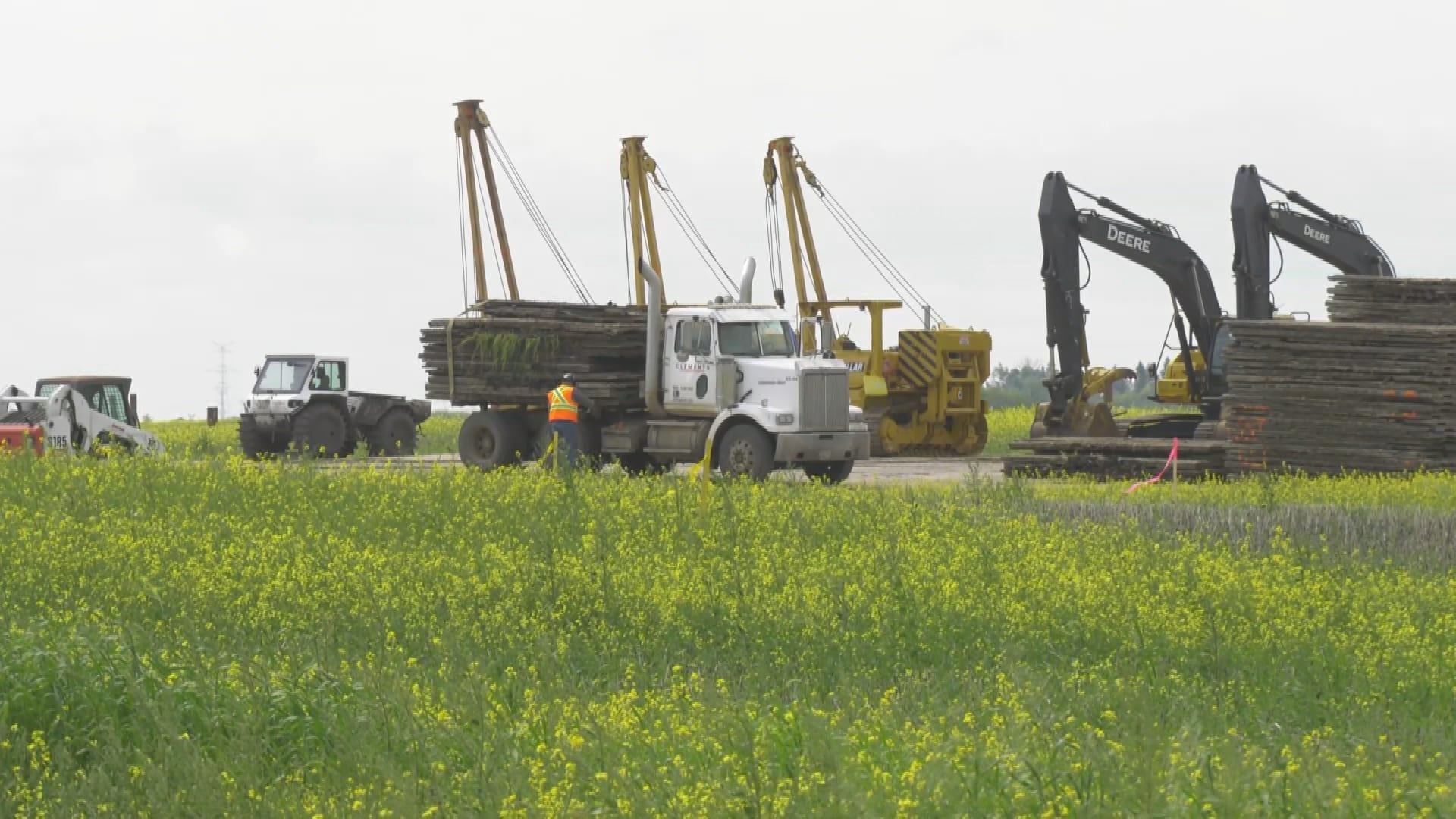
It will be four years before a new natural gas-fired power plant north of Edmonton is operating and able to serve the massive data centre Meta Platforms Inc. is planning to build nearby.
But the tech giant has a plan for power in the meantime.
Meta expects the $13-billion-plus data centre will be online in the next two to three years, spokesperson Stacey Yip said Friday. Before the Greenlight Electricity Centre starts up in the second half of 2030, Meta has rights to connect to Alberta’s grid and can tap other suppliers if needed, Yip added.
Last year, Alberta’s grid operator set aside a total of 1,200 megawatts of capacity for large-load projects like data centres until 2028 to ensure the province’s electrical system is not overburdened. The partners behind the Greenlight Electricity Centre power plant — Pembina Pipeline Corp., Morgan Stanley Infrastructure Partners and Kineticor Asset Management — have snapped up a chunk of that.
“Enabling that grid connection ... was crucial in giving Meta the speed to market they needed,” RJ Sigurdson, Alberta’s minister of affordability and utilities, told a news conference this week.
The first phase of the data centre project will draw 970 megawatts from the grid under a long-term contract with a “wholesale power provider,” Sigurdson said.
“Without this grid-connected pathway, Alberta may not have landed this massive new tenant.”
Also this week, Edmonton-based utility Capital Power Corp. announced a long-term energy supply agreement for the Meta data centre, with 250 megawatts of electricity available in the second half of 2028.
“This agreement is exactly the kind of opportunity we’ve been preparing for — AI infrastructure will be built where power is available, reliable and scalable and, with the support of Capital Power’s fleet, Alberta meets the mark," CEO Avik Dey said in a news release.
The $4.6-billion Greenlight Electricity Centre is expected to produce 932 megawatts of power in the second half of 2030, with permits in hand to eventually double that.
Data centres house the computing hardware needed for a variety of tech applications. With the boom in artificial intelligence, the facilities have grown to mind-boggling scales to meet the vast computing demands needed to train and run those models. Their thirst for power is voracious, giving rise to community concerns over pollution, power bills and water use.
Alberta has been courting big tech heavyweights to set up shop in the province, setting up a “concierge” service to help navigate the regulatory process. It has said it aims to have $100 billion in data centres under construction by decade’s end.
Given the limited slack in Alberta’s power grid, the province is prioritizing projects that build or contract their own power. The province has said Meta’s investment would help reduce transmission costs on Albertans’ utility bills by up to six per cent.
David Pickup, who leads the electricity program at the Pembina Institute — an environmental think tank that’s unrelated to Pembina Pipeline — said Alberta is locking itself into demand for natural gas at the expense of cleaner, and often cheaper, alternatives.
“It doesn’t have to be this way,” he said in a news release earlier this week.
“Already, other jurisdictions and operators have chosen a different path: to power these operations with renewables first and foremost.”
Researchers at York University’s Schulich School of Business have been mapping Canada’s emerging data centre landscape and have found that Alberta is at the epicentre of the boom.
That province accounts for 92 per cent of planned new capacity, while it represents 10 per cent of facilities currently active, said their paper.
This report by The Canadian Press was first published July 10, 2026.
By Lauren Krugel

