As potential minority investors line up for a slice of the pie that is Rogers Communications Inc.’s newly formed Toronto sports empire, the telecommunications giant has a simple message: Don’t expect discounts.
Rogers is set to own the entirety of Maple Leaf Sports and Entertainment after announcing a $4.35-billion deal to buy the remaining 25 per cent stake in the sports conglomerate that it didn’t yet own from Larry Tanenbaum’s Kilmer Sports Inc.
The company anticipates closing that purchase in the fourth quarter of this year, pending approval from the various pro sports leagues involved. MLSE owns the Toronto Maple Leafs, Toronto Raptors, Toronto FC and Toronto Argonauts.
Speaking to analysts Wednesday as Rogers reported its second-quarter earnings, executives also outlined the road map ahead as it seeks to monetize its combined sports and media assets, which also already include the Toronto Blue Jays, Rogers Centre and Sportsnet.
By the first half of 2027, Rogers plans to announce the sale of minority stakes in the combined sports entity to other investors, which will also be subject to league approvals, said chief financial officer Glenn Brandt, adding Rogers will use those proceeds to pay down debt.
Rogers has previously estimated its merged sports and media portfolio will be worth more than $25 billion. But Brandt said Wednesday he would let the market determine the actual value, as Rogers has seen “tremendous” interest from potential investors, including individuals and institutions.
“These are a very premium collection of assets and there are limited opportunities for buying in,” Brandt said.
“There is nothing that we have seen that causes us to be modest about the strength of the assets we own and the strength of the proposal we’re bringing to market.”
He also said investors shouldn’t expect a say in the decision-making surrounding Toronto’s sports franchises, noting Rogers is “not looking for a strategic investor to assist with that.”
“We are well-experienced in operating these businesses, both our media side of things as well as the sports franchise side of things in each of these leagues,” Brandt said.
“The exercise here is to sell a non-voting minority interest in ... the combined entities and to participate in the growth opportunity for that investment.”
Meanwhile, fans — particularly Rogers customers — should expect to reap the benefits of the MLSE deal as the company integrates its sports portfolio with its telecom services, said chief executive Tony Staffieri. He said Rogers would invest “to deliver unique rewards for our customers,” while creating opportunities for fans “to connect with the teams and artists they love.”
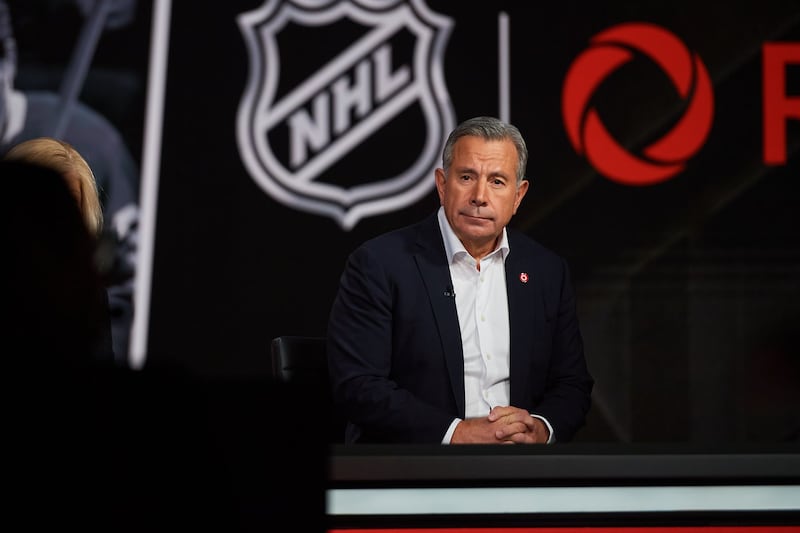
“Of course winning is everything for fans and it’s also good for business, so we plan to continue to invest in building championship-calibre teams,” he said.
“But the strategic value of sports is not just about winning. The value is even greater when combined with our core connectivity business. This gives us a unique value proposition in a competitive telco marketplace.”
Blue Jays’ attendance soars
In its latest quarter, Rogers reported a loss as it took a $1.03-billion non-cash charge related to its deal to buy out Kilmer’s stake in MLSE. The company said its net loss attributable to shareholders amounted to $726 million or $1.37 per diluted share for the quarter ended June 30.
The result compared with a profit of $157 million or 29 cents per diluted share in the same quarter last year.
The charge reflected an appreciation in the value of Kilmer’s stake since July 2025, when Rogers closed a separate $4.7-billion deal with telecom rival BCE Inc. to buy its 37.5 per cent share of MLSE.
On an adjusted basis, Rogers’ profit for the quarter was $633 million, excluding the charge. Rogers had an adjusted profit of $1.15 per diluted share in its latest quarter, up from an adjusted profit of $1.14 per diluted share a year earlier.
Revenue totalled $5.62 billion, up from $5.22 billion in the same quarter last year.
That included sports and media revenue of $1.2 billion, up 53 per cent year-over-year, which reflected Rogers’ takeover of BCE’s stake in MLSE last year. It said sports and media revenue grew 13 per cent when excluding the impact of that deal.
That’s largely thanks to higher Toronto Blue Jays revenue through both sponsorships and gameday attendance. Rogers said the Blue Jays recorded their best second quarter attendance since 1994 — the season after the team last won the World Series — with Rogers Centre at over 95 per cent capacity for baseball games from April to June.
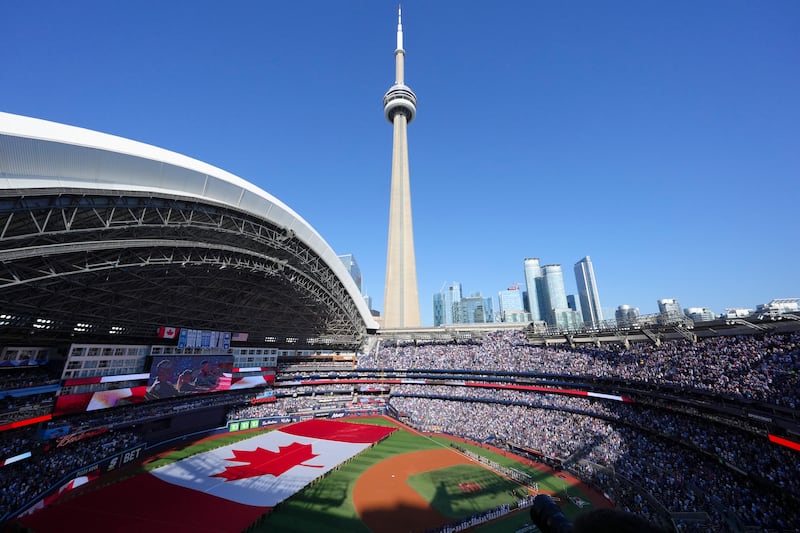
The team’s financial performance seems to be “benefiting from last year’s successes,” when the Blue Jays made it to Game 7 of the World Series, said Desjardins analyst Jerome Dubreuil.
“However, the 2026 season looks more challenging so far and therefore this strong performance may be more difficult to replicate,” he said in a note.
Higher subscriber revenue from the Warner Bros. Discovery suite of channels also helped offset lower advertising revenue in the quarter, which was primarily the result of fewer games by Canadian teams in the NHL playoffs, along with ongoing softness in media advertising.
The results came as Rogers reported 40,000 total mobile phone net subscriber additions, including 22,000 postpaid — those who pay a monthly bill for their wireless services after charges have accumulated. That was down from 35,000 postpaid additions in the same quarter last year.
Its monthly churn — a measure of those who cancelled their service — for net postpaid mobile subscribers was 0.94 per cent. That marked an improvement from one per cent during its previous second quarter, reflecting “a much quieter quarter for competitive intensity” in the telecom sector, said Dubreuil.
Rogers’ mobile phone average monthly revenue per user was $54.25, down from $55.45 in the second quarter of the prior year.
Retail internet net additions totalled 17,000, down from 26,000 a year earlier.
---
Sammy Hudes, The Canadian Press
This report by The Canadian Press was first published July 22, 2026.

