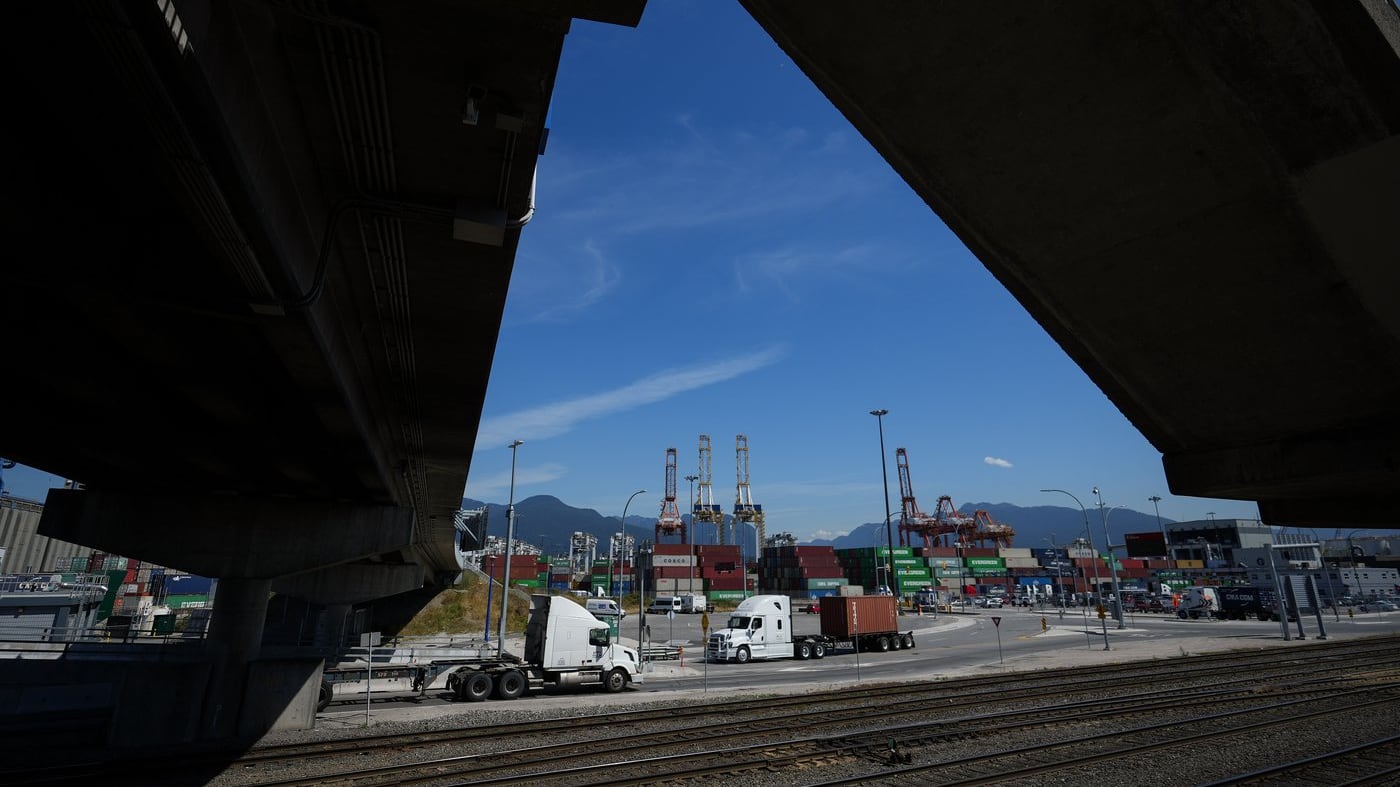
MONTREAL — Canada’s biggest trucking company aims to roll out autonomous big-rigs in the United States next year, with testing slated to start within months.
TFI International Inc. is working on the project with a partner south of the border in a bid to boost reliability, safety and fuel efficiency, said chief financial officer David Saperstein.
“It can drive day and night. There’s no hours of service,” he told analysts on a conference call Tuesday.
Driverless vehicles steer clear of human factors such as fatigue, illness and poor driving, Saperstein suggested.
“It drives the truck way better. There’s no idling,” he said. Acceleration and braking are more measured as well, yielding further fuel savings.
He also touted the safety record of the unnamed partner, one of America’s “major providers” of autonomous trucking technology with millions of miles driven across the Southern U.S.
Reliability offers a final advantage.
“You don’t have to deal with driver turnover and the reality of people not showing up to work,” Saperstein said.
The self-driving tractors would haul semi-trailers on fixed, long-distance legs between terminals or distribution centres in parts of the U.S.
Though they remain rare, self-driving tractor-trailers are nothing new to the United States.
Loaded with food and dairy, autonomous trucks created by Aurora Innovation now ply highways in Texas. Driverless trucks from Kodiak Robotics haul frac sand along leased roads in that state and New Mexico.
Canada has been slower to hit the gas on self-driving semis.
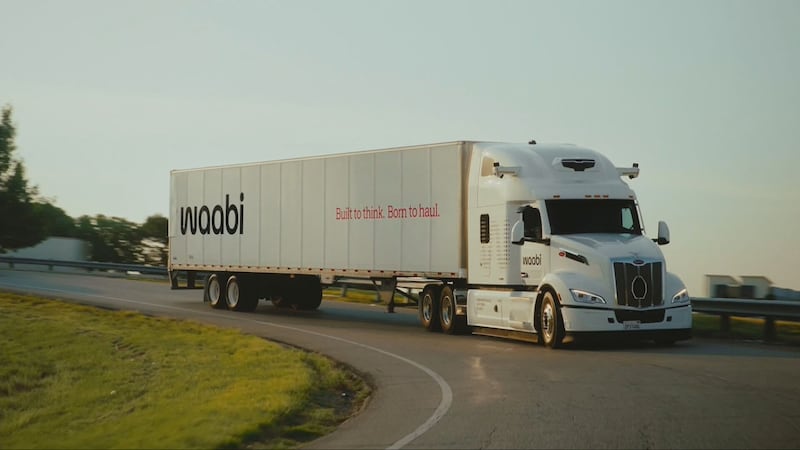
Waabi Innovation, an artificial intelligence startup launched in Toronto five years ago, ran at least a dozen autonomous trucks between the Dallas and Houston areas for Uber Freight as of last year. But regulations in Canada have delayed their rollout here.
Gatik, a California-based company with an office in Toronto, plans to deploy 50 autonomous box trucks across Loblaw’s distribution network in the Greater Toronto Area by year’s end. Some of those trucks are already cruising the streets and ferrying groceries with no one behind the wheel, relying instead on more than two-dozen cameras, radar and “lidar,” a laser-based measurement of distance.
Skeptics of the technology say autonomous vehicles struggle to handle more complicated environments, including heavy traffic, bad weather or unusual situations.
TFI executives have few reservations.
“This has moved a lot faster than we thought,” said Saperstein. “It’s very, very exciting.”
The announcement comes after TFI increased its second-quarter net income 39 per cent year-over-year to US$136.2 million and saw revenues rise 12 per cent to US$2.29 billion.
Higher freight rates as well as a crackdown on driver misclassification in Canada and unsafe drivers in the U.S. helped boost profit margins across all three of the company’s segments, said CEO Alain Bédard.
“The Driver Inc. fiasco is starting to become less. It’s still there, but it’s not as bad as it used to be,” he told analysts.
Driver Inc. refers to the misclassification of workers as self-employed, which means the company employing them does not provide benefits or basic labour protections. Companies like TFI argue the illegal practice undercuts rule-abiding outfits by lowering labour and tax costs.
On Tuesday, TFI raised its financial outlook for the third quarter, projecting adjusted earnings of between US$1.70 and US$1.80 per share, compared to consensus expectations of about US$1.66 per share.
The newfound optimism comes despite the ongoing hit from U.S. tariffs on some commodities imports.
“The issue is steel and forest products,” Bédard said.
“Aluminum, it’s not an issue,” he added. “Quebec is big. I mean, this is flying out the door.”
This report by The Canadian Press was first published July 28, 2026.
Christopher Reynolds, The Canadian Press

