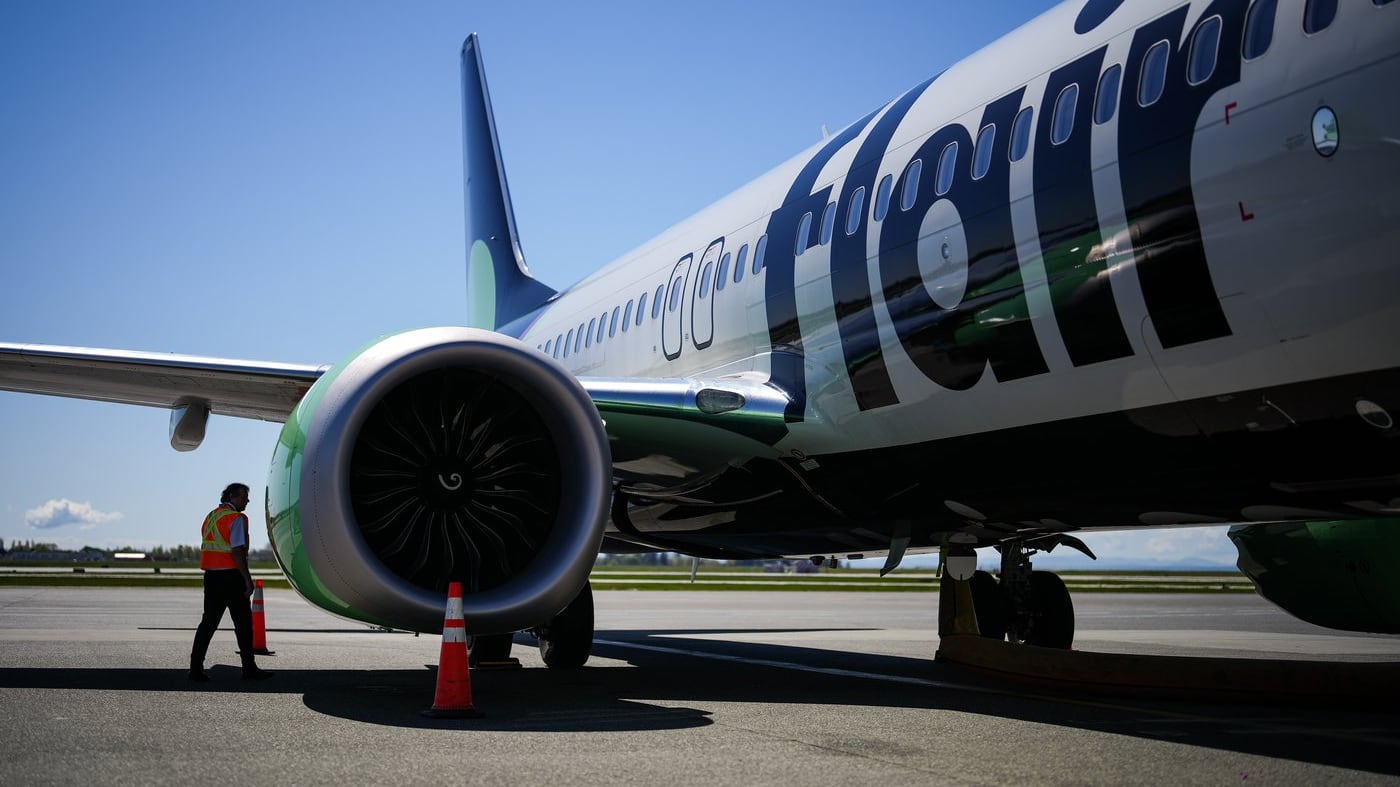
Flair Airlines CEO Len Corrado is feeling the heat from high jet fuel prices as he steers the budget carrier away from a recent strategy targeting business travellers and destinations in the United States.
Corrado, who stepped into the top spot in February, said in a phone interview that aviation fuel typically makes up nearly a third of Flair’s costs — and the price of that fuel in North America has shot up by more than 110 per cent from a year earlier, according to the International Air Transport Association.
“It’s hard to navigate, hard to manage,” said the industry veteran. Pricier tickets haven’t fully made up for the soaring expense.
“Fares have increased overall somewhat, but not enough to do a full capture on the price. So it’s an everyday struggle.”
Earlier this month, the federal government approved $76 million in emergency aid for Flair. It’s far from the only airline to need support against hefty kerosene costs.
Porter Airlines and Air Transat parent Transat A.T. Inc. both secured bailouts from Ottawa in the past two months as jet fuel prices bled more money from carriers.
Transat has received $430 million in low-interest loans since the Iran war began in late February and triggered a surge in energy prices due to the ongoing blockage of the Strait of Hormuz, which typically carries about 20 per cent of the world’s oil.
Porter received a $125-million loan, according to the Canada Enterprise Emergency Funding Corp.
The loans must be repaid within four years.
Pivoting to meet shifting demand, Flair has expanded its presence domestically and in the Caribbean while cutting its Canada-U.S. flight numbers by more than 50 per cent since last year as Canadians continue to spurn U.S. travel.
“There’s a big demand for cross-Canada tourism,” Corrado said, noting that Flair has begun to tap the Quebec market.
In August 2025 it had zero flights out of Montreal’s Trudeau airport; last month it had 62, according to aviation data tracker Cirium.
“We really didn’t touch Montreal for the longest time, or Quebec — 9.6 million customers that we chose to ignore.
“Canadians have really sent a message loud and clear, I believe, about not wanting to go to the U.S.”
The Edmonton-based discount airline is doubling down on personal trips and turning away from plans earlier this year to home in on small business travellers, he said.
“Ninety-five per cent, if not more, of our passengers use their own credit card to book their travel” rather than a corporate account, he said. “We’re not a business travel airline.”
Most of Flair’s customers are fuelled by an “emotional demand” for vacations or visits to friends and family, he said.
“They’re going to Auntie Mary’s funeral, they’re going to Cousin Bobby’s wedding. Those are the connections that matter. That’s what we’re focusing on.”
About 85 per cent of Flair flights next month are domestic, Cirium figures show, though that proportion drops to just over 50 per cent come winter, as passengers flock to sunshine destinations.
To lure them, Flair has tapped into one of a handful of global distribution systems that form the digital back end of commercial air travel.
Platforms such as Amadeus and Sabre connect travel agents and online agencies to airlines, hotels and car rental companies, comprising a central marketplace that can distil bookings from various providers into a single purchase.
This month, Flair announced it would partner with Montreal-based Softvoyage to pick up business from travellers who book via travel agencies or tour operators.
The question remains whether the move will lead Flair to an annual profit — the CEO declined to state whether it has so far, pointing out that the carrier is privately held.
“I came back out of retirement because there was something unique about the opportunity. I look at it as a little engine that could,” he said.
---
Christopher Reynolds, The Canadian Press
This report by The Canadian Press was first published Sept. 22, 2026.

