WASHINGTON -- U.S. Commerce Secretary Howard Lutnick stalled President Donald Trump’s crackdown on companies suspected of diverting Nvidia’s chips to China, Axios reported on Wednesday, citing high-level sources.
Trump on Thursday of last week authorized a crackdown on companies suspected of diverting the chips for the third time this year, Axios reported, adding that the Republican president consulted billionaire Elon Musk before giving the go-ahead.
But Axios reported that Lutnick has repeatedly stood in the way.
The White House and a spokesperson for Lutnick did not immediately respond to a request for comment.
Lutnick met in the Situation Room last Thursday with U.S. Treasury Secretary Scott Bessent, Defense Secretary Pete Hegseth, Trade Representative Jamieson Greer and Secretary of State Marco Rubio, Axios said.
During the meeting, Bessent confronted Lutnick about resistance from his department to implementing export controls. Lutnick appeared to agree but said he needed to check with Trump, according to the Axios report.
Several U.S. lawmakers have said in recent days they want the Trump administration to take a tougher stance on exporting U.S. chips to China and have called on Congress to approve legislation toughening restrictions, following disclosures about Nvidia CEO Jensen Huang.
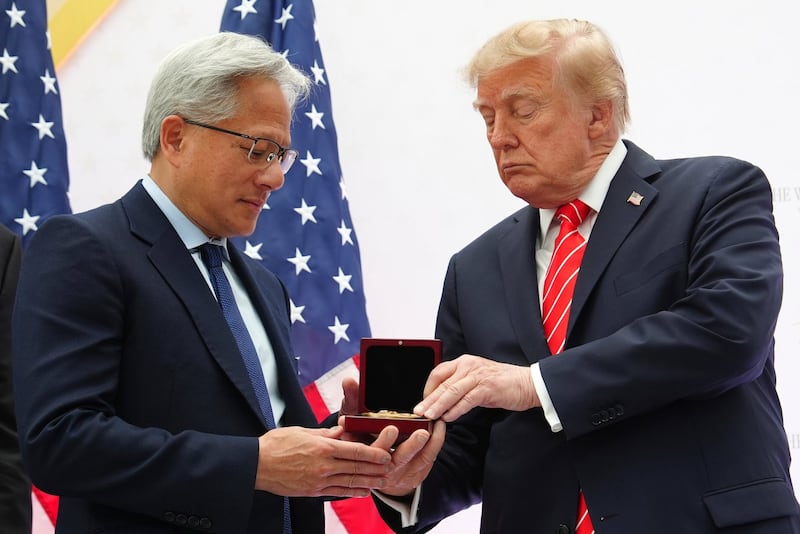
Nvidia’s board launched an investigation after reports that Huang had a close relationship with a Chinese businesswoman who U.S. intelligence officials believed was spying for Beijing.
In June, Reuters reported that the Trump administration had held off from adding China’s AI startup DeepSeek, memory chipmaker CXMT and more than 100 other companies flagged as national security risks to a trade blacklist.
The U.S. has not posted any additions to its Entity List since October 2025, the longest stretch between new postings in more than a decade.
Reporting by Costas Pitas, David Shepardson and Daphne Psaledakis; Editing by Caitlin Webber and Edmund Klamann, Reuters

