A new tentative deal between Air Canada and the airline’s flight attendants’ union proposes an increase in pay over four years, as well as an hourly rate paid when a plane is not in flight, also known as ground pay.
The new deal, which has yet to be ratified, offers a 12 per cent increase immediately, dated back to April 1, for flight attendants who have five years or less of service with Air Canada, while flight attendants who have more than five years of experience with the company would receive an eight per cent pay bump.
The second year would see a three per cent wage increase, the third year would see salaries increase by 2.5 per cent and the fourth year of the deal would increase pay by 2.75 per cent.
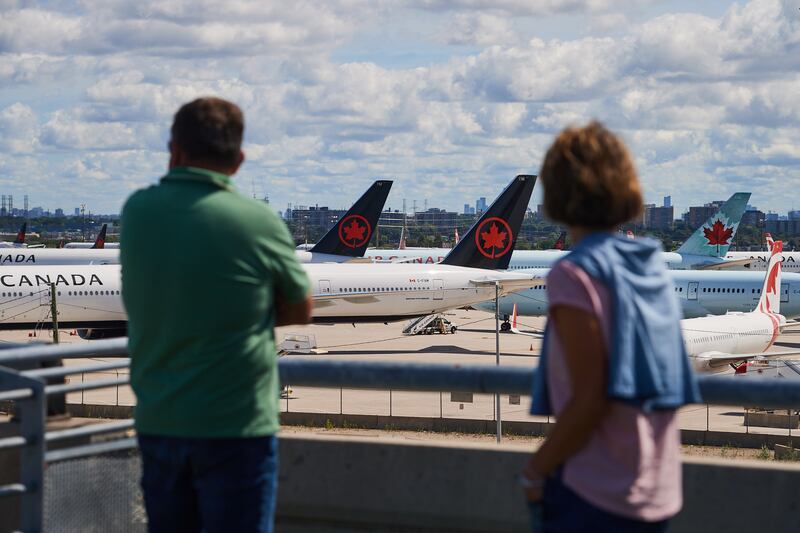
The four-year agreement also covers ground pay, with hourly wages determined based on whether an aircraft is a narrowbody or widebody plane.
For narrowbody aircraft, also known as single-aisle aircraft, flight attendants will receive ground pay for one hour at 50 per cent of their hourly wage rate, which will increase to 60 per cent in April of next year, 65 per cent in April 2027 and 70 per cent in April of the last year of the contract.
For widebody aircraft, flight attendants have been offered the same hourly rate as those for narrowbody aircraft but would be covered for 70 minutes of pay for work done while the plane is on the ground.
Members of the Air Canada component of the Canadian Union of Public Employees (CUPE) will likely vote to ratify the tentative agreement between Aug. 27 and Sept. 6
The union said it was able to strike a deal with Air Canada early Tuesday morning with the help of a federal mediator after more than 10,000 flight attendants walked off the job Saturday morning.
On Saturday, Jobs Minister Patty Hajdu ordered binding arbitration between the airline and the union, which forced the employees back to work, but the union immediately defied the back-to-work ordered and remained on strike throughout Sunday and Monday.
The Canada Industrial Relations Board (CIRB), which was tasked by the federal government on working as a third-party arbitrator between the two sides, deemed the strike “unlawful,” but CUPE members continued to picket at airports across the country.
The union’s website says if the agreement is not ratified, “the agreed to items will form part of the new Collective Agreement and the wages portion will proceed to arbitration, which involves a third party arbitrator making a final decision.”

