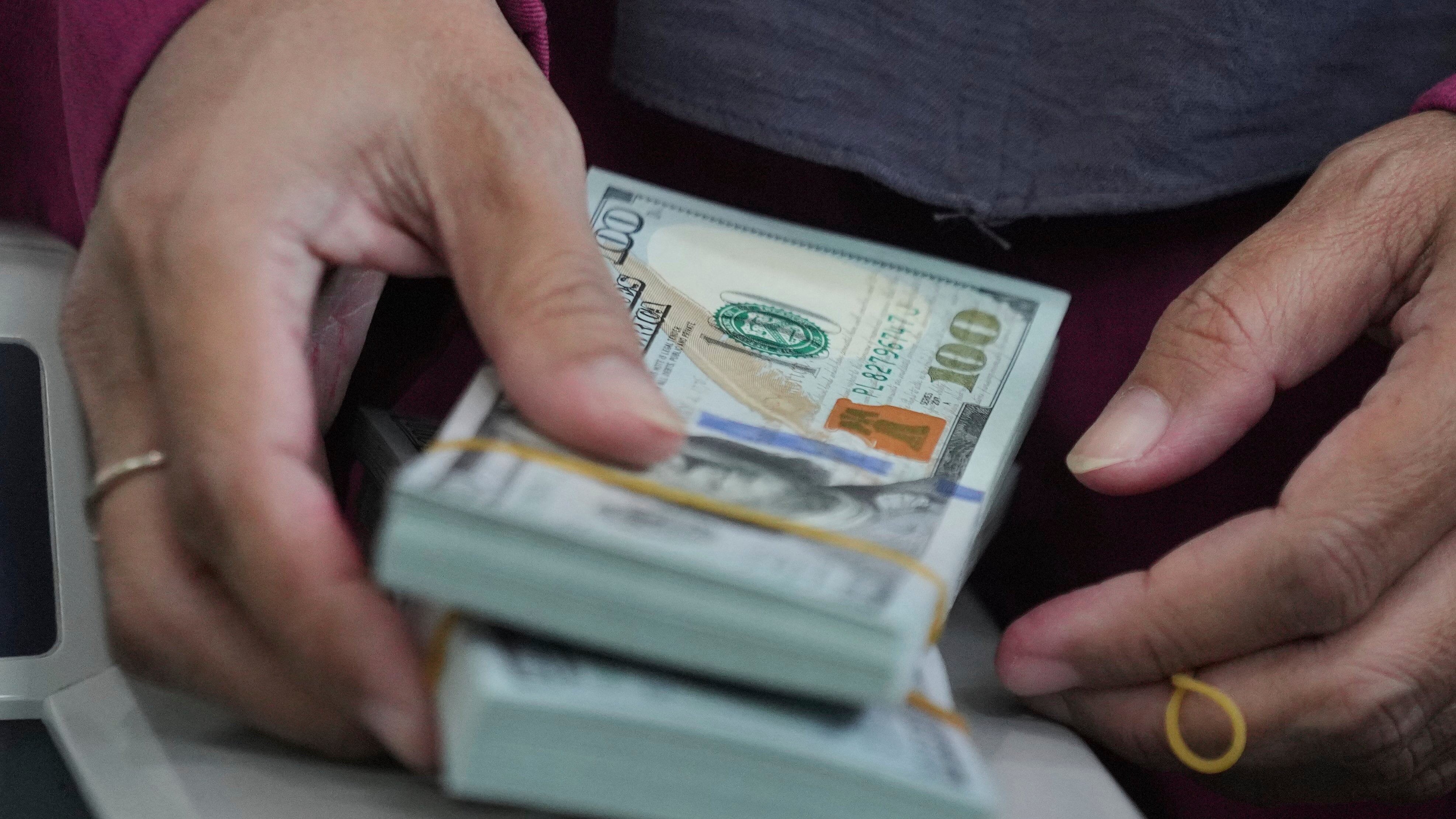
SINGAPORE -- The U.S. dollar was heading for its worst weekly performance since late July on Friday as investors increasingly expect further monetary easing in December by the Federal Reserve, while the U.S. holiday thinned liquidity.
An outage due to a cooling issue at CME Group’s CyrusOne data centers halted trade on its widely-used currency platform and in stock and commodity futures, the world’s biggest exchange operator said in a statement.
“We are not expecting any significant impact on the market, maybe it is something to keep an eye on just in case, but we are going to have a fairly quiet end to the month and the week,” said Lee Hardman, senior currency analyst global markets division for EMEA at MUFG.
The dollar index, which measures the greenback’s strength against a basket of six major peers, was last trading up 0.2 per cent at 99.711, recovering some ground but five days of declines still leave it set for its biggest one-week loss since July 21.
U.S. Fed funds futures are pricing an implied 87 per cent probability of a 25-basis-point cut at the Federal Reserve’s next policy meeting on December 10, compared to a 39 per cent chance a week earlier, the CME Group’s FedWatch tool showed.
They have been rising since Fed president John Williams said last week that the U.S. central bank could still cut interest rates “in the near term” without putting its inflation goal at risk.
The remarks “give us more confidence that they will cut rates, as we have seen in the FX market since then, which has, at least temporarily, put a dampener on the dollar’s uptrend,” Hardman said.
In Asia, the Japanese yen fluctuated after a period of decline.
It was last flat at 156.2 yen to the dollar as labor market and inflation data firmed up the case for monetary tightening in Asia’s second-biggest economy, against a backdrop of persistent weakness in the currency that has raised the prospect of intervention from the Ministry of Finance.
Consumer prices in Tokyo rose 2.8 per cent in November, slightly faster than economists had expected and above the Bank of Japan’s 2 per cent target.
“The yen has kind of stabilized at weaker levels this week, it has reduced pressure on Japan to step in and support the currency,” Hardman said.
The euro was last down 0.2 per cent at $1.1568 on the dollar, as Ukraine’s President Volodymyr Zelenskiy on Thursday said Ukrainian and U.S. delegations are to meet this week to work out a formula discussed at talks in Geneva to end war with Russia and provide security guarantees for Kyiv.
Sterling was 0.3 per cent weaker at $1.3201 so far on the day, though it was heading for its best weekly performance since early August, after Rachel Reeves, Britain’s finance minister, revealed plans to raise taxes by 26 billion pounds (US$34 billion) on Wednesday.
Reeves fought back on Thursday against criticism of the government’s spending plans, which will fund extra welfare spending by raising the country’s tax burden to a post-World War Two high.
Reporting by Ozan Ergenay and Gregor Stuart Hunter; Editing by Christopher Cushing and Kate Mayberry, Reuters

