
Scott Perkin is a longtime farmer in southwestern Manitoba.
He farms a mixed array of crops, including wheat, oats, and soybeans. He also has a purebred cattle operation on his farm in Elgin, Man., which is about 250 kilometres southwest of Winnipeg.
He also farms canola, which makes up between 25-to-30 per cent of his crop rotation, depending on the year.
“Canola is a pretty big part of our rotation,” he said. “The tariffs that were in place and the geopolitical things that were happening, certainly made it uneasy growing canola.”

He closely followed Prime Minister Mark Carney’s recent visit to China, which led to a removal of tariffs on canola meal and a reduction on canola seed.
Ottawa expects to also have tariffs removed on lobsters, crabs, and peas.
But no mention of canola oil, which is the smallest part of the industry, and is still subject to a 100 per cent tariff.
“As a farmer, I’d love to see all the tariffs removed,” he said. “We spend all the time in the field growing the crop. At the other end you have consumers, whether it’s in our country or others, that are consuming the crop and it’s politics in the middle that make a mess of the entire operation.”
The preliminary agreement with China kicks in on March 1 and lasts at least until the end of the year.
“There is still uncertainty that we don’t know when all tariffs will be removed. This is just an interim solution,” Perkin said.
Uncertainty felt at Manitoba agriculture festival
Ag Days in Brandon, Man., is one of Canada’s largest indoor farm shows.
CTV News attended the event and spoke with several farmers, gathering their thoughts on the recent news surrounding tariffs.
Tracy Court is a farmer in Plumas, Man., which is about 180 kilometres northwest of Winnipeg.
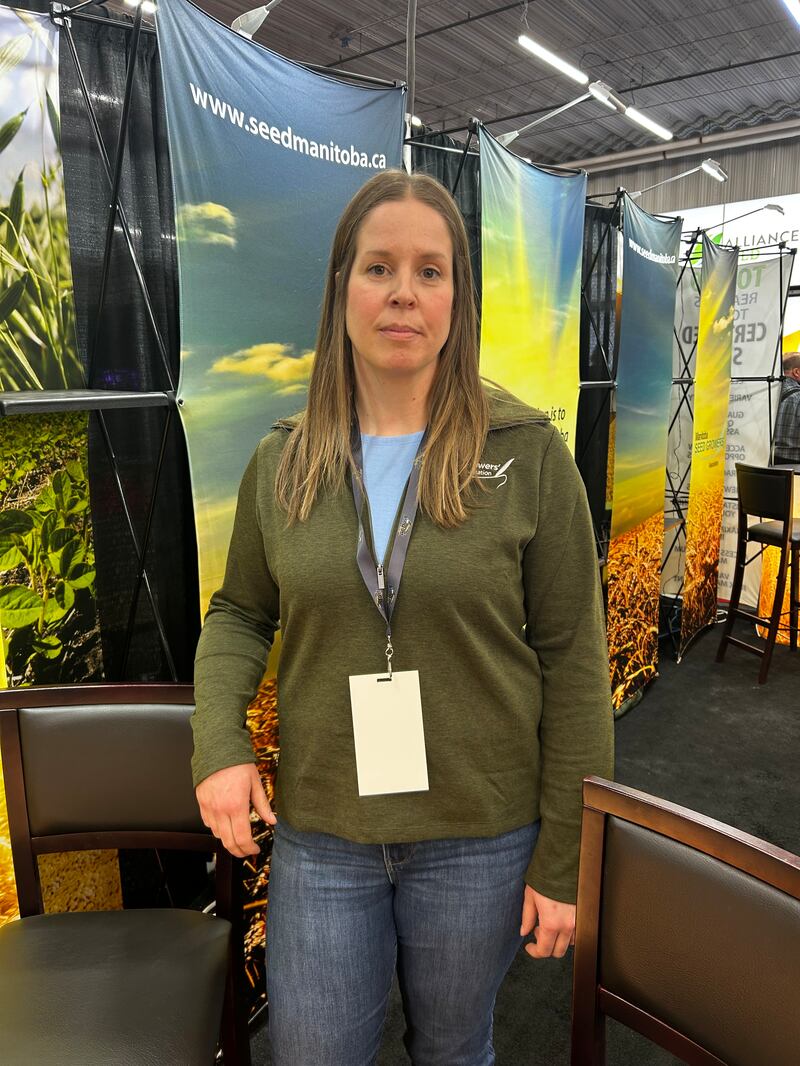
She is a seed farmer but also grows around 2,000 acres of commercial canola.
“When the tariffs (from China) came in, we did see a huge drop in market price,” she said. “It affected us on the farm and affected our profitability.”
Court said she is questioning whether to continue growing the same amount of canola.
“We’ve diversified into other crops, things like peas and soybeans to replace those canola acres,” she said. “Hopefully the politicians can all work together and we can see some of these tariffs lifted long-term.”
“I’m confident that things are going to improve,” she said.
But it’s not just China farmers are dealing with, others are watching trade talks with the United States.
Amanda Ellis is a seed grower in Wawanesa, Man., more than 200 kilometres west of Winnipeg.
She said the initial tariffs imposed by the U.S. last year really had an impact on her business.
Her seed company, Ellis Seeds, exports around 90 per cent of their product, which includes fall rye and forage peas, to the U.S.
They do export some flax seed which goes to Mexico. She’s following North American trade talks closely.
“I think I’d definitely like to see some certainty on the trade talks between Canada, US and Mexico coming up, because obviously the agreement is going to open up here soon,” she said.
“Right now, we have kind of delved into a comfortable position, but with talks opening up again this year, that could change.”

