CLANDEBOYE, Man. — Fuel is essential to Curtis McRae’s farm. Without it, he can’t properly operate.
But recent geopolitical tensions in the Middle East have sent fuel prices soaring, adding pressure at a critical time of year.
As farmers across Canada prepare for seeding, rising costs for key inputs like fuel are becoming a major concern.
“Everything is going to get expensive this summer,” he said.
McRae, who farms near Clandeboye, Man., north of Winnipeg, typically spends about $10,000 on fuel during seeding.
This year, he expects that cost could double.
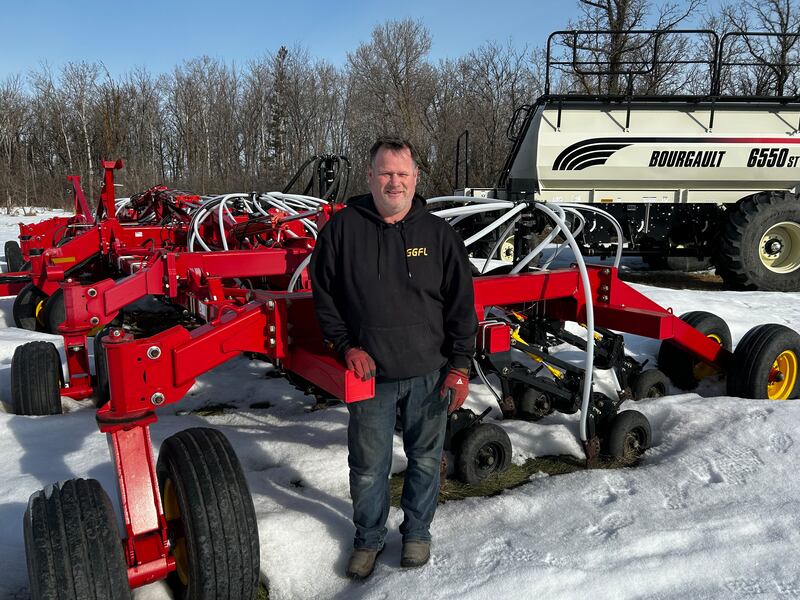
“It’s going to erode the bottom line. Maybe we will have to run a deficit, which won’t be fun,” he said. “But how does that affect food prices? If our products go up in price, we can still make ends meet.”
Despite the financial strain, McRae says farmers will keep going.
“Farmers are still going to farm because it’s more of a love than an occupation, but for the consumers, that’s who I feel bad for because it could get ugly,” he said.
Farmers across Manitoba are facing the same reality, including Thorsten Stanze, who farms near Brunkild, southwest of Winnipeg.
“Everyone who relies on energy is affected by this,” he said. “It’s not just our input costs, it’s also the stuff that you get from shipping, all the way down to the grocery store.”
Fertilizer prices have also surged since the conflict began. Roughly one-third of the world’s fertilizer shipments pass through the Strait of Hormuz, off the southern coast of Iran.
Ongoing threats to shipping in the region have significantly disrupted supply.
“Fertilizer is the biggest impact on our farm price-wise,” he said. “I spoke to one of my neighbours, he had bought fertilizer last year, and he is just getting 75 per cent of it, even though it’s bought and paid for, but because of it (the war), he is scrambling to figure out where to get the rest from.”
‘Politics should stay out of it’
Stanze says farmers already face a range of challenges each year, but this situation is particularly frustrating.
“This problem is simply man-made, and it didn’t have to happen,” he said. “It’s just another layer of difficulty on top of everything else.”
May take months for prices to lower
Economists warn the impact of rising fuel prices for farmers across the country could last well beyond any resolution in the Middle East.
“I don’t expect those prices to ease significantly on a permanent basis in the next couple of months,” said Fletcher Baragar, who is an economics professor at the University of Manitoba. “If things don’t deteriorate militarily or politically, I’m hoping by the end of the year, things will be a little more manageable.”
Baragar points to the price spike following Russia’s invasion of Ukraine in February 2022, when energy costs climbed for a few months before gradually declining.
“If that’s any use as a rough guide, we could then maybe say we can probably expect rising prices over the next month or two, probably into May and June,” he said.
Baragar adds that any relief later in the year will depend heavily on unpredictable military and diplomatic developments.
As for McRae, he says he’ll continue to move forward, despite the uncertainty.
“Farmers still send it every year and somehow make a crop through, having some good luck along the way,” he said. “Farmers have a lot of built-in padding so that we can handle these tougher years, and sometimes the challenge makes it that much more fun.”

