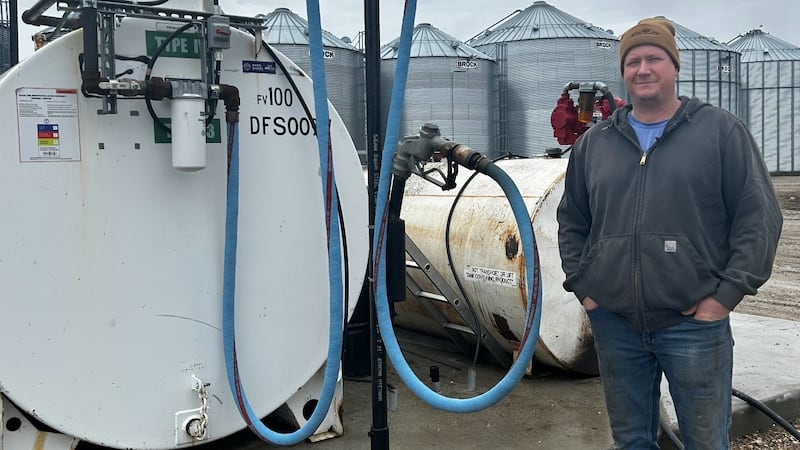
RANDOLPH, Man. – Kevin Peters spends a lot of money on fuel to keep his farm equipment running during the season.
He says rising costs are adding up quickly.
“The fuel increase this year could easily add $50,000 at the end of the year,” said Peters, who farms in Randolph, Man., about 54 kilometres southeast of Winnipeg.
Peters says the rising costs for fuel are eating away at the small margins that already exist.
“We’re just feeling the pressures of the world, but we’re looking forward to some warmer weather and we’re all itching to get some seed in the ground and get moving forward this year.”
Temporary tax cut to start next week
In an effort to ease costs, Prime Minister Mark Carney announced a temporary removal of the federal excise tax on gas and diesel, starting next week.
The suspension will come into effect on April 20 and last until Sept. 7.
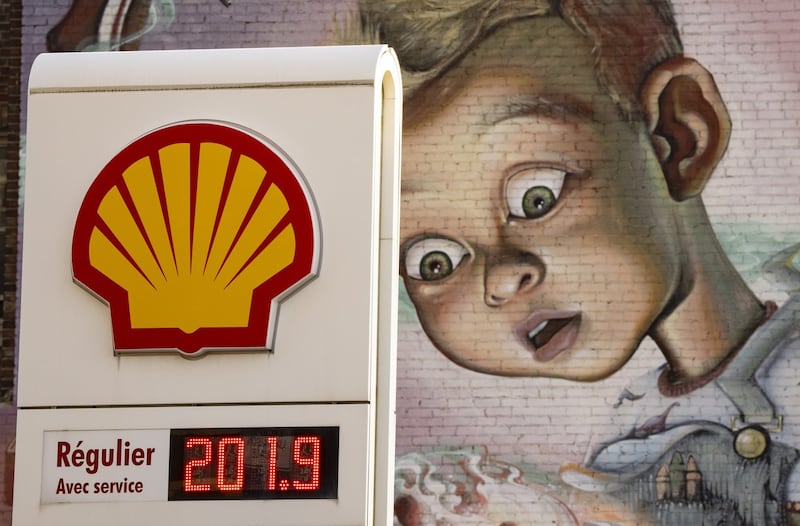
According to the federal government, the tax suspension is expected to reduce gas costs by 10 cents per litre and about four cents on diesel.
But Peters says it won’t have a direct impact on his operation.
“As farmers, we are already exempt from that tax on our own marked diesel on our farm, so our equipment has that exemption,” he said. “It’ll help me with my family car at home when I’m filling up with the car.”
He added that others in the agricultural supply chain may benefit more.
“Seed deliveries, all the trucks on the road that are in and out of farmyards, commercial trucks would definitely benefit from that tax exemption,” he said.
‘A little bit of money’
The trucking industry says that while the savings are welcome, the overall impact will be limited.
Aaron Dolyniuk says the savings of four cents per litre on diesel will save truck drivers about $40 on a 1,000- litre tank.
“It’s challenging as prices increase,” said Dolyniuk, the executive director of the Manitoba Truckers Association. “Does it have a large impact? No. But over time, it’s going to save everybody a little bit of money.”
He emphasized the industry’s reliance on diesel.
“Everything at one time or another moves on a truck,” he said. “Everything this day and age burns diesel fuel in our industry. There are very small segments where there is use for zero-emission vehicles, but the technology is not there yet, and diesel is our reality right now.”
‘Always a trade-off’
Economist Shiu-Yik Au says the tax break offers clear benefits to consumers.
“There’s a huge benefit to myself, and to other people who drive,” said Au, who is an associate professor in the accounting and finance departments at the University of Manitoba. “It’s very valuable to Canadians who are worried about making ends meet.
“It’s also going to affect things indirectly, such as the prices at the grocery store,” as well as items that need to be shipped.
But Au says there are disadvantages, including a large cost that will need to be paid.
“It’s going to hurt the federal treasury quite a lot,” he said. “They’re estimating about $2.4 billion over the six months that it will be gone.”
“It’s not a tremendously huge amount of money when we are dealing with the federal government, but it’s money that could have been used for social services or for health-care improvement.”
He also pointed to potential environmental consequences.
“People will drive more and will fly more,” he said. “When it comes down to it, gas taxes and diesel taxes discourage the use of high-energy activities, such as driving around or moving heavy objects, and this is going to have an increase in pollution levels.

