

This is part one of a four-part investigative series exposing corruption at Canadian airports.
CTV News’ investigative unit W5 has found at least 17 innocent passengers on flights originating in Canada were detained on drug smuggling allegations over the past year after their baggage tags were switched onto suitcases filled with drugs.
All were eventually released, but only after some had been handcuffed, arrested and jailed overseas.
W5 compiled the data through court records, news releases and police sources. The cases involved flights from Canada to the Dominican Republic, Paris, Germany, Morocco, Bermuda, the Philippines and Korea, where drug smuggling can carry the death penalty.
In the last year, the RCMP has arrested six baggage and ramp workers at Toronto Pearson International Airport in connection with alleged bag tag switching cases.
These numbers only reflect cases in which drugs have been detected. There is no way of knowing how many passengers may have unknowingly had their names used to move drugs around the world.
- If you have information on airport corruption, or any other story, send a confidential email to avery.haines@bellmedia.ca or joseph.loiero@bellmedia.ca
How bag tag switching works
The scheme is simple.
A corrupt airport worker unsticks the luggage tag from an unsuspecting passenger’s bag and re-attaches it to a suitcase packed with drugs.
At Toronto Pearson, there are 3,000 security cameras. But there are camera blind spots in restricted areas. And a bag tag switch can happen in just seconds.
If the drug bag makes it through undetected, someone at the destination country retrieves it. If it’s intercepted, the innocent passenger whose name is on the tag is left facing the consequences.
W5 EXCLUSIVES
- Part one: Luggage-tag switching scheme involves flights from Canada to countries where drug smuggling can carry death penalty
- Part two: Investigation reveals security gaps and organized crime at Toronto airport: ‘You could walk out carrying a cruise missile’
- Part three: Air Canada employee accused in Canada’s largest gold heist had been on police radar for years
- Part four: Whistleblowers say organized crime has infiltrated Canada’s largest airport
Toronto woman pulled off flight to New Zealand
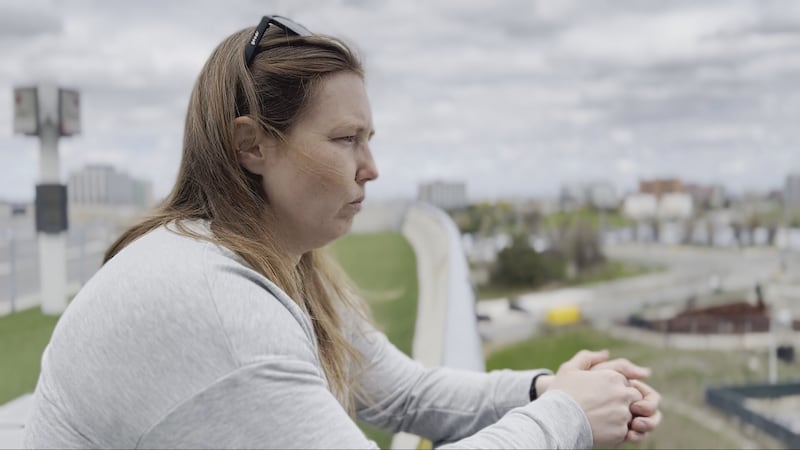
Nicole, a 35-year-old from Toronto, was travelling to Auckland, New Zealand, with her family when her trip was suddenly interrupted during a layover in Vancouver.
Passengers were getting settled for the 14-hour flight when Canada Border Services Agency officers boarded the plane shortly before take-off.
“I hear a man speaking in an aggressive tone. So, I looked around like, ‘What’s going on?’” she told W5.
After Nicole was marched off the plane, she was told she was being detained for transporting narcotics.
‘How do I deny?’
Certified copies of border officers’ notes obtained by W5 show two suitcases tested positive for suspected narcotics.
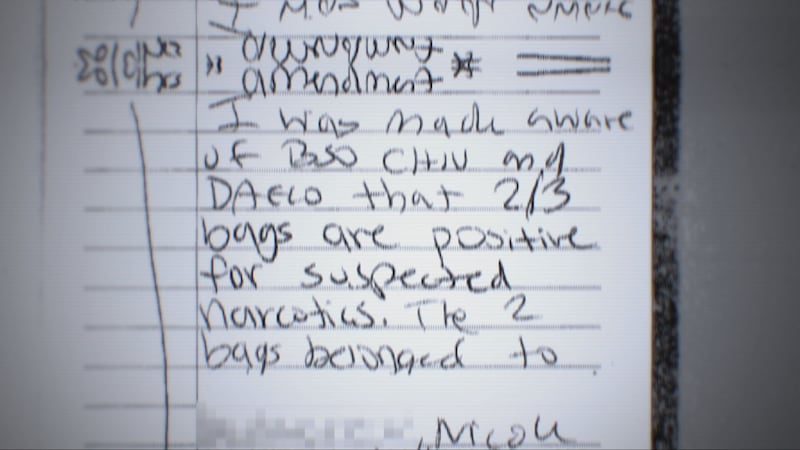
Nicole says inside the secondary screening area, officers opened the luggage.
“They brought out the bolt cutters, … and it is just massive vacuum sealed packages of pills. … It was stuffed full of drugs.”
Nicole insisted the bag wasn’t hers, even though a bag tag with her name on it was attached to the suitcase.
“How do you argue that it’s a tag with my name,” she said. “How do I deny that that’s not mine?”
According to a Canada Border Services report, the luggage contained eight packages of suspected methamphetamine weighing 20.52 kilograms. That’s more than 45 pounds.
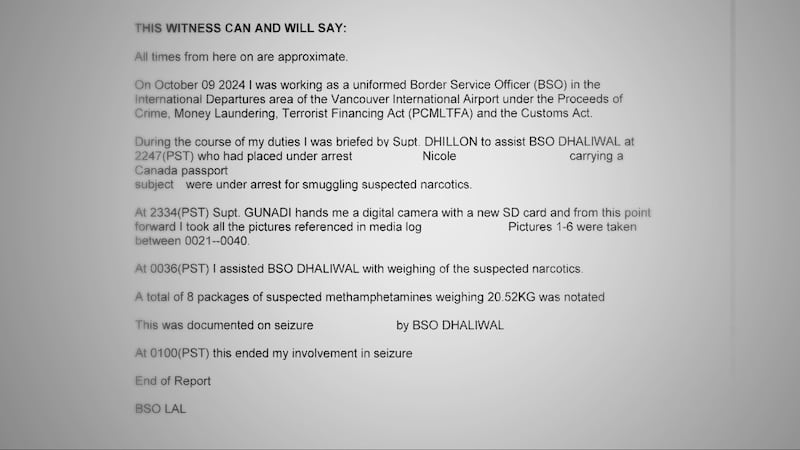
Nicole was arrested.
“I had to take my shoes off,” she said. “They cut the strings out of my pants, put me in the cell.”
The crumpled bag tag clue
In the cell, Nicole kept thinking about the tag.
“The tag looked crumpled. When I put it on it was in pristine condition,” she said.
About seven hours after her arrest, Nicole was released. While no one has explained what cleared her, she believes airport surveillance may have shown the bags she checked looked nothing like the drug-filled suitcases with her luggage tags.
“I know how lucky we were that it happened in Canada,” Nicole said. “But if it had happened somewhere else, ... some places still have capital punishment for it.”
When the family eventually arrived in Auckland, their real bags - the ones whose original tags had been removed in Canada - were sitting in the unclaimed luggage area with “rush tags” attached.
Airport employees use rush tags for luggage that has been delayed, mishandled or separated from its owner.
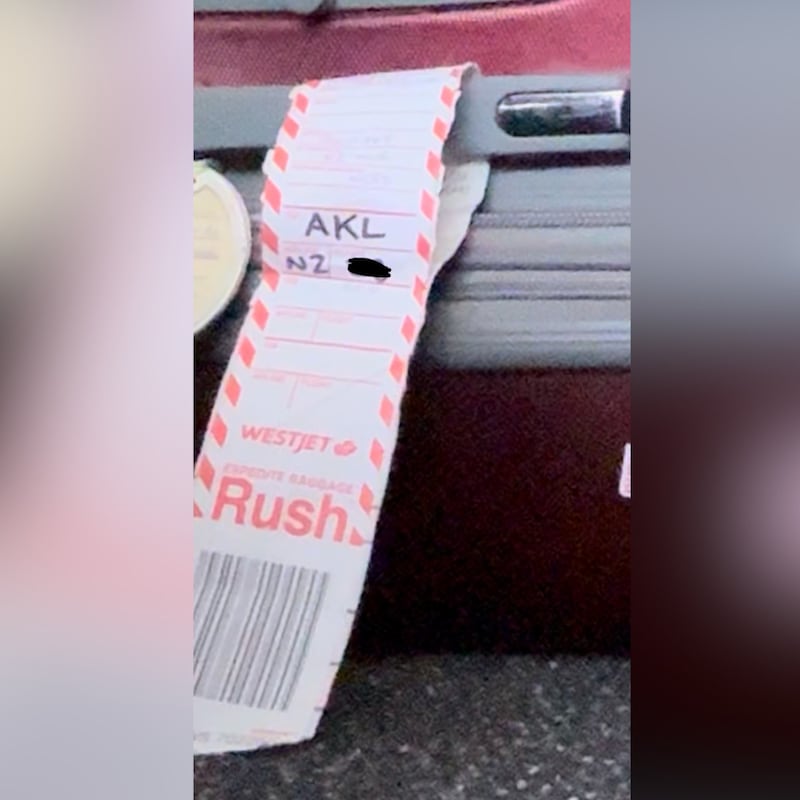
Had the drug bags not been discovered in Vancouver, Nicole may never have known her name had been used to move millions of dollars worth of methamphetamine to the other side of the world.
AirTags hidden inside drug bags
Nicole says tracking devices were hidden in the bags, presumably so the criminals behind the scheme could track them.
“What I was told is that they will swap the tags … and they’ll intercept the bags with the drugs in them. You’ll get to your destination and pick up your bag and not know that anything’s happened. And so, it happens more than you know, and it’s just not necessarily caught,” she said.
Canadians jailed in the Dominican Republic
Three Canadians on vacation in the Dominican Republic were jailed after a bag tag switching case at Toronto Pearson Airport linked them to suitcases filled with drugs.
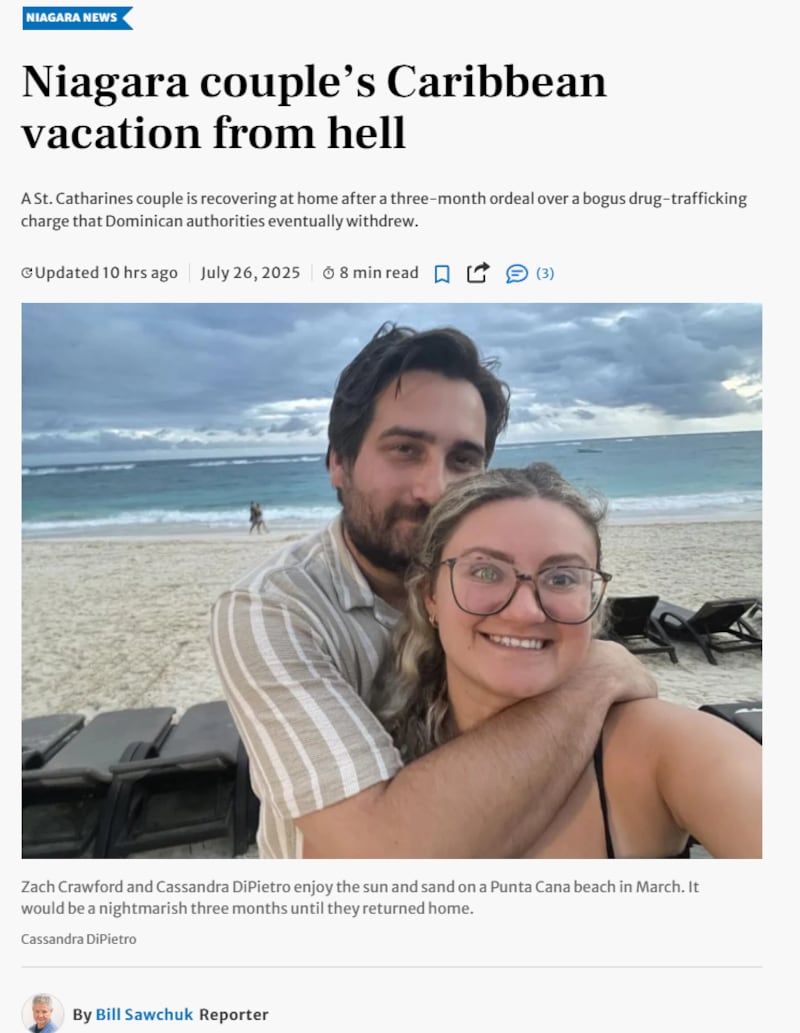
Dominican customs posted video of the three Canadians being led away to face charges of importing 79 packages of Canadian marijuana into the country.
They were stuck in the Dominican Republic for months even after the charges were dropped, after authorities determined the marijuana-filled suitcases did not belong to them.
No arrests in Nicole’s case
Nicole travels differently these days. The Toronto paramedic says she has lost trust in the system.
“I literally handed my bag to you and your one job was to get it safely on the plane. I never in a million years would have thought that something this simple would happen.”
The bag tag switch that landed Nicole in an airport cell in Vancouver is believed to have happened at Toronto’s Pearson Airport. No one has been arrested in her case.
W5 has spoken to numerous victims of bag tag switching as part of a larger investigation into airport corruption. Here are some of the steps they now take when they travel.
How to protect yourself when you fly
- Take photos and videos of your bag at the airport. Document what your luggage looks like before you hand it over.
- Take a photo or video of your bag being weighed. That can help confirm the original weight of your luggage in case anything is added after check-in.
- Make sure your bag tag is securely attached. Before your bag disappears onto the conveyor belt, check that the tag is properly fastened and clearly visible.
- Keep a record of your baggage receipt. Do not throw out the small sticker or baggage claim receipt until your trip is over and your luggage is safely back in your possession.
- Use a luggage tracker. Several victims told W5 that tracking devices helped show where their real bags had gone.
- Take a photo of the bag tag itself. Make sure the tag number, destination and passenger name are visible.

