

Higher gas prices driven mainly by the war in Iran pushed inflation higher in April but some economists argue the conflict’s looming costs haven’t been fully captured in the latest price data.
Inflation rose to 2.8 per cent in April, Statistics Canada said Tuesday -- the highest annual inflation rate since May 2024.
StatCan’s April report marks a jump from March’s inflation rate of 2.4 per cent, though a Reuters poll of economists had expected inflation would accelerate even more to top three per cent.
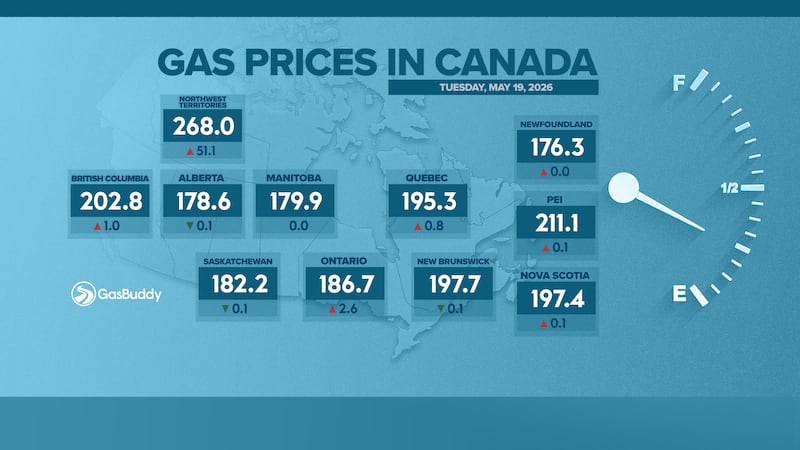
StatCan said the cost of gasoline was 28.6 per cent higher year-over-year last month as conflict in the Middle East disrupted global oil shipments, sending costs soaring at the gas pumps. April also marked the switch to more expensive summer gasoline blends at gas stations in Canada.
The federal government’s decision to remove the consumer carbon price a year earlier, meanwhile, skewed the annual price comparison higher in April.
Nixing the carbon price took roughly 18 cents off the price of a litre of gas in April 2025. While that move took some steam out of the headline inflation rate over the past 12 months, that reduction has now fallen out of the annual comparison -- pushing inflation higher rather than depressing it.
StatCan noted Ottawa’s move to suspend the fuel excise tax mid-month helped moderate the April price increase. That pause, which removes an estimated 10 cents from a litre of regular gas and four cents per litre of diesel, is scheduled to last until Labour Day.
StatCan said an 11 per cent annual price drop for travel tours in April and a slowdown in rent inflation nationally helped offset rising energy costs. Rent hikes have especially eased in British Columbia as its population shrinks; StatCan noted the province was the only one that didn’t see its inflation rate accelerate in April.
CIBC senior economist Andrew Grantham said in a note to clients Tuesday that higher prices for airfares tied to spiking fuel costs were not captured in the April inflation data, because those transactions are recorded when the flight is taken -- not when the ticket is purchased. He said he expects to see those pressures show up more in the summer inflation readings.
Food inflation also eased to 3.5 per cent in April, down from four per cent in March, as grocery items such as chicken, fresh vegetables, coffee and tea saw their pace of price hikes slow following sharp increases earlier in the year.
Benjamin Reitzes, managing director of Canadian rates and macro strategist at BMO, said consumers’ grocery bills might not be spared the impact of the Iran war. Spiking energy prices and disruptions to the global supply of fertilizer are likely to hit store shelves if the conflict persists, he warned.
“Hopefully we can get more declines, but that is difficult to see if fertilizer prices are pushing higher, energy prices are pushing higher,” Reitzes said. “All of that does point to higher food prices over time. We will see how long it takes for those to pass through.”
The April figures mark the Bank of Canada’s last look at inflation data before the bank makes its next interest rate decision on June 10.
The central bank has held its policy rate steady at 2.25 per cent in its last four decisions.
TD senior economist Leslie Preston said in an analysis note that knock-on effects from the Iran war oil shock are not yet showing up in non-energy segments of the consumer basket.
The Bank of Canada’s closely watched core inflation metrics cooled more than expected in April, Preston said, offering “little argument” for rate hikes from the central bank.
Officials at the Bank of Canada have explained that the energy price shock from the Iran war puts them in a bind. Responding to this inflationary impulse with rate hikes risks hampering an already soft Canadian economy, but lowering the policy rate could add more fuel to price increases.
Bank of Canada governor Tiff Macklem has said the bank is willing to look through the initial energy price spikes from the conflict but will act to ensure inflation doesn’t become entrenched.
Reitzes said that April’s inflation report was good news for monetary policy-makers, because it “puts exactly no pressure on them” to raise interest rates.
He said the Bank of Canada is likely clear to remain on hold through the summer and early fall at this rate, but rate hike talk could pick up if the central bank starts to see a string of bad inflation reports where energy pressures are spreading to other elements of the consumer basket.
“But that’s just not where we are right now,” Reitzes said.
Grantham said the soft core inflation readings suggest there’s slack in the Canadian economy, which will continue to keep a lid on inflation even if higher gas prices start to work their way through other components in the months ahead.
“Because of that, we continue to see the Bank of Canada holding interest rates steady at their current level throughout 2026,” Grantham said.
Craig Lord, The Canadian Press
This report by The Canadian Press was first published May 19, 2026

