
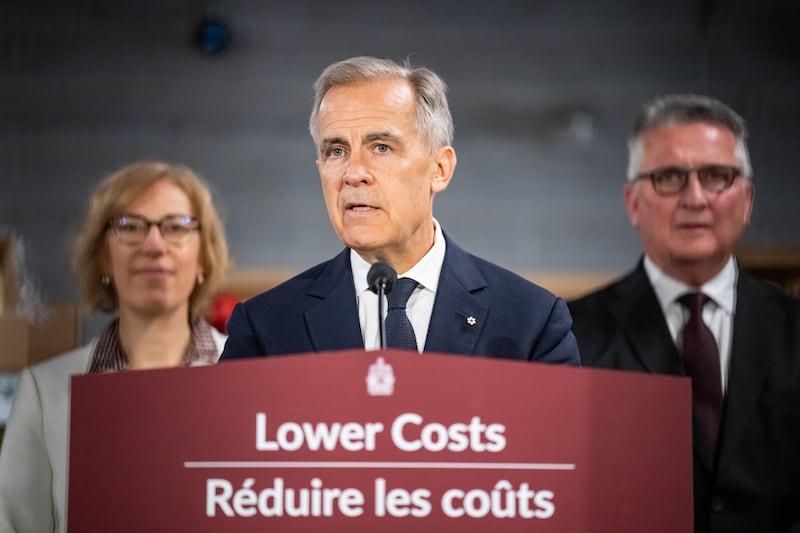
The federal government unveiled a new food security strategy this week aimed at increasing competition in Canada’s grocery sector, with a focus on helping small and medium-sized grocers better compete with larger chains.
The government says the plan is designed to create a more competitive food system and ultimately help lower prices for Canadians, who continue to feel pressure at the checkout counter.
“Grocery prices are tough for everyone, across the board,” one shopper told CTV News at Farmer’s Pick, a local independently owned grocery store in Ottawa.
The strategy includes measures intended to support independent grocers, like Farmer’s Pick, by addressing challenges that smaller retailers face when competing against major grocery companies.
“The Canadian grocery market is controlled by two or three of the big players,” said Alfonso Curcio, owner of Farmer’s Pick. “They squeeze out all the independents because we’re not able to compete.”
Curcio, who has operated the business for 30 years, said he would welcome changes that help level the playing field for independent stores, but questioned how the government’s plan will be paid for.
“That would be great, if I’m not paying for it somewhere else, through more taxes or whatever,” Curcio said. “Everything sounds great, but at the end of the day if they’re going to open up distribution centres, who’s going to pay for that?”
The federal strategy intends to change how food is bought, sold, transported and distributed across Canada. The government says it is backing the plan with $3 billion in funding over the next decade.
Gary Sands, senior vice-president of the Canadian Federation of Independent Grocers, said the strategy could benefit both smaller retailers and consumers.
“This is good news for independent grocers. It’s going to improve competition, but it’s really going to be good news for consumers because, in the long term, when a lot of these things come on stream, they will make food more affordable for Canadians,” Sands said.
Shoppers at Farmer’s Pick said more competition in the grocery sector is needed.
“We need more competition and we need to pay less at the checkout,” one shopper said.
Another said a greater variety of independent stores helps maintain choice for consumers.
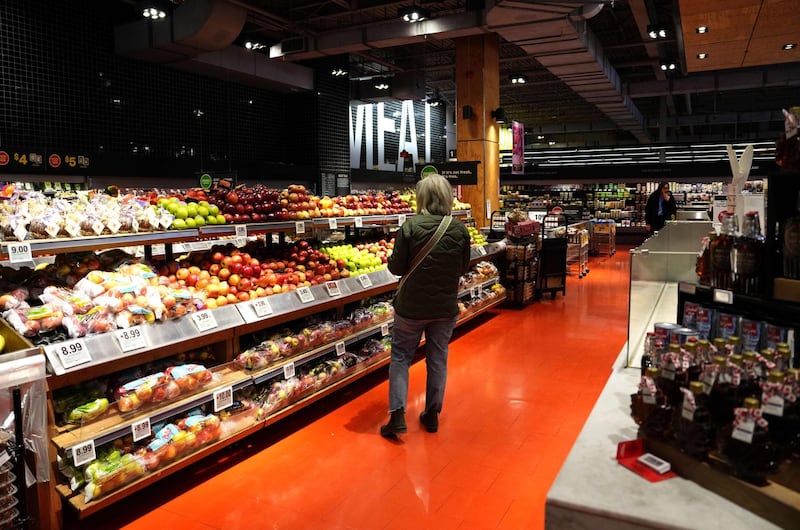
“When we’re all reduced to the same box stores everywhere, it decreases our options and it all goes to a higher level and not staying as local,” the shopper said.
The announcement comes as grocery prices remain a key concern for Canadians.
Conservative Leader Pierre Poilievre criticized the Liberal government’s approach, saying previous promises to make food more affordable have not resulted in lower prices.
“Every couple of months a Liberal minister goes out and promises affordable food, and what happens the next month? Food prices rise even more,” Poilievre said.
The federal government says five major retailers currently control about 75 per cent of Canada’s grocery market, along with much of the country’s food distribution system.
It argues that increasing competition will be an important part of bringing prices down.

