A new national study suggests Canadians generally view supervised consumption sites as beneficial and do not believe they have negative effects on communities or health systems.
The findings were released in the International Journal of Drug Policy as Alberta and Ontario move to close several of the facilities.
“They (Canadians) thought that not only did these sites provide access to supports and health-care resources, but they also felt more neutral toward the crime situation, saying it didn’t really impact crime one way or the other,” said Dr. Monty Ghosh, an addictions medicine physician and one of the study’s authors.
The study, which surveyed nearly 2,900 Canadians between July 2022 and May 2023, found respondents perceived supervised consumption sites as reducing overdose and infection risks, improving access to health care and social services, and decreasing public drug use and discarded needles.
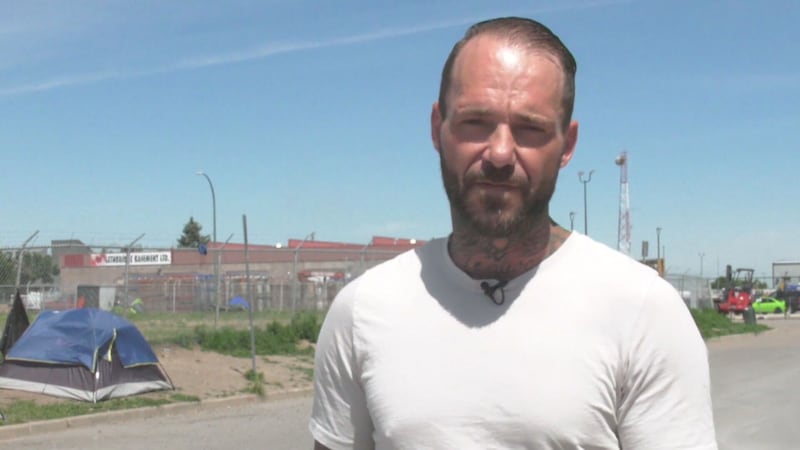
Safe consumption sites ‘saved my life’
Alberta is preparing to close two supervised consumption sites — one at Calgary’s Sheldon M. Chumir Health Centre and another outside the Lethbridge Shelter — on June 30 as the province continues its shift toward recovery-oriented treatment.
Ontario has also moved to shut down several supervised consumption sites in favour of treatment hubs, underscoring a broader national debate over how best to address the toxic drug crisis.
Calgary’s site opened in 2017 in response to the opioid crisis and has since become a flashpoint in the city’s drug policy debate, with some area residents and businesses arguing it contributed to increased social disorder and crime in the surrounding neighbourhood.
“Those safe consumption sites saved my life,” said Albertan Travis Peddie, who has been clean for six months and relied on sites in both Lethbridge and Calgary.
Not long ago, Peddie was living in one of the tents that lined the streets around Lethbridge’s supervised consumption site, part of an encampment that became a visible symbol of the city’s addiction crisis.
“Everybody here is dealing with pain, trauma, grief, loss,” he said. “And they’re also somebody’s brother, sister, mother, daughter.”
Peddie said news of the closures is alarming because he worries some people will lose a lifeline that once kept him alive.
Last November, he overdosed at Calgary’s supervised consumption site and said it took 17 doses of Narcan, a medication capable of reversing the effects of an opioid overdose, to revive him.
“Although I hope I never relapse and I never need those sites ever again, I’d like that form of treatment to be available to me and to everybody else who needs those sites,” he said. “Those sites kept me safe and kept me alive until I was able to find recovery and be a fully present, fully capable, loving, gentle father.”
He said the closures will push drug use further into the open, leading to more public overdoses and deaths while putting additional pressure on an already strained system.

“It’s going to put more pressure on the hospitals, on the shelters, on the public and less resources for the people that need them.”
Ghosh said supervised consumption sites provide more than overdose prevention. They also serve as a point of entry into more intensive treatment services and are especially important because Alberta’s illicit drug supply is increasingly volatile.
“Everything could change in a blink of an eye,” he said. “We have a large amount of carfentanil that enters the drug market in Calgary and we can see a spike in drug overdoses.” Carfentanil is a powerful synthetic opioid originally developed for veterinary use.
“Given the fact that the drug supply is so volatile, it’s even more crucial that we have these services available to help support this population group because it is incredibly unpredictable.”
Can a recovery-focused approach help?
The Ministry of Mental Health and Addiction said every death due to addiction is a tragedy but pointed to declining overdose numbers in the province as evidence its recovery-focused approach is working.
According to the ministry, opioid-related deaths across Alberta have decreased by about 39 per cent since peaking in 2023. In Calgary, opioid overdose deaths have declined by 65 per cent and are now consistent with pre-pandemic levels.
In a statement to CTV News, the ministry said it continues to invest in its Alberta Recovery Model and is “moving away from the past focus on acute care interventions that provided no clear path to recovery.”
As supervised consumption services wind down, the ministry said it is expanding rapid access addiction medicine services, increasing withdrawal management capacity and deploying 24-hour recovery response teams made up of paramedics, nurses and peer support workers to respond to confirmed or suspected overdoses around the Calgary Chumir area and surrounding community.
The ministry also highlighted the more than 537 publicly funded detox, treatment and recovery beds in Calgary, as well as new recovery communities opening near Calgary in Siksika Nation and Tsuut’ina Nation.
As the transition away from supervised consumption sites continues, Peddie and his lawyer sought an injunction to keep the Calgary and Lethbridge sites open.
“We didn’t get the injunction, sadly, but we are in the court of appeals,” he said.
As they await a court date, Peddie said he will continue to advocate for the most vulnerable.
“Hopefully my voice can give a positive impact to the people that are still struggling with addiction,” he said.
“There is a way out. Harm reduction works and recovery works if you put in the work.”

