
WINNIPEG – Prairie grain is set to move along the Hudson Bay Railway to the Port of Churchill later this week, marking it the first grain shipment through Canada’s northern trade corridor since 2020.
Beginning Friday, grain will travel north from The Pas, about 625 kilometres northwest of Winnipeg, on the Hudson Bay Railway to the Port of Churchill, where it will be prepared for export.
Multiple vessels are scheduled to transport the grain to international markets later this summer.
“This is an important day for Arctic Gateway Group, for Prairie producers, and for the Indigenous and northern communities that own this corridor,” said Mike Spence, chair of the Arctic Gateway Group (AGG) and mayor of Churchill, in a release.
“It’s a strong signal of the progress made to restore and rebuild this corridor, and of the opportunity ahead as we continue growing the business with a diversified mix of exports.”
Chris Avery, who is the president of AGG, which owns and operates the Port of Churchill, didn’t disclose how many tonnes of grain will be shipped through the port this year, but expects the first shipment of grain to happen in either late August or early September.
He says this shipment represents another significant step in the revitalization of the Port of Churchill, which is Canada’s only deepwater Arctic seaport with a direct rail connection to the North American transportation network.
“It’s been one of the busiest years in quite some time,” he said. “It’s certainly the most diversified range of commodities that we’ll carry.”
In addition to grain, the port will also export critical minerals and potash, as well as industrial goods, supplies and equipment to.
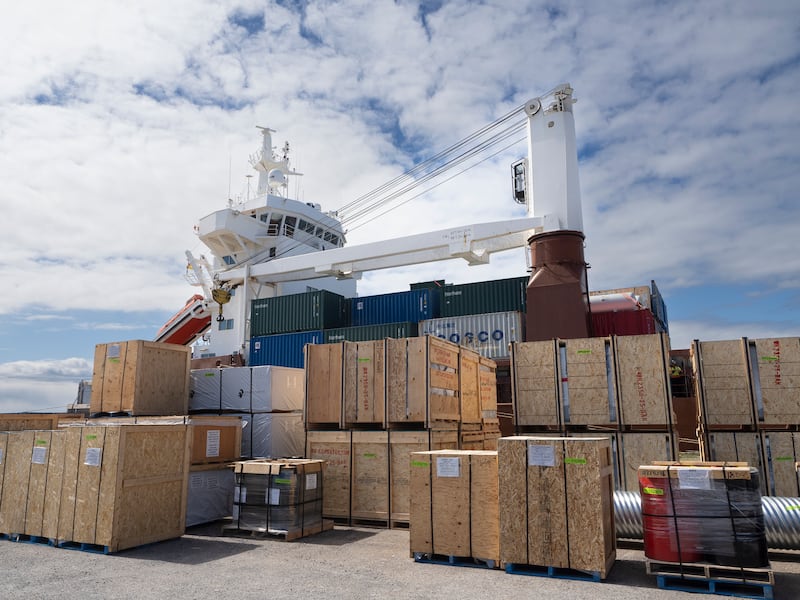
“We expect to have three vessels of northern supplies go out, we expect to have a vessel come in for critical minerals this year, and we expect to have a number of vessels come in for agricultural products,” he said.
Interest in revitalizing the port has increased in recent years as Canada works to diversify its global trade markets and lessen its dependence on the U.S.
“It is about diversifying Canadian trade through a reliable northern trade corridor, supporting the export of Western Canada’s vast resources, strengthening Canada’s presence in the north, and delivering long-term benefits to AGG’s Indigenous and northern community owners,” he said.
The port was shut down by its previous owner, U.S.-based OmniTrax, in 2016. It was sold to the current operator, ACC in 2018.
Grain shipments to the port were halted in 2020 due to the failing rail line, which has now been largely completed.
“The railway is the strongest shape in its history, and its kept strong with modern, new tools like ground penetrating radar, LiDar, drones and AI,” aid Brad Harte, who is the director of communications and government relations at AGG.
Major economic benefits: University of Manitoba professor
Shiu-Yik Au says bringing back grain shipments through the port will help boost economic development in the north by creating jobs and will also benefit the agricultural sector.
“It’s absolutely great news for grain farmers in Manitoba, as well as people in the north,” said Au, who is an associate professor in the Accounting & Finance Department at the University of Manitoba.
“Being able to diversify our trade routes away from our traditional partners towards, other partners, is incredible.”
Earlier this year, Ottawa said it’s considering a major expansion of the Port of Churchill that would transform the northern Manitoba facility into a year-round, multi-commodity trade hub.
Ottawa said that upgrading the port is still of interest, but the plan needs more development.
Churchill building global connections
AGG has also been working to strengthen international partnerships, recently signing an agreement with Port of Antwerp-Bruges International in Belgium, one of the world’s largest cargo-shipping hubs.
Au said demonstrating the Port of Churchill’s ability to move commodities could create significant opportunities for Manitoba’s economy.
“Right now, there is a huge political push to build pipelines and other things to move energy products to markets outside of Canada, and by showing we can do it at the Port of Churchill, there is potential for tremendous growth for Manitoba,” said Au.
Manitoba Premier Wab Kinew said earlier this year that Ottawa had indicated it wants to see liquefied natural gas shipped from Churchill by 2030, or federal support for a larger port expansion could be reconsidered.
The federal government has set a target of increasing Canada’s LNG production capacity to 50 million tonnes annually by 2030 and says it is working with provincial, territorial, and Indigenous partners to reach that goal.

