A Canadian miner is trying to position its antimony deposit in Ontario as part of the United States’ future defence supply chain.
While Toronto’s Critical One Energy searches for more antimony underground, it is also trying to secure U.S. government funding.
In doing so, it’s trying to prove its resources are domestic enough for the U.S. government to buy.
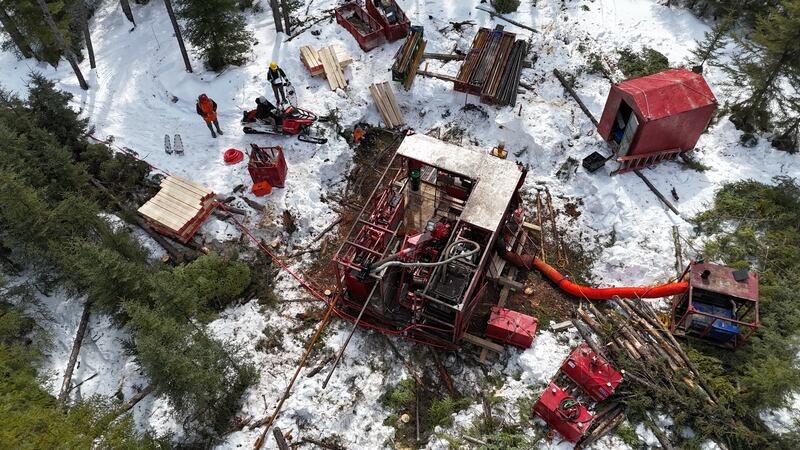
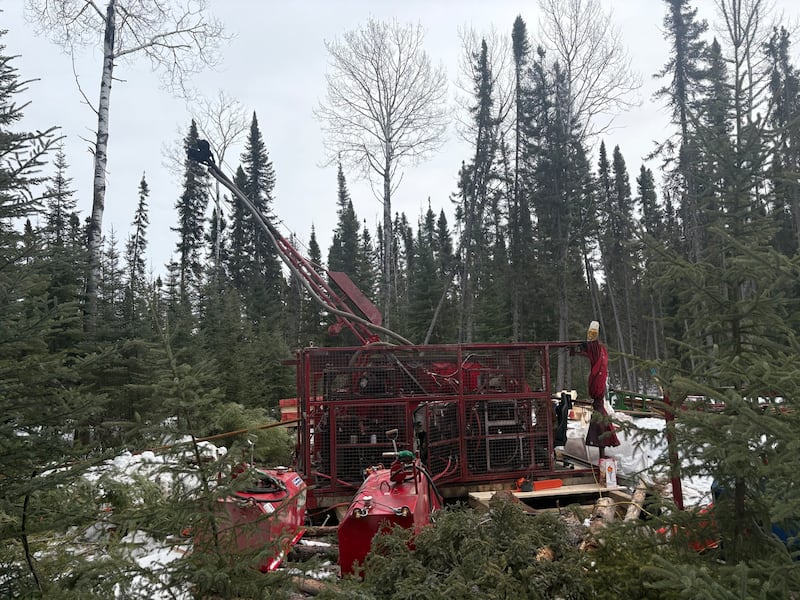
The company says it is currently in the middle of a $9-million drill program at its Howells Lake antimony-gold project in northwestern Ontario to rebuild North America’s supply chain.
The strategy comes as the U.S. government is heavily prioritizing domestic mining and processing to break its reliance on China.
“We’re strategically trying to fix a problem that’s 40-plus years in the making, and that is this broken supply chain that North America is endeavouring to repair,” Critical One Energy, CEO Duane Parnham told BNN Bloomberg.
To make its case that an Ontario project can still compete for U.S. defence contracts, the company hired retired U.S. Army General Charles A. Flynn as a strategic advisor.
“My role… is to make it apparent that we have a problem,” Flynn told BNN Bloomberg.
“We basically have an anemic, if not incredibly weak, processing capacity inside the United States, like many countries.”
Building a North American supply chain
The U.S. government has already begun directing public funding toward rebuilding its antimony supply chain after China, which dominates the supply chain, imposed strict export restrictions, triggering a historic price spike.
Earlier this year, the U.S. government awarded US$27 million through the Defense Production Act to the U.S. Antimony Corp. It also gave US$80 million to Perpetua Resources last year for a domestic “ground-to-round” antimony trisulfide supply chain in Idaho, which is expected to supply the U.S. military.
Parnham says Canada is also trying to strengthen its role in critical minerals by building more value-added processing instead of simply exporting raw materials.
“We’re seeing a lot of inward activity from NATO partners,” he says.
“The narrative coming from our politicians now… is let’s try and value-add. Let’s repair the supply chain in Canada. Let’s create jobs. Let’s create an economic environment whereby the critical minerals become more of a Canadian, NATO, U.S. play.”
‘We need to do it with our friends, allies, partners...’
Flynn says the U.S. lacks sufficient processing capacity for many critical minerals and will need supplies from allies like Canada while it rebuilds its domestic capabilities.
He says the goal is to create multiple sources of supply and multiple processing options across North America rather than relying on a single country.
“We need to do it with our friends, allies, partners and neighbours in the Western Hemisphere,” Flynn says.
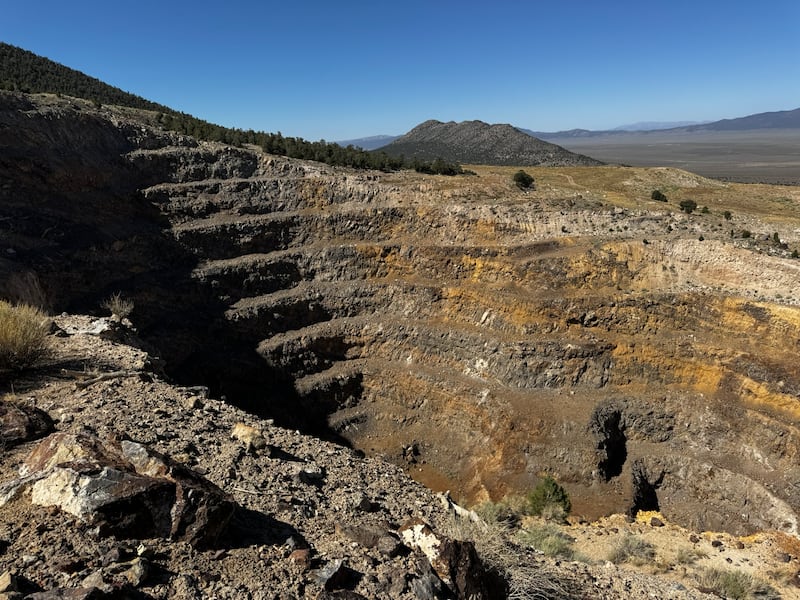
Critical One is not the only Canadian firm aiming to support U.S. supply chains. Vancouver-based NevGold Corp. is extracting antimony from surface-level historic mine waste at its Nevada project.
Flynn says antimony is important because small amounts are essential in many defence products like ammunition primers and igniters.
Having the mineral in the ground, he says, is only one part of the challenge.
“We have to mine it, separate it, refine it… and then bring that finished product to the defence industry.”
High-grade drilling expands the project
The Howells Lake antimony-gold project remains in the exploration stage and does not yet have a mine permit or production timeline.
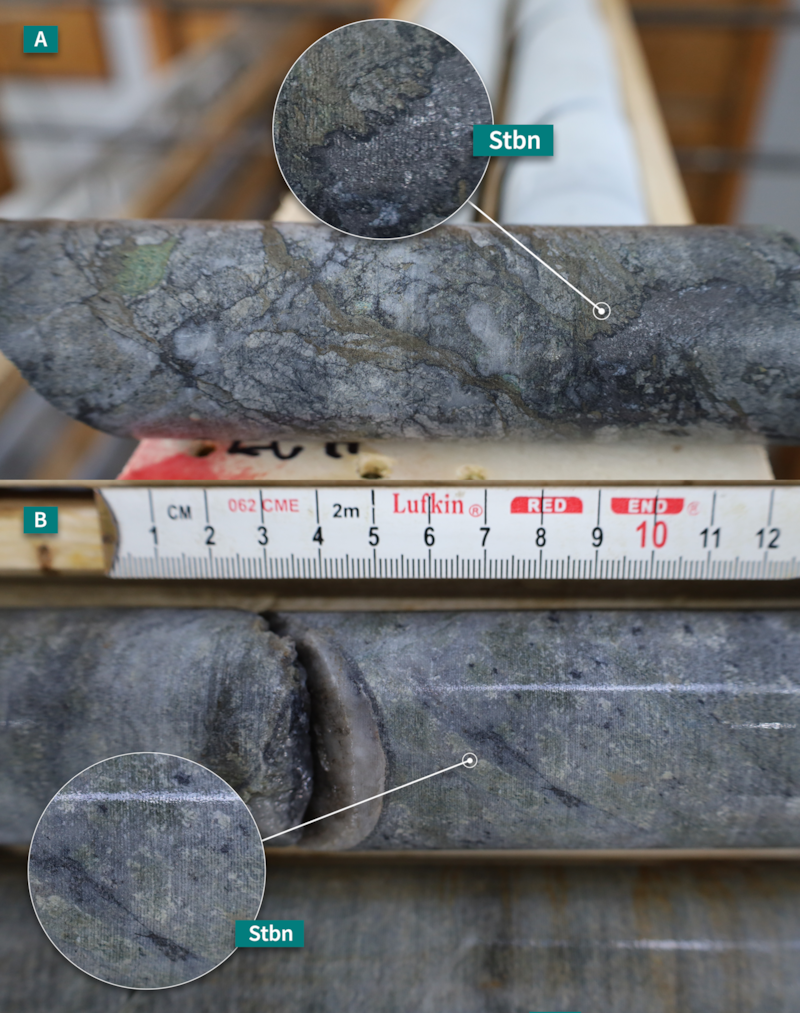
Parnham says the project is based on a historical estimate containing roughly 48 million pounds of antimony identified through drilling between 1978 and 1984, but says the current drilling program continues to expand the mineralization.
He says the company acquired 100 per cent interest in the Howells Lake Antimony Gold Project 16 to 18 months ago and has been trying to upgrade it from a historical resource discovered in 1978 and drilled into the 1980s.
“And then you know all activities out there dropped…plus, the fact that probably nobody knows what antimony was back then. So it was a very difficult endeavor, says Parnham.
The company is roughly halfway through its $9-million drill campaign after completing 34 holes.
It announced several high-grade drill results, including four metres grading 70.2 per cent antimony and another interval of 4.17 metres grading 27.35 per cent antimony.
“We know we can process material very cleanly,” says Parnham, adding that the technology is less costly and the resource is “near surface.”
He also says the area benefits from being 120 kilometers from the Ring of Fire, Ontario’s new critical minerals economic zone, which has received a $1 billion government commitment.
“I’m calling our area the Outer Ring of Fire because we’re actually within that corridor,” says Parnham.
“It’s not hard to get our material to market. It is remote at the time right now, but the infrastructure is being rolled out for us, so that’s quite easy.”
A long-term strategy
Neither Flynn nor Parnham expects North America’s critical minerals supply chain to be rebuilt quickly.
Flynn estimated restoring processing capacity and broader supply chains could take at least five to seven years, with a full recovery likely taking more than a decade.
“This is not going to be solved in one election cycle, one administration cycle or one funding cycle,” he says.
He says the industry is playing catch-up after years of limited investment in exploration.
“When you say, ‘Hey, I need antimony,’ the explorers like Critical One haven’t been exploring for the last 10 years or more,” he says.
“How do you turn on a switch to say, ‘Hey, I’m going to start mining antimony in today’s environment?’ It’s near impossible.”
He says the renewed attention on critical minerals gives the industry momentum it has lacked for years.
“Now everyone is paying attention,” says Flynn.
“And that’s what excites me. It’s not just us, gold bugs or us metal guys. It’s everyone, and there’s a great need for it.”

