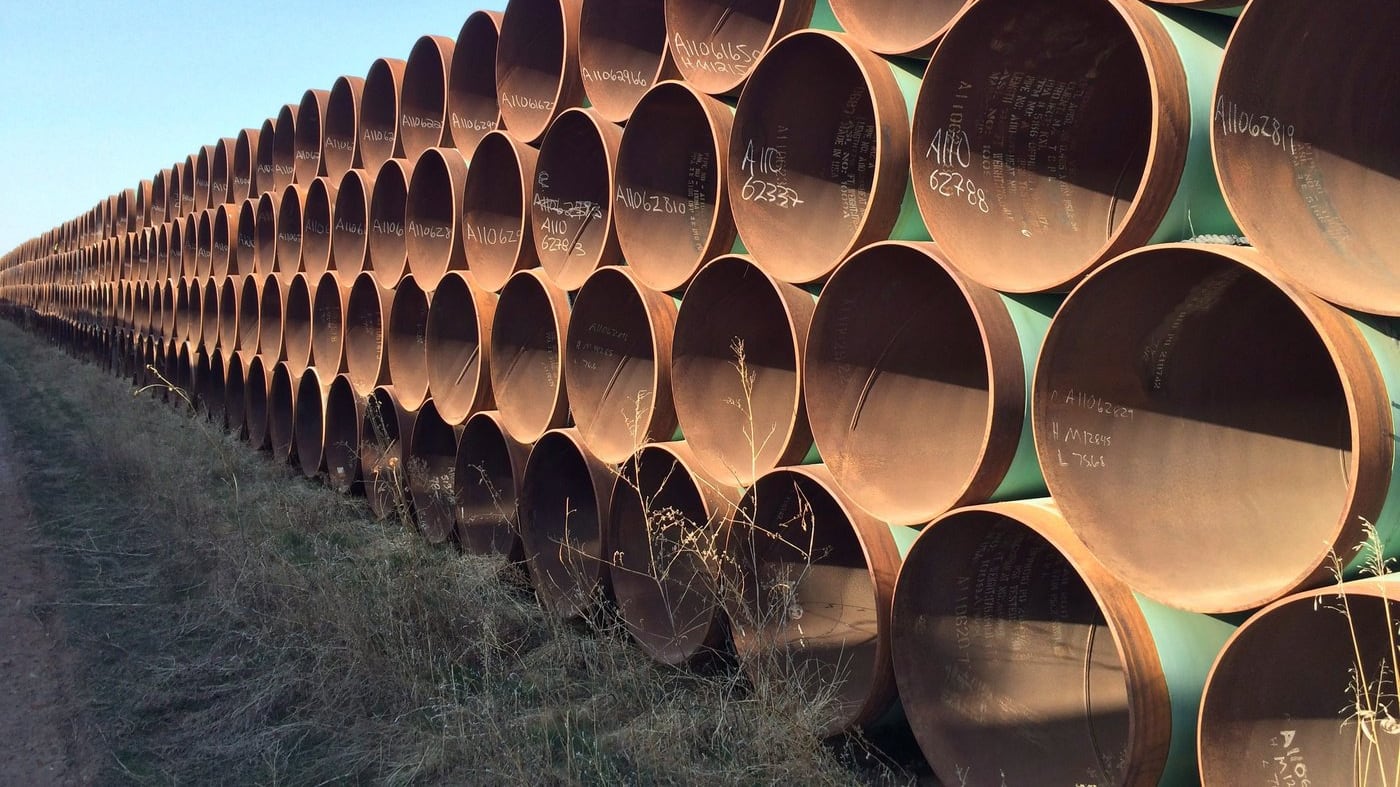
U.S. President Donald Trump hinted that he may revive an old pipeline project that would export oil from Canada to the U.S. as part of a pending trade deal.
In a Truth Social post shared Tuesday night, Trump said he had suspended the 50 per cent tariffs on Canadian goods for three days, two hours before they were set to take place on Wednesday.
The deal, he stated, may include revitalizing the Keystone XL pipeline, a long hotly-contested project that has been in the works for almost a decade.
Trump had attempted to revive the project during his first presidency as part of his then-campaign promises, but the pipeline was quashed by Joe Biden in the first year of his term.
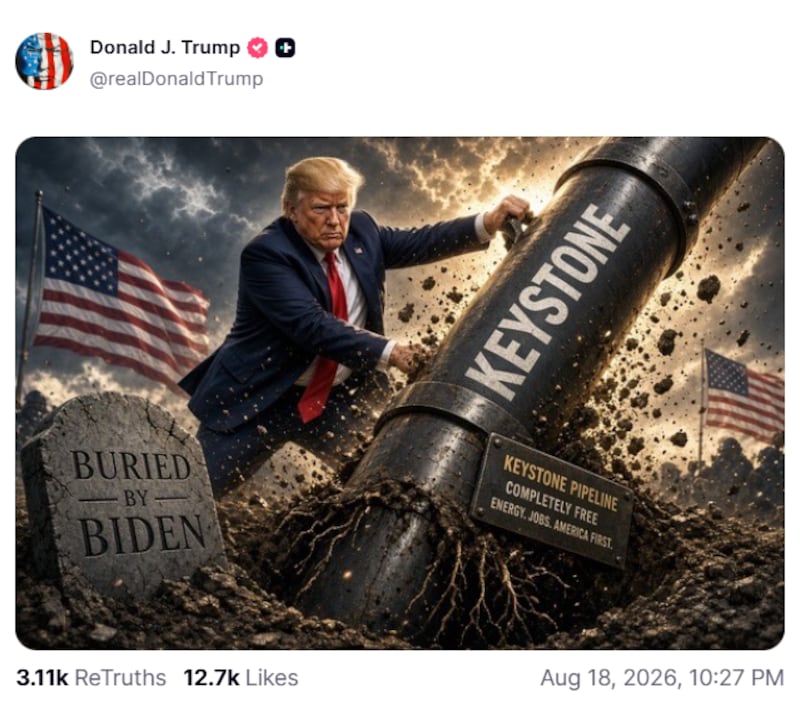
“The great Keystone XL Pipeline, long ago killed by Sleepy Joe Biden, may be awoken from the grave!” Trump’s social media post reads.
He then published an AI-generated image of himself hoisting the Keystone XL pipeline out of a gravesite marked by a tombstone labelled “BURIED BY BIDEN.”
Prime Minister Carney did not mention the pipeline in his own statement on Trump’s announcement.
“Substantial progress has been made, although there is important work still to be done,” read the statement.
First proposed in 2008, the project has seen a rocky journey, piled with legal barriers, opposition from environmental and Indigenous activists, and subject to the whims of U.S presidents at different points in time.
What is Keystone XL?
It has been proposed as an expansion project that would carry Canadian crude oil to the U.S. Gulf Coast and, if built, potentially increase those exports to the U.S. by more than 12 per cent.
The current Keystone pipeline, first proposed in 2005 and built between 2008 and 2010, runs from Hardisty, Alta., across Saskatchewan and Manitoba and before crossing the U.S. near Haskett, Man., into North Dakota, Illinois and Nebraska.
Keystone XL, if it had gone ahead, would have seen a direct route built between Hardisty and Steele City, Neb.
However, only the U.S. portions of the extension have been constructed so far.
How was it initially approved?
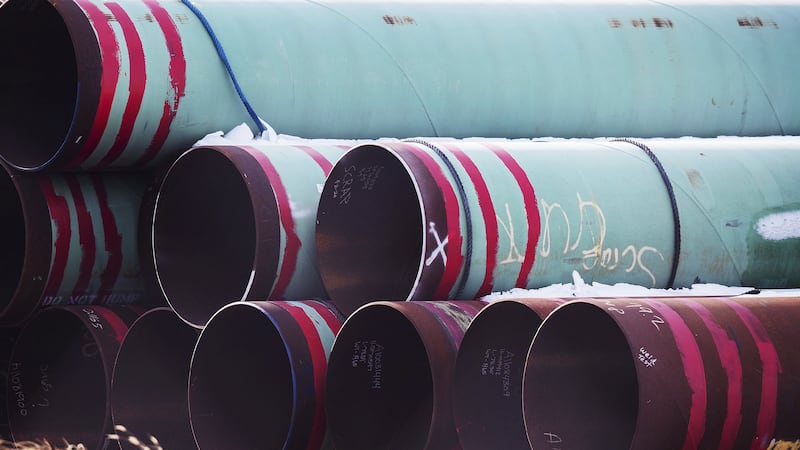
The project was first proposed in 2008 by its then-owners TC Energy Corp. and ConocoPhilips. At the time, TC Energy Corp. was called TransCanada Corp.
The Canadian Energy Board approved the project in 2010, but that came with 22 conditions on safety, environmental protection and landowner rights.
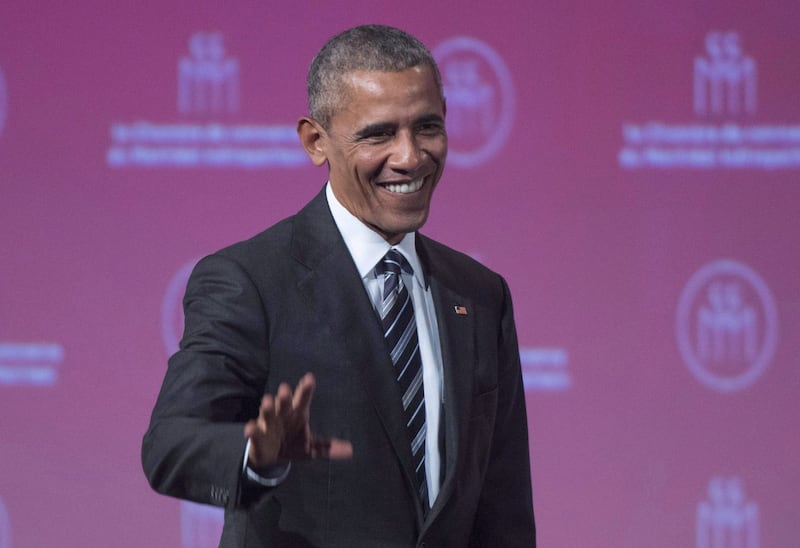
Then-U.S. president Barack Obama was the first to shut it down two years later, in January 2012.
Why is it so controversial?
The project has seen major opposition from legislators and activists, citing environmental concerns, lack of legal oversight and unconstitutional use of state law to review the routes.
Obama rejected the project in 2012 after U.S. legislators passed a bill in December 2011 that stated the president had to make a decision on the pipeline’s future in 60 days.
Obama argued that this did not allow much time to review the new route but said TransCanada was free to submit another application.
Between 2012 and 2016, project costs ballooned as TransCanada looked to build southern legs of the expansion. While the company found favour in the Nebraska state government and a Republican-led U.S. Congress, the project was repeatedly shot down through legal challenges from pipeline opponents and a veto from the Obama administration.
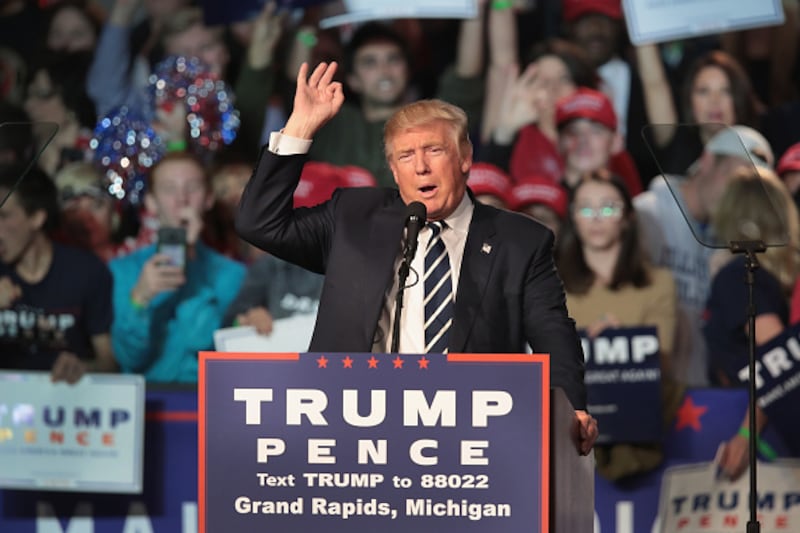
Trump, in his 2016 presidential campaign, vowed to bring back the project if elected. In January 2017, he signed an executive order approving the project with plans to renegotiate the terms.
The project still faced legal challenges over the next two years with construction getting underway in April 2020. In November, Biden was elected president and shut down the project on his first day of presidency.
Why did Biden cancel the project?
Biden cancelled the project in January 2021, stating that it did not align with his administration’s economic and environmental objectives.
He had served as U.S. vice-president during the Obama administration.
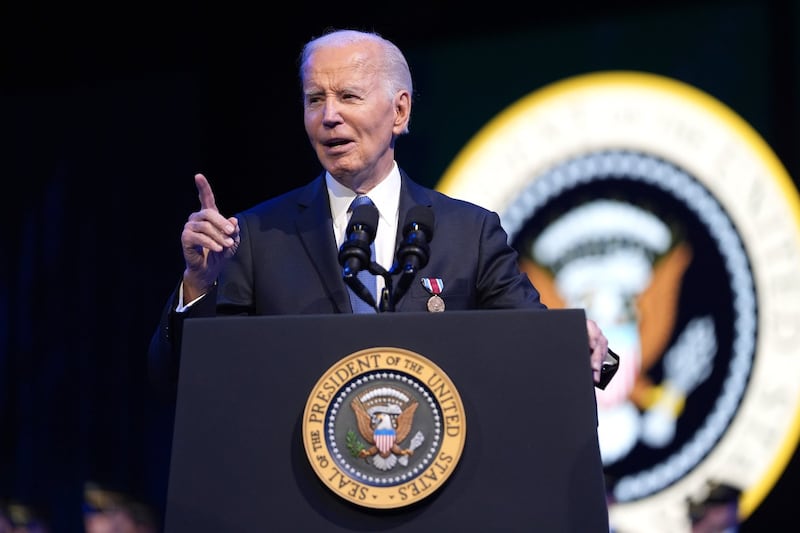
Then-Canadian prime minister Justin Trudeau expressed disappointment over the cancellation and stated that his representatives were pressing the Biden administration to reconsider.
Then-Alberta premier Jason Kenney threatened legal action if the project was scrapped.
What has happened since?
The project remained buried until Trump entered his second term as president.
In February 2025, Trump posted on social media that he wanted to revive the Keystone XL project.
In October, Carney pitched the project to Trump in exchange for relief from U.S. steel and aluminum tariffs on Canada’s industries, to which Trump was “very receptive,” according to media reports published then.
In March, Alberta Liberal MP Corey Hogan confirmed that the pipeline was being used as leverage in trade talks with the U.S.
“As we start thinking about some of the exposed industries and some of those that are really being hit hard by tariffs, we’ve got to have things to negotiate with, and energy is one of those things,” Hogan told CTV’s Power Play at the time.
He added it would be “foolish” for the federal government not to “think about the opportunities” the pipeline project could provide.
While the pipeline did not appear to be part of the pending trade deal, it could become a “sticking point” for Trump, according to CTV News political analyst Eric Ham.
He told CTV News Channel on Wednesday that the situation seems “mysterious,” but noted Trump has prioritized “oil and energy” as a key component in his administration and in negotiations with Canada and other countries.
“We saw how the president was willing to invade, frankly, Venezuela over energy,” Ham said. “So this has always been a priority.”

