CLANDEBOYE, Man. – Farmers are beginning to harvest their crops in parts of the Prairies, including in Manitoba, but damage from heavy rains and flooding earlier in the summer will make this year’s harvest much more challenging for some.
Jean-Paul and Tina Lavallee farm near Clandeboye in the province’s Interlake region, about 41 kilometres north of Winnipeg. Normally at this time of year, the Lavallees would start harvesting their wheat crops, but due to the intense weather in June, half of their 3,000-acre farmland has been turned into nothing but mud.
“This is the worst year,” Jean-Paul said. “If you talk to older generations, they’ve never seen anything like this.”
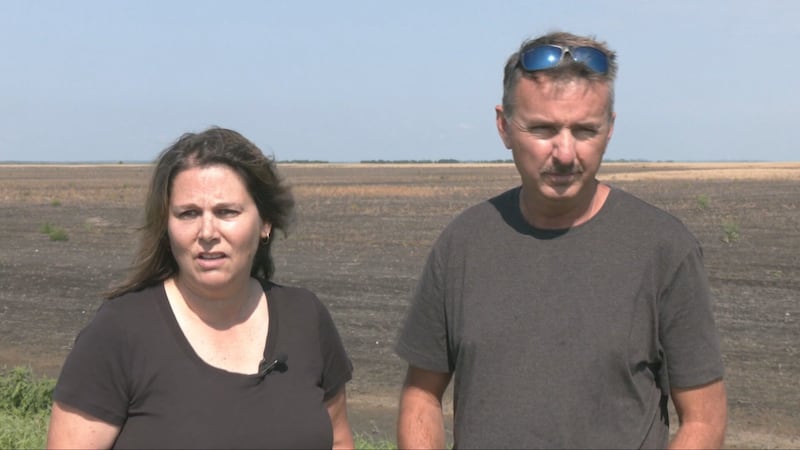
They are trying to salvage what they can, but fear this could be their worst harvest yet.
“We won’t really know the quality of the crop until we get into it,” Tina said. “From the stuff that was under water that receded in time for it to maybe produce something, we really don’t know the quality of what it’s going to be until we are harvesting it.”
The Lavallees are not alone.
Just down the road, Curtis McRae is also trying to salvage what he can. Between 1,500 and 2,000 acres of his property were destroyed from flooding, which reached two to three feet in his fields.
He says the conditions have made it his most challenging season yet.
“The sooner we get harvest done, the better, because we got to look forward to next year,” he said. “Because this harvest, it’ll pay the bills, but that’s about all it’ll do.”
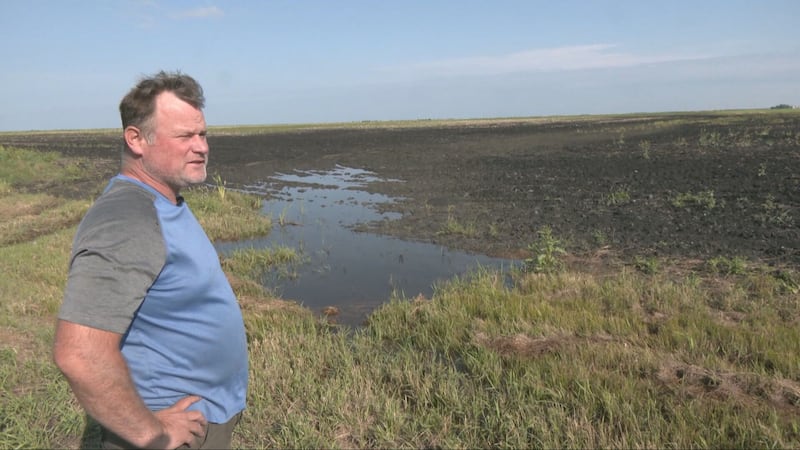
McRae believes his losses could be as high as $500,000.
“If we’re lucky and frost stays away, we’ll make that crop insurance payment a little bit smaller,” he said. “So really, my employer right now today is crop insurance.”
Historic rainfalls
The two-day storm in June brought heavy rains over a short period.
Stonewall, about 37 kilometres southwest of Clandeboye, received a whopping 255 mm of rain in just a few hours.
According to the Insurance Bureau of Canada, insured losses from two days of severe weather in June in both Manitoba and Saskatchewan have climbed to more than $840 million. That is up from all of 2025, which saw around $760 million in losses, mostly due to wildfires.
While the Lavallees and McRae are working to get what they can, other farmers across the province are already harvesting.
Manitoba’s latest crop report shows about 75 per cent of winter cereals are already harvested, while crops like wheat and canola are just beginning.
While Manitoba’s Interlake region sustained significant damage, other parts of the province were not hit as hard.
“Mother Nature did not really give us the best hand this year,” said Jill Verwey, president of Keystone Agricultural Producers (KAP).
“Fortunately, I think that the crop that is out there that did push through in a lot of parts of the province,” she said. “We’re optimistic with some of the yield potentials there.”
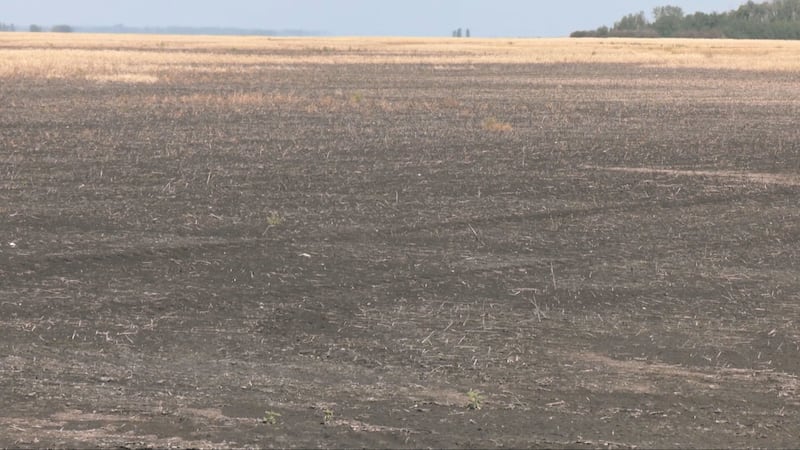
A lot of damage here’
As for the Lavallees, they say some of this damage could have been avoided, blaming years of neglected infrastructure and poor drainage.
“We took on more water than we should have, from breaching dikes to, culverts with no traps,” Tina Lavallee said.
“It’s been years of neglect,” she added, ”and some of these projects have been on the books for a number of years.”
In the meantime, the Lavallees are turning their attention to preparations for next year’s crop, hoping next season is better than this one.
“We just need a plan and we need to see some improvements,” she said.

